
Danger in the laundry aisle?

Last night at the grocery store I had to go through the “poison” aisle to get to the paper products. For some reason, the are stored in the household cleaning section—that’s what I call the “poison” aisle.
When we walk this aisle my eyes and nose are assaulted by what I can only call a chemical stew. Basically, the aisle stinks from all of the chemical fragrances and aromas. I always get teary eyed, sneezy and wheezy whenever we have to go down that aisle—which is why I avoid it as much as possible.

You see, I’ve been shopping online for quality toxin-free cleaners and laundry detergents for years, and rarely need to shop that aisle. Consequently, the smells in the ‘poison’ aisle really attack my allergies and asthma. If you use these brand-name store-bought cleaning products in your home, you don’t notice the smells like I do, because it’s already in your home every day.

So, let’s talk about this common laundry detergent people buy. I am not going to go into the many reasons why it isn’t a safe product – God forbid a child or pet gets their hands/paws or mouths into Tide. It will not be good.

What I do appreciate is the company I shop from has never had a claim against it—not a single child has been harmed from accidentally ingesting any of this company’s products. Sure, kids and pets have gotten into MelaPower, but the worst that can happen will be a tummyache and will be fine in a few hours.
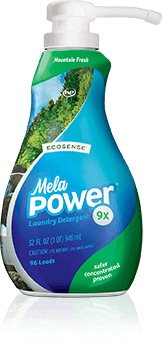
Now, how about the cost effectiveness between the two products? On the front of the Tide container, it says it will do 64 loads. But, if you look closely on the back, it says a load is measured to the #1 on the cap, which is really for super small loads. A common family load is a full load, which is to the #5 on the cap. If you measure to the #5 you are only able to do13 full loads with this container of Tide at a cost of $11.99—or .92 cents a full load!

My MelaPower bottle shown does 96 loads of laundry and it is $17.49 and that’s just .18 cents In fact, you only need 15ml (0.51 us fl oz) to do a full load. It’s comforting to know that I’m taking care of my laundry and my family’s health at the same time.

That’s life!

Make it count!

What might happen?

Take a chance day is here

Like Moths To A Flame: Why do guests always gather in the kitchen?

Have you ever noticed during holidays like today, after all your work filling the living room with lights, flowers, champagne and bacon-wrapped appetizers, people leave your comfy couches to drift back to the kitchen?
If your home is like mine, it’s comfortable, but lacking a huge kitchen—so, more 10 guests means it gets a little tight.

It’s a bit of a cliché, but to many, the kitchen really feels like the heart of the home. The kitchen being the center (or heart) of the activity, means that’s where everyone wants to be—even if it’s to grab a bite of food coming out of the oven, to chat with the hosts, to chat with the guests who are chatting with the hosts or to drop off drinks in the refrigerator or napkins in the trash.

It’s often said that the messy informality of the kitchen has its own draw. Why? Because the kitchen is most definitely warm — both literally and metaphorically. You can relax in the kitchen. You can bump up against a counter, not worry about putting down that glass of wine.

Did you know warm, welcoming kitchen environments were not the norm 150 years ago. According to the book, The Food Axis, the kitchen would be a very separated place, and no one would go in the kitchen because mixing socially with servants was most definitely frowned upon.

The kitchen of the early 20th century also wasn’t conducive to welcoming toguests. It had issues because of poor refrigeration, inefficient cleansers and primitive plumbing, causing unappetizing aromas. It wasn’t unusual to find poorer households and tenements had shared central kitchens and hired household labor. As industrialization took hold in the later 19th and early 20th century, many household servants left domestic service for factory jobs, where they could make a lot more money. This in turn lead to housewives becoming their own domestic labor.

Now a new field developed: domestic science. Home economists and women’s magazines also came on the scene to tell housewives how best to manage their household on their own. That meant small kitchens. The ideal was to able the housewife to stand in the middle of the kitchen and reach everything—basically she would revolve in place to make dinner.

Over the last 100 years, the tiny kitchen expanded, to make room for other household members. It’s also become more of a living space — with design elements like color and windows — because people want to spend time there—including at parties. You might want to shunt guests out of the kitchen, but if people do end up there, next to a sink full of dishes and wadded-up tin foil, don’t knock it.

Those parties that feel a little magic — there are pretty flowers, the lights are dim, the candles are going, and you feel comfortable. That comfort and connection is the reason everyone gathers together in the first place—even if it happens in the casual mess of a crowded kitchen.

Beyond Empty Calories: Curbing sugar intake

When it comes to weight management, refined sugar in all its forms — high-fructose corn syrup, dextrose, rice syrup, sucrose and many others — is certainly one of the top items to get knocked off an eating list.

Harvard University’s School of Public Health suggests that to achieve a healthy weight, you should limit “lower-quality foods” including sugar-sweetened beverages, refined sugar and highly processed snacks. But your waistline isn’t the only thing affected by excess sugar consumption. Overindulgence on the sweet stuff can affect you in some other surprising ways:

1. Sleep Interuption. According to the National Sleep Foundation, an after-dinner dessert is a great way to get a terrible night of sleep. In fact, the organization notes, the more sugar you eat during the day, the more likely it is you’ll wake up during the night. That’s because sugar lowers the activity of orexin cells, a neuropeptide that regulates how wakeful you are. More bad news: These cells also help control appetite, so if they’re feeling off-kilter, you’re more likely to eat more.

2. Increased Colds and Flu. When it comes to an effective immune response — your system needs to be on high alert during cold and flu season — sugar could be defeating your white-blood-cell army. When you eat a big dose of sugar, like a soda or a candy bar, you temporarily suppress your immune system’s ability to respond to invaders. If that happens occasionally, it may be no big deal, but since the effect lasts for a few hours, you could be consistently sabotaging your immune syste if you eat sugary food regularly.

3. Increased Risk of Heart Disease. Sugar can affect your weight goals, but it affects your heart even more. A major study published in JAMA Internal Medicine suggested a sugar-packed diet may raise your risk of dying of heart disease, even if you aren’t overweight. In the 15 year-long study, participants who ingested 25% or more of their daily calories from added sugar were more than twice as likely to die of heart disease than those who consumed less than 10% of added sugar.

4. Potential Depression. Although much is made of the mind-body connection when it comes to health and wellness, less attention has been put on the mood-food link. But sugar can be notorious for causing emotional fluctuations, including anxiety, frustration and even depression, according to Dr. Elson Haas, author of Staying Healthy With Nutrition. He notes that refined sugar has been shown to deplete important nutrients, such as protein, vitamin B, zinc, chromium and manganese—deficiencies can lead to lower levels of emotional and mental functioning. When these nutrients remain in the immune system, individuals notice a marked difference in their moods and emotional states.

5. Skin Problems. Refined sugar and many other high-glycemic foods raise insulin levels in the body and that increases inflammation. When that happens, the inflammation produces enzymes that break down collagen and elastin, the structural building blocks of skin. The digested sugar permanently attaches to the collagen in your skin through a process known as glycation, which results in sagging skin and wrinkles. Glycation can also exacerbate skin conditions like acne and rosacea. Plus, the more sugar you eat, the more likely it is you’ll develop insulin resistance, possibly leading to excess hair growth on the skin, as well as dark patches on the neck and other areas.

With side-effects like these, you might be tempted to swear off sweets forever. You really don’t need to cut out refined sugar products completely to see benefits and lower your health risks, instead, focus on mindful eating and awareness — in other words, make a sugary treat into exactly that, so it’s a sometime occasion and not a regular habit. Start by eating your next sugary snack very slowly, and notice how it smells as well as tastes. You don’t need to become a mealtime snail, but doing this a few times can help you “reset” when it comes to sugar—and helps to reduce sugar cravings. Being more mindful when you eat, especially when it comes to sugar, can keep you off autopilot and change your eating habits.

A house favorite

This Herbal Tea is a must have in my household. Over the years, this tea has soothed achey stomachs, sore throats, helped me sleep with a old and just made me feel good. Do you have a favorite comfort tea?