Take Action: Cover Up

With Memorial Day weekend coming up, you may be planning a full three days of being outdoors—basking in the sun; at the beach; at a barbeque or at the park. Since you will be out in the bright and shiny sun’s rays, you will want to take these simple steps to help prevent skin cancer.

Cover up with long sleeves, a hat, and sunglasses.

Wear a long-sleeved shirt and long pants or a long skirt. Clothes made from tightly woven fabrics are best.

Wear a hat. A hat with a wide brim that protects your face and neck works best. Avoid straw hats with holes that let sunlight through. If you wear a baseball cap or visor, be sure to protect your ears and the back of your neck with sunscreen.

Wear sunglasses that block UV light. This will help protect your eyes and the skin around them from sun damage. Wrap-around sunglasses are best, because they block UV rays from the side.

Stay in the shade between 10 a.m. and 4 p.m. The sun’s rays are the strongest from mid-morning to late afternoon. Try to stay out of the sun during these hours. If you are outside, stay in the shade – like under a tree or umbrella.

Use sunscreen with a minimum SPF 15 or higher. Use sunscreen with both UVA and UVB protection, also called broad spectrum sunscreen. My dermatologist recommends using a sunscreen that has an SPF of 30 or higher, is water resistant, and provides broad spectrum coverage. My favorite sunscreen that meets all of those requirements is Sun Shades Sport. Sun Shades Sport’s principal ingredient is Avobenzone. Avobenzone gives my skin a highly effective broad spectrum protection. The photostablized avobenzone maintains its UVA protective power even during long periods of sun exposure. I especially like that I can spray it on and it sticks!

One thing you always need to do is check the expiration date on the bottle to make sure it’s not out of date—especially if you found a bottle from last summer.

To get the most protection:

  • Wear sunscreen even on cloudy days. UV rays can still harm your skin through the clouds.
  • Plan ahead – put sunscreen on 30 minutes before you go outside. Put on more sunscreen every 2 hours and after you swim or sweat.
  • Be sure to use enough sunscreen (a handful). Don’t forget to apply it to your ears, hands, feet, the back of your neck, and any part of your scalp that isn’t covered by hair.
  • Use lip balm with sunscreen to protect your lips.
  • If you wear very lightweight clothing (like a beach cover-up or thin T-shirt), put sunscreen on under your clothes.
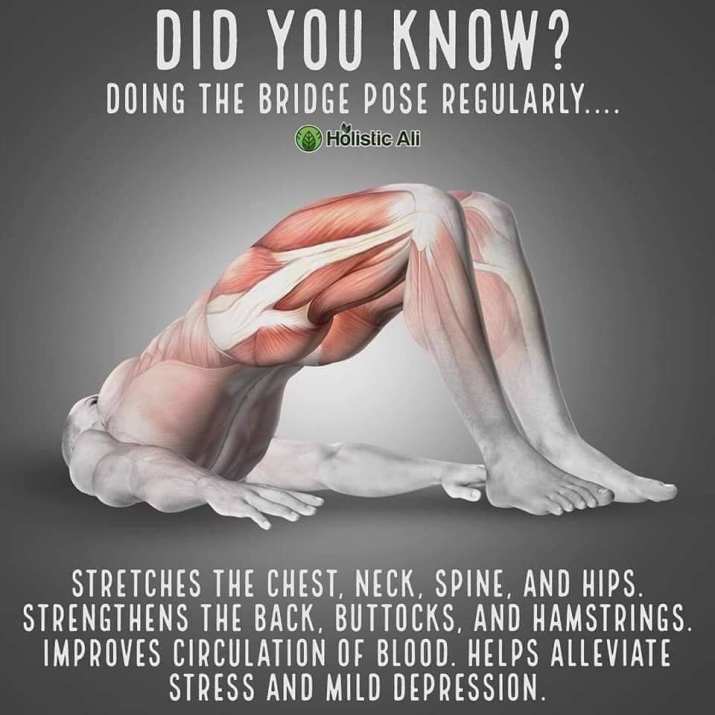
A week of stretching: Stretch #3

Bridge Pose

Gluten intolerant or glyphosate intolerant?

Celiac disease, and, more generally, gluten intolerance, is a growing problem worldwide, but especially in North America and Europe, where an estimated 5% of the population now suffers from it,” researchers wrote in a meta-analysis of nearly 300 studies.

They propose that glyphosate, the active ingredient in the herbicide, Roundup®, is the most important causal factor in this epidemic. The study, published in the journal Interdisciplinary Toxicology in 2013, was completely ignored by the media except for Mother Earth News and The Healthy Home Economist.

Now that glyphosate is getting the attention it deserves, being named as the culprit in a $280 million cancer lawsuit and labeled as a carcinogen by the World Health Organization and the state of California, it may be time to look at the chemical’s role in a related disease:

The symptoms of so-called “gluten intolerance” and celiac disease are shockingly similar to the symptoms in lab animals exposed to glyphosate. They study’s authors also reference a recent study on how glyphosate affects the digestive systems of fish. It decreased digestive enzymes and bacteria, disrupted mucosal folds, destroyed microvilli structure in the intestinal wall, and increased secretion of mucin — features highly reminiscent of celiac disease.

Additionally, the number of people diagnosed with gluten intolerance and celiac disease has risen in tandem with the increased use of glyphosate in agriculture, especially with the recent practice of drenching grains in the herbicide right before harvest, which started in the 1980s and became routine in the 1990s. While some suggest the recent surge in celiac disease is due simply to better diagnostic tools (which as you can see above happened around 2000), a recent study suggests it’s more than that.

In 2009, researchers looked for gluten antibodies in frozen immune serum obtained between 1948 and 1954 for gluten antibodies, and compared them with samples from people today. They found a 4-fold increase in the incidence of celiac disease in the younger generation. As further evidence the researchers make the following points:

“Celiac disease is associated with imbalances in gut bacteria that can be fully explained by the known effects of glyphosate on gut bacteria.”

“Celiac disease is associated with the impairment of cytochrome P450 enzymes. Glyphosate is known to inhibit cytochrome P450 enzymes.”

“Deficiencies in iron, cobalt, molybdenum, copper and other rare metals associated with celiac disease can be attributed to glyphosate’s strong ability to chelate these elements.”

“Deficiencies in tryptophan, tyrosine, methionine and selenomethionine associated with celiac disease match glyphosate’s known depletion of these amino acids.”

“Celiac disease patients also have a known increased risk for non-Hodgkin’s lymphoma, which has also been implicated in glyphosate exposure.”

“The incidence of non-Hodgkins lymphoma has increased rapidly in most Western countries over the last few decades. Statistics from the American Cancer Society show an 80% increase since the early 1970’s, when glyphosate was first introduced on the market.”

“Reproductive issues associated with celiac disease, such as infertility, miscarriages, and birth defects, can also be explained by glyphosate.”

Glyphosate residues in grain, sugar and other crops are increasing recently likely due to the growing practice of crop desiccation just prior to harvest, the researchers say. The secretive, illegal practice has become routine among conventional farmers since the 1990s. Ironically, the practice increases yields by killing the crops. Just before the plants die, they release their seeds in order to propagate the species.

Moral of the story? We need to go glyphosate-free, not gluten-free. And that means going organic, especially when it comes to grains and animals who eat those grains.

A week of stretching: Stretch #2

Back stretch

Safer for you cleaning

Yesterday, my cleaning lady used all these! She loved it! No chemical smell and safe for her.

We love our products!

A week of stretching: Stretch #1

Yoga Upward Dog Pose

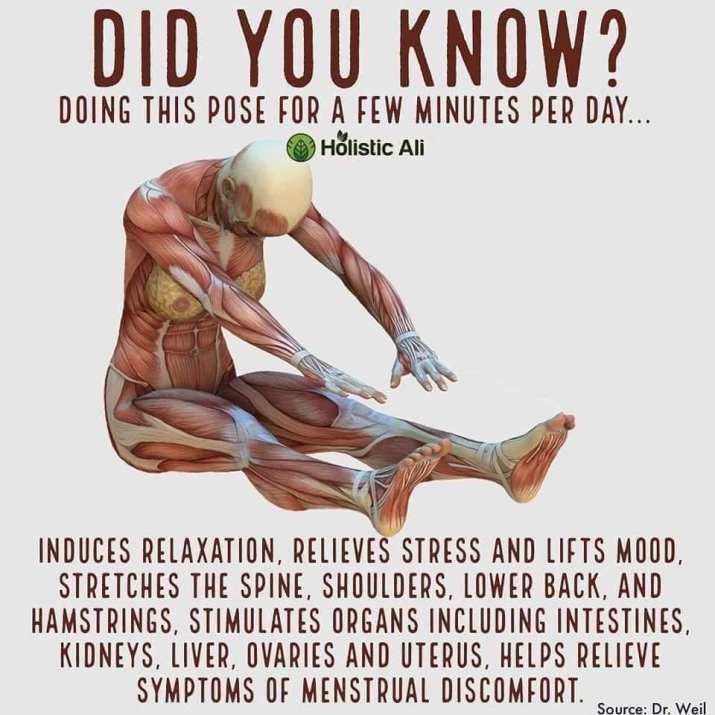
Mind and body exercise

Your local hospital or fitness, recreation, or community center may offer classes such as yoga, tai chi, or Pilates. You also may find some of these workouts online and can download them to a computer, smart phone, or other device. These types of activities may help you:

  • become stronger and more flexible
  • feel more relaxed
  • improve balance and posture

These classes also can be a lot of fun and add variety to your workout routine. If some movements are hard to do or you have injuries you are concerned about, talk with the instructor about how to adapt the exercises and poses to meet your needs—or start with a beginner’s class.

Here is the first of our week of stretches:

Q: Is indoor tanning safer than tanning in the sun?

A: No! Find out why: http://1.usa.gov/1bbBePF

Feeling busy this week?

Try these tips to build more #PhysicalActivity into your busy schedule: http://bit.ly/1uoHJe8

Are you a weekend gardener?

Now that warmer weather is here, I find I spend more time out in my yard and garden. Finding natural and safe products can sometimes be an issue, but I have found some safe and affordable lawn and gardening care alternatives using my everyday household products.

For killing weeds.
I mix 1/4 cup Tough & Tender with 1 gallon vinegar and two cups salt. Apply to trouble spots. For stronger, hardier weeds I add 1/2 Lemon Bright dish soap. The soap is needed to break through the weed’s protective coating.
Here is a “how-to” video: https://youtu.be/tINbAl37hvo

Ridding the lawn of gnats, “no seeums” and mushrooms.
Spray the lawn with a diluted mixture of Tough & Tender in a lawn sprayer unit. It will kill the little gnats as well as mushrooms that grow in your yard. (Tough & Tender is my go-to cleaning product, It’s one thing we are never out of there are so many uses for it!)

Killing “Yard Bugs”.
Mix 1 cup of Lemon Brite dish soap and 1 cup of pre-mixed Breath-Away Mouthwash into a 20 gallon hose-end sprayer and soak your lawn, garden beds and trees to the point that the fluid is running off. Bugs HATE it!

Killing Ants.
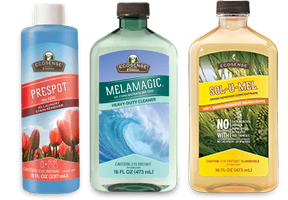
Spray concentrated Pre-spot Plus on areas ants congregate (don’t use on wood). For heavier concentrations and black ants, combine 1 ounce of MelaMagic and 1 ounce of Sol-U-Mel in a 16 ounce spray bottle and fill with water.

Armyworm caterpillars.
Mix 1/2 cup of MelaMagic in two gallons of water to spray. Spray cocoon, nest, and any webs you see. This will also help cutdown on succeeding generations as well as with the ant invasion that follows the armyworms.

All purpose home made spray.
A safe and non-toxic bug spray can be made from a combination of ¼ cup of Sol-U-Mel, five drops of T36-C5, 1 teaspoon of Tough & Tender, and 14 ounces of water. Or you can just get the Natural Insect Repellent. (Which we happen to love!)