What Is Good Coaching In Business?

In the last decade or so, you have often heard the word coaching used when referring to management interaction. Why does the word coaching come up more and more?

It is a term that was adopted by the popularity of sports and the management of men and women on the court, the field and the rink. Our “adaptation” of coaching is derived directly from those experiences in person and in observation.

The attached article can help you understand more clearly the value of good coaching and what it can bring to your “team’s” success. As the author, Yael Bacharach, tells us: “if you listen, reflect, question and provide the right feedback, you can easily build trust in the coaching relationship.”

The Mediterranean Diet

An unhealthy heart, cancer-causing inflammation, and even depression can be avoided by acclimating to a Mediterranean diet. It incorporates the basics of healthy eating plus a splash of flavorful olive oil and, if you choose, a glass of red wine, among other components characterizing the traditional cooking style of the countries bordering the Mediterranean Sea.

Most healthy diets include fruits, vegetables, fish and whole grains and limit unhealthy fats like butter and margarine. The subtle variations of portion size make a big difference whether your goal is to lose weight or simply get and stay healthy.

The Mediterranean diet emphasizes:

    • Eating primarily plant-based foods, such as fruits, vegetables, whole grains, legumes and nuts.

   • Replacing butter (and margarine) with healthy fats like olive and canola oil.

   • Using herbs and spices instead of salt.

  • Limiting red meat to no more than five times a month.

   • Eating fish and poultry at least twice a week.

   • Enjoying meals with family and friends.

   • Getting plenty of exercise.

The residents of Greece, for example, eat very little red meat and average nine servings A DAY of antioxidant-rich fruits and vegetables. Grains in the Mediterranean contain very few unhealthy trans fats and bread is an important part of the diet there. Throughout the Mediterranean region, bread is eaten plain or dipped in olive oil, not butter or margarine, which contain saturated fats.

Another part of the healthy Mediterranean diet is nuts, which are high in fat, but most of the fat is not saturated. Obviously, you should avoid candied, honey roasted or heavily salted nuts. I am associated with a wellness company that offers nearly 500 products many of which are whole grain, gluten, sugar and saturated fat-free. I have benefited greatly from all of these choices while avoiding hunger and cravings and staying healthy and weight responsible.

I have included some great (and very tasty) recipes for Mediterranean dishes to get you get you started and give you some direction. I know you will enjoy them.

Teamwork in Business

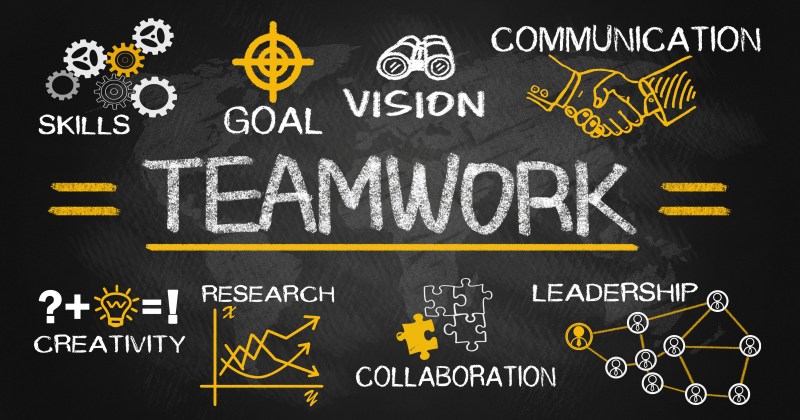
Over the last decade or so, the terms teamwork, team, and coach have proliferated in business discussions. This Harvard Business Review article explains more about the anatomy of teams and teamwork. I think you will find it insightful and quite detailed.

It explains the team and its dynamics (many members change over time) and how individual and team goals change over time. Team diversity is an important factor in interpreting team goals and context.  If your team is geographically diverse, as well, differences in the availability of certain resources can be challenging.

The need for a system, goal articulation (why), a shared mindset and strong leadership (coaching) are all important elements in the success of your business team. I am associated with a company that has understood the concept of team for over 30 years. It has made my activities more effective and much more profitable.

Should I own my own business?

Almost all of us have asked ourselves the question: “do I want my own business?”. I could be my own boss. I would be able to control my hours and spend more time with my family. I could be the determiner of my own income. The reasons to do it abound.

The attached article from the Wall Street Journal could help you assess your own qualifications. It touches on some key issues like needing a strong why to keep you focused and to get you through the, the inevitable “rough patches”. You must be willing (and comfortable) to take on some risk or find a business that has very little or none. You must be willing and able to fill many roles. Early in the development of your business, you will be IT, So, you must stay in balance.

Your Make Green partner has their own business, either part time or as their primary source of income. They would be excited to review their reasons for entrepreneurship and help you inventory your own by sharing their own twelve success factors. Freedom is a great way to make a living.

Seasonal Allergies

In spring and summer, we are used to anticipating allergies but this Healthline article points out that allergies can visit us in every season. It points out which exterior causes trigger which allergies.

And did you know that not all allergens are generated from the outdoors? Many allergens are sourced to the inside our homes. Many come from the household cleaners we use and even our laundry products.

The article continues to identify which allergies occur in which seasons, how to cope or avoid them and diagnosing them. Naturally, your doctor can prescribe medications that in most cases provide relief.

I represent a wellness company that produces many natural alternatives as well as a full line of eco-friendly cleaning and laundry products, which can make a huge difference in your in-home environment.

The Six Emotional Enemies Inside Your Mind

Don’t become a victim of yourself. Forget about the thief waiting in the alley—what about the thief in your mind?  What can destroy our ambitions, our fortunes, our relationships—our lives? The enemies lurking inside us, the ones we face from within, the ones we’ve got to destroy before they destroy us. There are six we must conquer:

1. Fear
We are not born with courage, but neither are we born with fear. Maybe some of our fears are brought on by our own experiences, by what someone has told us, by what we’ve read and heard about. Some fears are valid, like walking alone in a bad part of town at 2 o’clockin the morning. But once we learn to avoid that situation, we won’t need to live in fear of it.

2. Indifference
What a tragic disease indifference is. Some will say, “Ho-hum, let it slide. I’ll just drift along.” But here’s one problem with drifting: We can’t drift our way to the top of the mountain.

3. Indecision
Indecision is the thief of opportunity and enterprise. It will steal our chances for a better future. We have to take a sword to this enemy.

4. Doubt
Sure, there’s room for healthy skepticism. We can’t believe everything. But we also can’t let doubt take over. Many of us doubt the past, doubt the future, doubt each other, doubt the government, doubt the possibilities and doubt the opportunities. Worst of all, we doubt ourselves. Doubt will destroy our lives and our chances of success. It will empty both our bank accounts and our hearts. Doubt is an enemy. Go after it. Get rid of it.

5. Worry
We’ve all worry some—but we can’t let it conquer us. Instead, let it alarm us. Worry can be useful. If we step off the curb in New York Cityand a taxi is coming, we’ve got to worry. But we can’t let worry loose like a mad dog that drives us into a small corner. Here’s what we’ve got to do with our worries: Drive them into a small corner. Whatever is out to get us, we’ve got to get it. Whatever is pushing on us, we’ve got to push back.

6. Timidity
Over-caution is the timid approach to life. Timidity is not a virtue (unlike humility); in fact, it can be an illness. If we let it go, it’ll conquer us. If we’re timid, we won’t get promoted, we won’t advance and grow and become powerful. We’ve got to avoid over-caution.

So, we must battle with the enemy, battle with fears, build our courage to fight what’s holding us back, what’s keeping us from our goals and dreams. We have to be courageous in our lives and in our pursuit of the things we want and the people we want to become.


 

Getting And Staying Motivated

Motivation is a unique emotion because it comes from within. External sources can be relied on for inspiration and information, but motivation must come from you. The Balance gives you some details and some tips.

Motivations are an important element in fighting the occasional (or more often) slumps and, build some momentum to stay focused on your business targets. Have a clear vision of your goals. Get inspiration from someone you respect that has achieved the things to which you aspire.

At times, working for myself requires me to do my business 7 days a week. It can be difficult to stay motivated with that demanding (although rewarding) of a schedule. I find revisiting these six tips can do it. Try it and, I will tell you, it will make a big difference in your daily, weekly, and monthly successes. Before the year is over, you will be amazed by your progress.

We make everyday Earth Day.

In 1970 the world recognized what an impact unsafe practices and products had on our planet and instituted Earth Day. It was the beginning of the modern environmental movement. Earth Day is now a global environmental event, celebrated on April 22nd.

As a result of the inaugural Earth Day celebration, there have been a number of accomplishments. The Environmental Protection Agency was established later in 1970. The tough Clean Air Act of 1970 was passed with few dissenting votes in both houses of congress. The Federal Occupational Health and Safety Act soon followed, aimed at in-plant pollution, was passed by a coalition of labor and environmental groups. Within the next three years, such landmarks as, the Clean Water Act, the Endangered Species Act, and the Conservation and Recovery Act were passed. Other countries have accomplished similar achievements.

In 1990, the U.N. Earth Day Summit in Rio de Janeiro was the largest collection of national political leaders to ever meet in one place. It made some important initial steps toward addressing climate change and preserving biodiversity. More than a dozen countries established eco-labeling programs to guide consumers toward environmentally preferable goods and services.

Several Eastern European nations, responding to public demand, established new environmental agencies. CARE, the international relief agency, set out new environmental goals for itself in the 1990s that included planting 500,000,000 trees worldwide. And in the new millennium, there is still lots to do. All these stories are great, but what does it really have to do with you and me? We are not part of the U.N. or anything important like that.

Start by recycling and encourage others to do the same. Use products that are concentrated and that use ingredients that are environmentally safe. Most of all, talk about it to your children, family, friends and your political leaders. Finally, celebrate Earth Day in your own big way. Make Earth Day every day. It is your Earth, what are you doing for it?