

Suffering from Allergies? Here are some EOs that can help. Peppermint, Lemongrass, Clove, Tea Tree and Lavender. We like to put them in our diffusers throughout the house. It seems to help a lot!
Category: Uncategorized
US government surveys says the average A
US government surveys says the average American is consuming 152lbs a year. That is *up* more than 20 pounds since the topic caught my attention 40 years ago.

Are Suffering From Gluten Intolerance?
Gluten is a widespread name for the proteins that can be usually found in wheat products. Grains that contain gluten include wheat, barley, rye, oats and others. People who eat gluten-loaded foods can feel a plethora of symptoms—often described as allergic reactions that can yield to intestinal inflammations. Problems like an unpleasant feeling in the stomach can easily become long-term damage.
Currently, you can’t be tested for gluten intolerance—but taking the test to rule out celiac disease can help. During normal digestion, enzymes are in charge of breaking down long strands of protein. Gluten amino acids are called peptides and they can be absorbed and transported within the body for later use. Occasionally, the body will treat peptides as foreign bodies and set off alarms, convincing the immune system the body is under attack, which can create all sorts of health problems and symptoms.
It’s often difficult to note gluten intolerance, because many food items can hide its presence. To find traces of this compound, you have to start reading labels. In that way, you will be fully aware of the elements that are in that item. Watch for food additives, medications, and flavorings. Having knowledge of what you put in your body is crucial for your health.
Here is a list of 15 Indicators that can help you determine if you are gluten intolerant.
- Constant headaches. The cause of recurring migraines after finishing your meal can be a big sign that shouldn’t be ignored. The biggest triggers are sugary foods, alcohol, dairy products, artificial sweeteners and processed meats. If you are eating lot of these foods, then there may be your answer. Be aware that everyday products like shampoos, products for cleaning and perfumes can contribute to migraines as well. The American Academy of Neurology hired researchers to do the study in 2001If this is the case, the solution doesn’t necessarily mean medicating yourself. Miracles can happen with just a few everyday changes. Try consuming more vitamins and minerals. Not only will they contribute to the migraines fading away but they can help with your overall health.
- Digestive problems. Gluten can affect the stomach and it can be the first organ to indicate something Is off. A study done in 2013 that was published in Gastroenterology Hepatology revealed some interesting facts. Gastrointestinal symptoms can be created by following the consumption of wheat in some people. Those people are usually suffering from celiac disease or allergies. Some of the symptoms are bloating, cramps, constipation, gas or heartburn.
- Extreme exhaustion. Fatigue is a common symptom when we talk about gluten sensitivity. If you find you are extremely lethargic after a meal you may want to take a look at what foods may be triggering this feeling. Too many carbohydrates can give energy spikes that later lead to the feeling of somnolence. Hormonal imbalance due to gluten sensitivity can also yield some big changes to our body.
Sleep problems like insomnia and struggling with proper brain function can have an impact on fatigue. - Mood swings. We can all be prone to irritability—it’s normal and it happens to all of us. However, extreme anxiety and anger issues can feel awful—leading to a lack of self-control. People with a gluten intolerance have a tendency towards mood swings, feelings of depression and sadness. Two reasons are cited for these emotional rollercoasters: either your body is assaulting its tissues and yielding to inflammation or the gluten is obstructing the absorption of nutrients.
- Dermatological problems. One prominent target of gluten allergy-related effects is, of course, the skin—the biggest organ in the human body. It’s no rarity that people allergic to gluten suffer from multiple skin conditions at once. When gluten latches onto the top skin layer, the epidermis cells can get damaged beyond repair—causing rashes, itching, blisters and severe redness. A lack of vitamin A can also manifests itself through acne, psoriasis and several forms of eczema.
- Muscle pain due to fibromyalgia. FibromyalgiaFibromyalgia is the collective name for all types of muscle fiber-related chronic pain. It’s somewhat difficult to pinpoint, as it affects both muscle and connective tissue. Due to the prevalence of connective tissue, you may or may not feel pain in your bones too. One recently discovered cause of fibromyalgia just maybe gluten intolerance. During one prominent study, it was discovered that a non-celiac form of gluten sensitivity can be a cause of fibromyalgia. If you have fibromyalgia, you may want to try eliminating gluten-based products.
- Dental problems. Enamel is one of four major tissues that form the body of your teeth. Its role is to protect the body from acidic attacks and decay. Several proteins are responsible for its production—Enamelin and amelogenin are a pair of proteins responsible for creating and regenerating enamel tissue. If you suffer from gluten sensitivity or a gluten allergy, these two proteins will be affected. This will lead to discolorations and problems within the enamel tissue. Because of this, it may become weaker and more sustainable to breakage.
- A clouded mind. A condition known as “mental fogginess” is characterized by a severe lack of focus and trouble staying concentrated. It’s a hazardous condition to have, as it can affect your day-to-day life. This cloudiness can indeed be caused by an intolerance to gluten and hinder the normal functionality of your brain and cause it to become less efficient in every way.
- A sudden appearance of autoimmune diseases. When your body experiences gluten sensitivity, you tend to suffer from certain conditions known as autoimmune diseases. They are caused by the body attacking its own cells in a desperate attempt to preserve health and eradicate any presumed threat. There are 80 types of autoimmune diseases. Ones like lupus and multiple sclerosis aren’t surely caused by gluten. However, a person that already has MS or diabetes can see their symptoms worsen due to their gluten intolerance. A simple change in your diet can turn your whole life around in a matter of days.
- Frequent miscarriages and an inability to conceive. Everything about child conception and being pregnant is about hormones. There are several disorders which may severely disturb the hormonal system’s balance. One such disorder isn’t really a disorder, but an intolerance to gluten. One woman went to a nutritionist as her last resort. He suggested that there may be a possibility of gluten intolerance. She laughed it off and tried removing bread and all wheat products from her diet. This instance proved to be the deciding factor in transforming her life. Several studies followed, describing the effect of gluten on human hormones. The results were astonishing.
- Unexplained weight gain. One side effect of celiac disease is unexplained weight gain. Weight gain might not be a direct result of gluten intolerance, but a side effect of a malfunctioning gut. As people who are gluten intolerant consume gluten-rich foods, the inner lining of the small intestine becomes inflamed, causing, tiny fissures appear allowing bacteria and other food molecules escape into the bloodstream. These foreign molecules are seen as foreign substances in the bloodstream and the white blood cells start to attack them, causing more inflammation. This makes for the perfect environment to pick up weight. The easiest way to determine if gluten is the cause of weight gain is by gradually decreasing or removing gluten from your diet. If your body weight starts to drop, chances are you are gluten intolerant. To be sure, however, you need to reintroduce the gluten-rich foods, one at a time. When you do this, you will be able to see if you gain weight again.
- Depression and anxiety. There are certain foods that seem to lift a person’s spirits and others that seem to bring a person down. Gluten can be a depression-inducing food. Only one percent of people in the US have celiac-disease, the most extreme form of gluten intolerance. There are a number of other people who live with non-celiac gluten sensitivity, and these people can experience digestive problems that are related to depression and anxiety. Gluten is also a major allergen that can cause unwanted brain reactions. A study was done 2014 where 22 people with non-celiac gluten sensitivity were given a gluten-free diet for three days. They then received either a gluten-rich, whey rich or a placebo diet to follow for a further three days. The researchers assessed the candidates after the three day period and calculated their depression scores. The candidates who received the gluten diet showed much higher depression scores than the candidates who had either the placebo or the whey diets. This strong correlation pointed towards how gluten could actually make you feel depressed. Another study published in 2007 also showed that people with celiac disease were 80% more likely to suffer from depression than those who were gluten tolerant. The study was performed on 1400 candidates. Furthermore, a Swedish study that was done in 2011, showed that people who had celiac disease also had a higher risk of committing suicide. Although the correlation between gluten and depression might not be a direct correlation, if you suffer from depression, you might want to consider cutting down on the gluten.
- Leg and arm numbness. One of the more surprising symptoms of gluten intolerance is peripheral neuropathy. This condition can manifest itself in a number of different ways, including numbness, tingling, burning and in some cases pain of the arms, legs, and feet. When you are gluten intolerant, your body sometimes starts to produce anti-gluten antibodies. When these antibodies attack the gluten, it occasionally also causes nerve damage. A study was done where 215 patients were screened for axonal neuropathy and the results showed that none of the patients had any medical reason for the neuropathy. However, when these candidates were tested to see if they were gluten intolerant, the study showed that 34% had high amounts of anti-gluten antibodies. Surprisingly 80% of all the candidates showed that they had the celiac disease gene. A clear indication that there had to be a connection between the neuropathy and gluten intolerance. According to the University of Chicago, it is actually quite common to show signs of neuropathy and not show any of the other gastrointestinal signs of gluten intolerance. Physicians recommend that you follow a gluten-free diet to alleviate and even remove any sign of neuropathy.
- Iron deficiency anemia. Iron is a vital component of hemoglobin (the red pigment) to enable the transport of oxygen. The symptoms that accompany iron deficiency anemia is fatigue, irritability, headaches, brittle nails and a decreased appetite. Celiac disease can cause damage to the small intestine and restrict the absorption of iron. During the early stages of the disease, the upper two parts of the small intestine become damaged—this is where most iron is absorbed. If you have been suffering from chronic anemia and medication has not alleviated the issue, it is recommended that you have yourself tested for celiac disease by your physician. Once you have been diagnosed with celiac disease and you start with a gluten-free diet, you will notice a change in your energy levels seeing that your intestine begins to heal and absorbs more iron. You need to give the diet between two through eight months to correct the imbalances that occurred.
- Canker sores. Canker sores are little lesions or sores that form around the gums, the inside of the cheeks and underneath the tongue. A person can typically have one to six canker sores at a time and they usually last for about 10 days. These pesky little sores are quite common and can be triggered by a number of things. They typically start to form between the ages of 10 and 20 and tend to resolve or fade away during a person’s 30s. These tiny ulcers can be quite painful and irritating, seeing that they are extremely sensitive and make eating a chore rather than a pleasure. When these sores occur repeatedly, the condition is known as Recurrent Aphthous Stomatitis, or RAS. Doctors wanted to find out if there was a correlation between gluten and RAS and found 247 patients which were screened with the IgA antibody test, IgA and IgA anti-tissue transglutaminase. Seven random patients that tested positive for at least one of the sets were then sent for further biopsies and the results showed that they had gluten-sensitive enteropathy. These seven patients did not respond to the normal canker sore medication and were, therefore, put on a glutted-free diet for six months. During that time, four out of the seven patients showed a remarkable reduction in canker sores. The researchers concluded that when a person is diagnosed with RAS, he should consult a physician and test for celiac disease.

ADVANTAGES OF CLEAN FLOORS
It goes without saying that clean floors make your home LOOK better, so that is a key reason why you clean your floors. Surprisingly, another big reason is to prevent injuries from tripping or slipping.
We have included a posting from “Wikipedia” to inform you of some others as well as best practices in floor-cleaning and the care of a variety of surfaces including wood, tile, carpet, and vinyl.
Returning to reasons, aside from beautifying your floors, the correct methods can remove stains, as well as surface dirt. Proper cleaning actually increases the life of your floors. Cleaning your floors the right way can kill allergens that can cause or exacerbate diseases like asthma.
Regular maintenance can help you avoid expensive professional cleaning or machine rentals or purchases. Household budgets are sensitive these days, so avoiding these expenses can obviously help.
The company with whom I am associated has recently developed a complete system for cleaning, dusting and polishing your floors easily and efficiently. Another advantage of proper cleaning is that cleaning your floors can burn 200 calories and the results will help you feel psychologically better. So, get to work. Your home will look good and you will feel good.
https://en.m.wikipedia.org/wiki/Floor_cleaning#Reasons_for_cleaning_floors


Are you at risk for cataracts?
The group, Prevent Blindness Vision Problems in the U.S., reports more than 22.3 million Americans have cataracts.
A cataract is a clouding of the eye’s lens, which blocks or changes the passage of light into the eye. The lens of the eye is located behind the pupil and the colored iris, and is normally transparent. The lens helps to focus images onto the retina—which transmits the images to the brain. When a cataract develops, your vision may become blurry or dim because the cataract stops light from properly passing through to your retina.
Cataracts are a leading cause of blindness among older adults in the United States. More than half of all Americans have cataracts by the time they are 80 years old. Cataracts can sometimes be found in young people or even newborns. The exact cause of a cataract is unknown. Most often, a cataract is part of the aging process—as you age, you are at a greater risk of developing a cataract.
There are several possible risk factors for cataracts, such as:
• Intense heat or long-term exposure to UV rays from the sun
• Certain diseases, such as diabetes
• Inflammation in the eye
• Hereditary influences
• Events before birth, such as German measles in the mother
• Long-term steroid use
• Eye injuries
• Eye diseases and
• Smoking
The following problems may indicate that you have a cataract:
• You have blurred vision, double vision, ghost images, or the sense of a “film” over your eyes.
• Lights seem too dim for reading or close-up work, or you are “dazzled” by strong light.
• You change eyeglass prescriptions often and the change does not seem to help your vision.
• You may also be able to see the cataract in your eye. It may look like a milky or yellowish spot in your pupil.
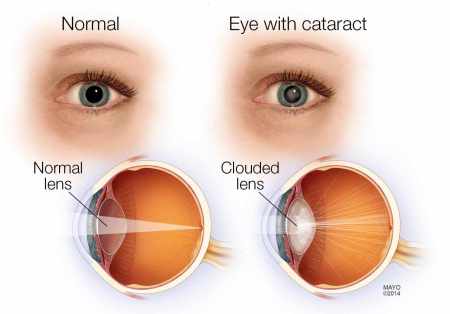
Generally, a cataract does not cause pain, redness or tears. Cataracts are most likely caused by changes related to aging. Throughout our lives, our bodies replace old cells with new ones. As we grow older, the old cells in our eye’s lens build up and block light as it tries to pass through. The end result is cloudy vision.
The National Eye Institute recently sponsored the Age-Related Eye Disease Study 2 (AREDS2), which revealed that lutein and zeaxanthin supplementation reduced the risk of progression of AMD, one of the leading causes of blindness and visual impairment today.
They recommend it is best to take steps to slow down, if not prevent developing cataracts in your precious eyes. Preventing vision damage starts with replenishing the nutrients your eyes lose before it starts. Specialized supplements designed for eye health help safeguard your sight—naturally.
The eye supplement I use offers superior vision support in high-glare and low-light conditions while promoting macula, retina, and lens health. I take just one softgel a day to helps maintain my visual acuity. After all, it’s never too late to protect your eyes!
PreventBlindness.org offers this Facts & Myths About Cataracts Fact Sheet to further explain cataracts.
.

Beauty Comes from the Inside
Shiny hair, robust nails, and bright skin can be signs of a great beauty regime…the things you do for the outside of your body. But as the article below from “The Healthy Food Guide” explains, your skin, hair, and nails are even more dependent on what’s going on INSIDE your body.
Your diet can be a huge determinant of the appearance of your skin, hair, and nails. The discussion from dietitian, Cindy Williams, speaks to the things that you can do to ensure that you are as beautiful as can be.
Be sure your diet includes plenty of protein (preferably lean) because our skin, hair, and nails are mostly protein. Essential fats are also part of internal health and beauty. Avoid the fats that are part of sugary snacks you may crave. The fats we refer to are essential Omega-3 and Omega-6 which occur in many seafoods. Eating fish, especially oily fish two or three times a week can help.
Foods high in iron not only will help maintain the cosmetic results you are seeking, it will bolster your energy levels, as well. Red meats are the best source of iron. If you avoid meats, you can get iron from legumes and whole grains, remember to assure proper absorption by supplementing with vitamin C.
Whole grains will add vitamin B (the skin vitamin) and the powerful antioxidant, vitamin E, will guard against dry skin. Nuts should also be part of your “beauty diet”. They provide additional essential fats. Nuts also offer a healthy alternative to higher calorie snacks and control your appetite.
Citrus for vitamin C, orange, yellow, red and green vegetables provide beta-carotene and vitamin A. Finally, hydrate with water and black, green and white tea to get the benefits of flavonoids which will help protect your skin from UV damage.
I’m excited that the company I am associated with keeps its pulse on the consumer trends. They just developed an incredible supplement designed to target skin, hair, and nails. I plan on adding it to my daily supplements. Balance your dietary changes with healthy exercise and supplements that really work!
https://www.healthyfood.co.nz/articles/2008/june/8-steps-to-healthy-skin-hair-and-nails

Contamination in Cosmetics
We all know that we have to take care with what we put IN our bodies. It is not as evident that we must take care of what we put ON our bodies, as well. Recently, news came to light about asbestos discovered in cosmetic products at Claire’s stores. They were quickly removed from the shelves.
There are other dangers that can be associated with cosmetics and other beauty products. We assume that government regulations are protecting us, but as the article below points out, The F.D.A. has only 6 inspectors to monitor the millions of cosmetic shipments coming into the U.S. each year.
I have included two articles below (of which there are many) that point out some of the risks that we take when using cosmetics and other beauty products. The majority of imported products are safe, but a surprising number of those imports (15-20%) led to adverse findings. Among the problems found were bacterial contamination, illegal color additives and unsafe chemical substances like mercury were discovered.
The problem is that the F.D.A. does so few inspections of imports (less than 0.3 percent) from South Korea, China, India, Canada, and France that it is impossible to predict how widespread the problems really are.
The government is attempting to get more control over the problems. Yet for now, the best anyone can do to protect themselves is to purchase and use domestically produced personal care products from companies that use the highest standards for approval methods. I’m proud to be associated with a company that applies only the highest standards in their ingredient formulation and manufacturing processes. For the safety of myself and my family, I choose to use products that have already been proven safe and effective.
www.asbestos.com/news/2017/12/28/claires-recall-asbestos-makeup/

Low Sodium Foods to promote heart health
Most people eat much more sodium (salt) than they need. This can lead to health problems like high blood pressure. To lower the amount of sodium in your diet, follow these tips when you go food shopping:
- Choose fresh instead of processed foods when you can.
- Use the Nutrition Facts label to check the amount of sodium. Look for foods with 5% Daily Value (DV) or less. A sodium content of 20% DV or more is high.
- Look for foods labeled “low sodium,” “reduced sodium,” or “no salt added.”
To preserve your heart and keep pressure in check, get plenty of fruit and vegetables.
- Any fresh fruits, like apples, oranges, or bananas
- Any fresh vegetables, like spinach, carrots, or broccoli
- Frozen vegetables without added sauce
- Canned vegetables that are low in sodium or have no salt added
- Low sodium vegetable juice
- Frozen or dried fruit (unsweetened)
- Canned fruit (packed in water or 100% juice, not syrup)
Breads, Cereals, and Grains
Compare labels to find products with less sodium. When you cook rice or pasta, don’t add salt.
- Rice or pasta
- Unsweetened oatmeal
- Unsalted popcorn
Tip: If your food comes with a seasoning packet, use only part of the packet. This will lower the amount of sodium in the food.
Meats, Nuts, and Beans
Choose fresh meats when possible. Some fresh meat has added sodium, so always check the label.
- Fish or shellfish
- Chicken or turkey breast without skin
- Lean cuts of beef or pork
- Unsalted nuts and seeds
- Dried peas and beans
- Canned beans labeled “no salt added” or “low sodium”
- Eggs
Dairy Products
Choose fat-free or low-fat milk and yogurt. Be sure to check the label on cheese, which can be high in sodium. Milk and yogurt are also good sources of potassium, which can help lower blood pressure.
- Fat-free or low-fat (1%) milk
- Fat-free or low-fat yogurt
- Low- or reduced-sodium cheese (like natural Swiss cheese)
- Soymilk with added calcium
Dressings, Oils, and Condiments
When you cook, use ingredients that are low in sodium or have no sodium at all.
- Unsalted margarine and spreads (soft, tub, or liquid) with no trans fats
- Vegetable oils (canola, olive, peanut, or sesame)
- Sodium-free, light mayonnaise and salad dressing
- Low-sodium or “no salt added” ketchup
- Vinegar
Seasonings
Try these seasonings instead of salt to flavor your food.
- Herbs, spices, or salt-free seasoning blends
- Chopped vegetables, like garlic, onions, and peppers
- Lemons and limes
- Ginger
Supplements
Sometimes food alone doesn’t work and we want to avoid a regimen of prescribed medications. So we had supplements to keep high blood pressure away.
- Grape Seed/Skin Extract
- We use a super-concentrated, natural extract associated with maintaining healthy blood pressure already in the normal range and also supports healthy endothelial function. The power of nearly 10,000 grapes in every bottle—ProvexCV® Blood Pressure Support.

Heart-Healthy Foods to Prolong Your Life
When it comes to your heart, what you eat matters. Follow these tips for heart-healthy eating:
- Eat less saturated and trans fat. Stay away from fatty meats, fried foods, cakes, and cookies.
- Cut down on sodium (salt). Look for the low-sodium or “no salt added” types of canned soups, vegetables, snack foods, and lunch meats.
- Get more fiber. Eat vegetables, fruits, and whole grains to add fiber to your diet.
Take this list with you the next time you go food shopping.
Vegetables and Fruits
Eat a variety of vegetables and fruits. Buy vegetables and fruits that are in season, frozen, or canned.
- Fresh vegetables such as tomatoes, cabbage, and broccoli
- Leafy greens for salads, like spinach and kale
- Canned vegetables low in sodium (salt)
- Frozen vegetables without added butter or sauces
- Fresh fruits such as apples, oranges, bananas, pears, and peaches
- Canned fruit in 100% juice, not syrup
- Frozen or dried fruit (unsweetened)
Dairy Products
Look for fat-free or low-fat milk products. Or choose soymilk with added calcium.
- Fat-free or low-fat (1%) milk
- Fat-free or low-fat yogurt (choose options with less added sugar)
- Cheese (3 grams of fat or less per serving)
- Fat-free or low-fat soymilk with calcium
Breads, Cereals, and Grains
For products with more than one ingredient, make sure whole wheat or another whole grain is listed first.
- 100% whole-wheat bread
- Whole-grain breakfast cereals like oatmeal
- Whole grains such as brown or wild rice, barley, and bulgur
- Whole-wheat or whole-grain pasta
Meat, Beans, Eggs, and Nuts
Choose lean cuts of meat and other foods with protein.
- Seafood, including fish and shellfish
- Chicken and turkey breast without skin
- Pork: leg, shoulder, tenderloin
- Beef: round, sirloin, tenderloin, extra lean ground beef (at least 93% lean)
- Beans, lentils, and peas
- Eggs and egg substitutes
- Unsalted nuts and seeds
Fats and Oils
Cut back on saturated fat and look for products with no trans fats.
- Margarine and spreads (soft, tub, or liquid) with no trans fats
- Vegetable oil (canola, olive, peanut, or sesame)
- Non-stick cooking spray
- Light mayonnaise
- Salad dressings that are oil based instead of creamy
Daily Supplements
For most people, diet and exercise aren’t enough to deliver optimal heart health. That’s why we use proven, natural solutions yo address six controllable factors for optimal heart health.
- Omega-3s are good fats—polyunsaturated fats—that are derived from fish, nuts, and seeds. Our favorite is Crème Delight®— Peach Mango Tango with 1,080mg of research-proven EPA/DHA essential fatty acids, this supplement provides daily support for eye, heart, and brain health–in a flavor the whole family loves.
-
Mom used to give us cod-liver oil every morning especially in winter to help us avoid flu and keep us healthy. The taste was not a favorite and we weren’t enamored of it. Today we use Vitality Coldwater Omega-3® a pure, concentrated DHA and EPA Omega-3’s for superior cardiovascular and brain health benefits. Two soft gels include the research-recommended dose with no fishy aftertaste.
-
CardiOmega EPA®— with 1,000 mg of EPA plus 100 mg DHA this supplement is designed to support high levels of activity, since we’ve become serious about fitness and getting to a healthy weight, we find this helps promote rapid recovery and reduce activity-induced inflammation all while protecting our heart.
Take care of your heart, it’s the only one you have!
Does the concept of earning a secondary income from home intrigue you?
Let’s face it; there are many inviting things about a work from home opportunity.
Flexibility of your schedule, earning while you sleep, living debt free, being your own boss etc. I am sure you have heard all the promises before but something has you skeptical. GOOD FOR YOU! There is a lot of reason to have that doubt! News paper articles about the FTC shutting businesses down for bad practices, stories of people getting scammed out of investment money, stocking a crap load of product only to be stuck with it and sometimes even seemingly legit opportunities that have made many people money close their doors leaving thousands with shattered dreams. I’m here to tell you that it is not all bad!
My good friend Ed Bestoso shares with us in this quick 2 minute video a few of the reasons you should review when looking at different companies. We are doing things for the right reasons with the right formula and the right way! If it makes sense to you, I have a checklist after the video to help you determine if you already shop for these products.
CLICK HERE TO CHECK AND SEE IF YOU ALREADY SHOP FOR THESE PRODUCTS!

