Green Living

Hayseeds Creative Wellness

I’m also partnered with a 35 year-old health and wellness manufacturing company that is privately held with more than a billion dollars in sales, and 100% debt free. All of the products are manufactured in the US and are science-based, non-grocery, green, and eco-friendly. With more than 500 products, from shampoo to foot cream, from supplements to coffee, we have products for everyone.

What I do is educate consumers on the brand and why it make sense to shop here. I help customers open their online shopping accounts to get great products at discounted prices. The best part about this shopping club is that there is a 96% percent reorder rate. The products are that good.

These types of products will always be in the homes of everyone I know and everyone I don’t know, so my ideal client is anyone who uses toothpaste, deodorant, nutritional supplements, personal products, household or cleaning supplies and wants to save money on high quality products at Costco prices shipped directly to your door.

Living longer with coffee?

Feel free to pour yourself a cup of coffee before reading this — even if you’ve already had some today.

A study of half a million people found more evidence that drinking coffee is associated with a longer life


Yet another study has found that drinking coffee is associated with a longer life and lower risk of an early death. This adds to a significant body of research indicating that coffee has positive effects on the heart, liver, brain, and more.

The latest study, published in the journal JAMA Internal Medicine, reveals that people who drink more coffee have a lower risk of death even if they drink eight or more cups per day. The study, also found that even people who metabolize caffeine slowly are less likely to die early if they drink more coffee.

The study looked at 500,000 people in the UK for three decades., of whom 387,494 were coffee drinkers. The group studied was 54% female and had an average age of 57. Ten years after the start of the study, 14,225 people had died. The results suggested that people who drank two to five cups of coffee in a day were about 12% less likely to die than non-coffee-drinkers over the 10-year time period in the study. People who drank six to seven cups were 16% less likely to die, and people who drank eight or more cups were about 14% less likely to die.

In this study, coffee drinkers seem to gain health benefits from the habit. The study results showed coffee drinkers had a lower risk of death overall, just as many other studies have found.

It didn’t matter whether the coffee was decaf or regular, ground or instant — all were beneficial (though the connection to lower risk of death was weaker for instant coffee).

As with all studies like this in which researchers observe a group of people over time, this study can’t prove that coffee is the cause of the reduced risk of death. It can just say that people who drink coffee are less likely to die early.

Another large study of 500,000 people in Europe showed similar results to the recent UK research: men who drank three cups of coffee per day were 12% less likely to die over a 16-year period than coffee abstainers, and women who drank that much coffee were 7% less likely to die.

Another study of 185,855 multi-ethnic Americans confirmed that result, too. People who drank one cup per day were 12% less likely to die. Consuming two to three daily cups was associated with an 18% decrease in risk for early death. That study is particularly important, as it shows these benefits apply to African Americans, Native Hawaiians, Japanese Americans, Latinos, and white people. (People of color are not always as well represented in these types of studies.)

Other research has indicated that coffee drinkers are less likely to develop various forms of cancer, Type 2 diabetes, depression, Alzheimer’s, dementia, liver cirrhosis, and heart disease.

In many studies, it hasn’t mattered whether coffee was caffeinated or not, which indicates that many benefits may not be connected to caffeine — there are all kinds of other antioxidant-rich compounds in coffee that could have an effect. Still, at least one recent study attributed the lower risk for cardiovascular disease and stroke to caffeine, though those researchers still cautioned that overdoing it with caffeine was possible.

As all this data shows, coffee is likely beneficial for most of us, and at the very least not harmful. So the next time someone says they’re trying to limit their coffee consumption, you can tell them not to worry about it.

My favorite brand of coffee is Mountain Cabin what’s yours?

Did you know. . .

Regular #PhysicalActivity can help reduce your risk for colorectal cancer. Take steps to #GetActive today: http://1.usa.gov/UNrlVO

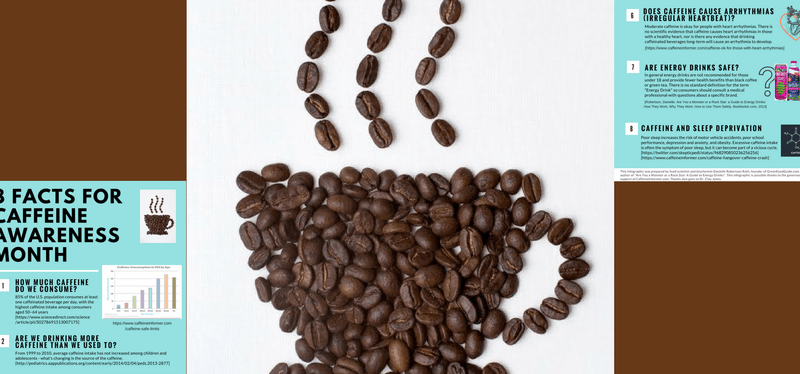
Caffeine Awareness Month

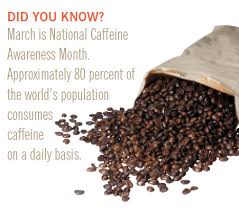
March is Caffeine Awareness Month, which comes at a time when caffeine from coffee, tea, energy drinks, chocolate bars, and other foods and beverages is an especially buzz-worthy topic for consumers around the world.

I love coffee and chocolate and have a tendency to consume one or the other (sometimes both together) daily. A day without chocolate is a day without sunshine! Both are considered sources of caffeine.

The 2015 Dietary Guidelines for Americans (DGAs) published recommendations mentioned caffeine 414 times, and provided an evidenced-based guideline indicating caffeine consumption of up to 400 mg/day, or approximately three to five 8-oz. cups of coffee per day, can be incorporated into healthful, daily eating patterns.

While the DGAs are primarily centered on coffee, there are several sources of caffeine that can contribute to this recommended 400 mg threshold.

Ever wonder which foods contain caffeine and how much is recommended for you?  Let’s take a quick look at a few common food and beverage sources and how much caffeine they contain:

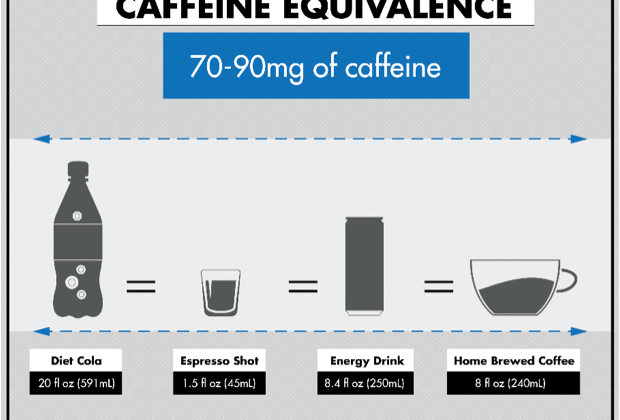
  • An 8.4-oz. energy drink, a 20-oz. diet cola, and a shot of espresso, all sources of caffeine, contain about the same amount as a cup of coffee (80 mg).  Other recognizable choices include:
  • A cup of green tea or a 12-oz. can of soda, both of which contain about 40 mg of caffeine.
  • A 1.5-oz. chocolate bar, which contains about 10 mg of caffeine, whereas a darker chocolate bar the same size contains about 30 mg of caffeine. (No wonder I prefer dark chocolate!)

So know your sources of caffeine and the amounts.  It all adds up across the day.

What’s your favorite chocolate or coffee?

Working at my peak

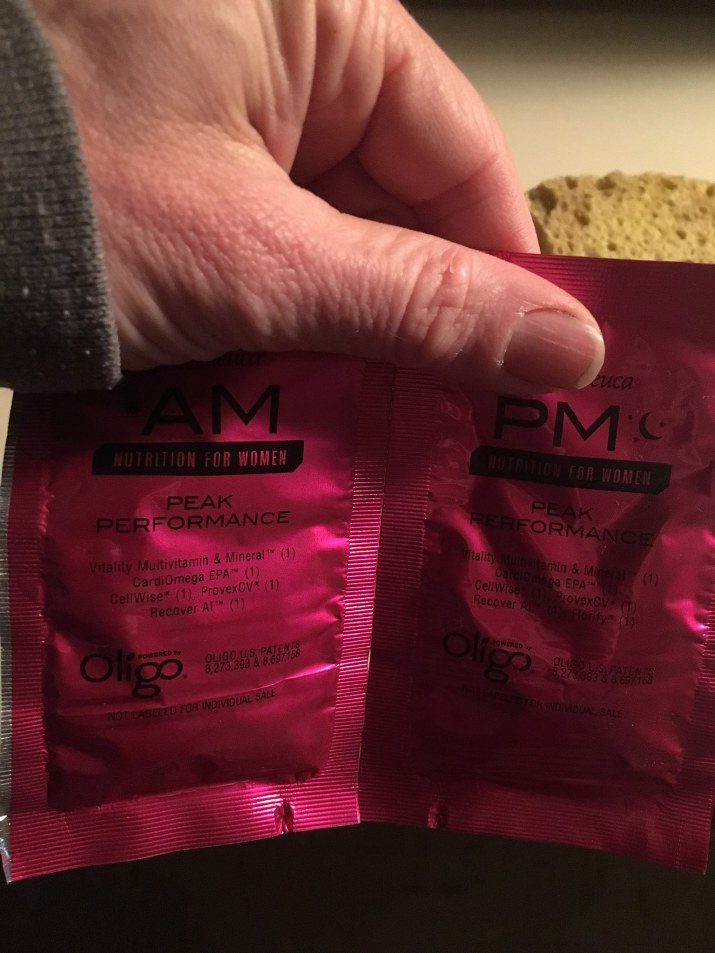
It’s a Monday and we are back in the groove for a very busy work week. I am so thankful for America’s best kept secret: Peak Performance.

I know daily exercise and proper nutrition gives me the best chance of living a longer, healthier, and more vibrant life. My Peak Performance Pack has been shown in two separate human clinical studies to reduce free radicals so I can add years to your life and life to my years.

It’s the one product I can’t live without.

#americasbestkeptsecret

#peakperformance

78% of Americans live paycheck to paycheck

Yes, it’s unfortunately true. 78% of Americans live paycheck to paycheck. There are some who think that number is probably higher, if you take into account the recent government shutdown and the number of employees seeking assistance from food pantries.

It’s sad when these same people look at retirement. How do you compare? Are you living paycheck to paycheck? If so, do you have a plan to escape this statistic? Having a back up or a plan B already in place is a smart idea.

Think about this:
What if you took the next few years to build a residual income-based business in your spare time, a business that can generate thousands (even tens of thousands) each month—how would that change your future outlook on retirement?

Would you:
Help take care of your elderly parents? 
Help your kids go through college? 
Help you pay off debt?
The options are endless.

What’s important is you have a plan that will work for you and give you what you need when that time comes.

I knew I would need an additional method to fund my future retirement, and I am so thankful I found a business that can help me do exactly that!
If you’re looking for a few hundred a month or a few thousand, message me today. You can join me on that path today!

Healthy snacking

Eating healthy doesn’t mean you have to constantly deny yourself of all those delicious treats and snacks forever.

Making and eating healthy homemade snacks can be easy with GC Control Brownies and muffins. and… are they ever delicious!

To make basic muffins:
Preheat oven to 350°
1 egg beaten well
1/2 cup milk
1 cups GC Control any flavor
1 tsp. baking powder
Splash of Vanilla
Thoroughly blend all ingredients in a medium bowl.
Prepare muffin pan by spraying or brushing with a non-stick oil
Pour mixture into muffin pan.
Bake for 12-15 minutes.
Yields 4 – 6 muffins

Breakfast muffins.
I have these for breakfast or as a snack with coffee or tea.
Preheat oven to 350°
2 cups GC Control any flavor ( I used Apple Cinnamon)
1 tsp baking powder 
3 whole eggs
1 cup water or milk 
Bake for 20 minutes.
Yields 12 muffins

Brownies:
Preheat oven to 400°
2 cups GC Control Chocolate
1 tsp. baking powder
1 cup 2% milk (can also use fat free)
Mix all ingredients together and pour into baking pan.
Bake for 20 minutes.

GC Control Chocolate Mousse
1 scoop GC Control Chocolate
1 cup heavy whipping cream
Vigorousl shake ingredients until well-blended
Pour into glass.

GC Control Peanut Butter Cup
4 tbsp Coconut oil
8 tbsp GC Control Chocolate
Small amount of Peanut butter or Almond butter
Melt oil and mix with GC Control until smooth
Fill six muffin cups with half the mixture
Place dollop of nut butter in center of each half-filled muffin cup
Fill muffin cup with remaining chocolate mixture
Freeze for 30 minutes and enjoy
Store in refrigerator

Attain Pudding
1 scoop Attain Shake mix (any flavor)
3 tbsp water
Add ingredients to small ice cream size dish
Mix vigorously until thick and smooth.
Freeze for 20 minutes
Enjoy!

Healthy Gingerbread And French Vanilla Cookies
Preheat oven to 400°.
1/2 cup Unbleached Flour
2 scoops GC Control Gingerbread
1 scoops GC Control French Vanilla 
1/3 cup Eggland Eggwhites
1 cup Organic So Delicious Unsweetened Coconut milk
1 TB Organic Coconut Palm Sugar
2 TB Organic Earth Balance Butter
1tsp Organic ground ginger
2 tsp pure baking soda
1/2 tsp pure vanilla extract
2 tsp ground cinnamon

In large bowl add all ingredients.
Use electric mixer on low for 3-4 minutes.
Put mixture in the fridge for 5-10 minutes to harden slightly.
Spray two flat rectangular trays with non stick Extra Virgin Olive Oil.
Bake for 15 minutes.
Yield: 30 cookies.
Each cookie has 28 cal, 3g carbs, 1g fat, 2g protein, 1g fiber and 1g sugar.

Challenges to Millennials

Millennials are facing significant and unique challenges as they enter the workforce, the housing market and attempt to construct their futures. An article in the Detroit Free Press illustrates the realities and the obstacles they face.

Many millennials have accumulated thousands in education debt. These 25-34 year-olds now average over $33,000 in education debt. Nearly 50% of families with the head of household under 40 years of age owe money for student-related loans.

Although the recent economic recovery, has helped, there are still challenges to finding decent jobs in this demographic. Many drop out of college because of anxiety regarding growing their debt—and indicators are that even those who have not accumulated debt by choosing higher education are facing the same challenges to their financial futures.

Millennials are bringing home significantly smaller paychecks, making it less likely for them to be able to own a home or save anything for their retirement. In essence, millennials are accumulating assets at a much lower rate than those only 25 years ago.

Many are seeking alternative careers. Some becoming entrepreneurs and experimenting in businesses of their own—searching for answers. But new businesses contain risks of their own, including significant up-front investments, which can begin the debt cycle all over again.

The company with which I am associated offers millennials alternatives that can help turn their frustrations into opportunities. It eliminates risk and is virtually at no investment. It gives millennials the opportunity to begin wealth creation and much brighter futures. There is hope, young people. 

www.freep.com/story/money/personal-finance/susan-tompor/2018/04/25/student-loans-millennials-generation/537227002/

Beware the medicine cabinet

When we think about pet-proofing our homes, it makes sense to put away leftover food, cover the garbage bin, and make sure your favorite slippers are out of reach. However, securing the medicine cabinet probably isn’t the first thing that comes to mind, but perhaps it should be. The Pet Poison Hotline reports that nearly 50% of all the calls they receive involve human medications, both prescription and over-the-counter.

The following common medications pose a serious threat to pets:

  • NSAIDs –  Non-steroidal anti-inflammatory drugs, such as Advil, Naproxin, and Aleve, are staples in many medicine cabinets, but even one or two of these pills can cause serious stomach ulcers and liver failure in pets.
  • Tylenol – Acetaminophen, the active ingredient in Tylenol, is considered very safe for humans. Dogs and cats can suffer serious side effects from even small amounts of the drug. Cats in particular are highly susceptible to the effects and can suffer red blood cell damage as a result.
  • Anti-anxiety medications –  Drugs like Ambien, Lunesta, and Xanax are designed to reduce anxiety and help people sleep better, but they can cause extreme agitation in dogs. Cats who ingest one of these medications can become lethargic, uncoordinated, and may suffer liver failure.  
  • ADD/ADHD medications – Adderall, Concentra, Ritalin, and similar medications contain a combination of stimulants (such as amphetamine and methylphenidate) that pose a serious risk to pets. Even a small amount can cause life-threatening seizures, tremors, elevated body temperature, and heart problems.
  • Blood pressure medications – Beta blockers like Tenormin, Toprol, and Coreg save human lives by treating high blood pressure, but pets who ingest these drugs experience a life-threatening drop in blood pressure and heart rate.
  • Thyroid hormones – If large amounts of human thyroid hormone drugs are consumed by a pet, they can experience muscle tremors, nervousness, increased panting, and aggression.
  • Cholesterol-lowering drugs – Statin use is extremely common in America. Fortunately, statin overdose in pets usually isn’t too serious. Typical side effects include mild vomiting and diarrhea.
  • Pet medications – Pets can easily overdose on medications that have been prescribed to them, such as parasite preventives and painkillers. These medications are often flavored to make them more enticing, which makes them even more tempting to pets.

Preventing the Worst

Accidental pet poisonings are one of the most common reasons pet owners seek emergency veterinary care. Follow these tips to keep your furry loved one safe:

  • Store all medications out of your pet’s reach. Do not leave pills in plastic baggies, as these are easily chewed through. If you store pills in a weekly pill divider, make sure this is kept in a place your pet can’t access (many pets find these plastic containers fun to chew on).
  • Pick up any dropped pills immediately before your pet has a chance to investigate. Never leave loose pills on the counter or other surfaces where they may be accidentally knocked on the floor.
  • Don’t store human medications near pet medications. It’s easy to confuse the two.
  • Backpacks and purses often contain medications, food scraps, and other items that pets find enticing. Hang up purses and backpacks as soon as you get home.
  • Never give your pet any medication, supplement, or home remedy without first consulting your veterinarian.

Please don’t hesitate to contact your veterinarian  with any questions or concerns regarding pets and medications. It’s the bet way to keep your pet safe!


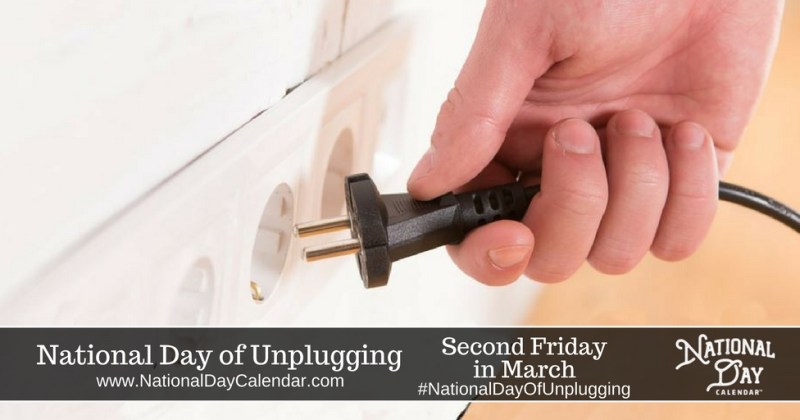
National Day of Unplugging

The second Friday in March is the National Day of Unplugging and today just so happens to be the day.

So for 24 hours (ideally from sundown to sundown) we take a break from technology by unplugging, unwinding, relaxing and doing things other than using today’s technology, electronics, and social media. Take a break from technology and use #NationalDayOfUnplugging to post on social media the day before to spread the word.

How do you plan to unplug?

Hayseeds Creative

Enhancing Lives

Skip to content ↓