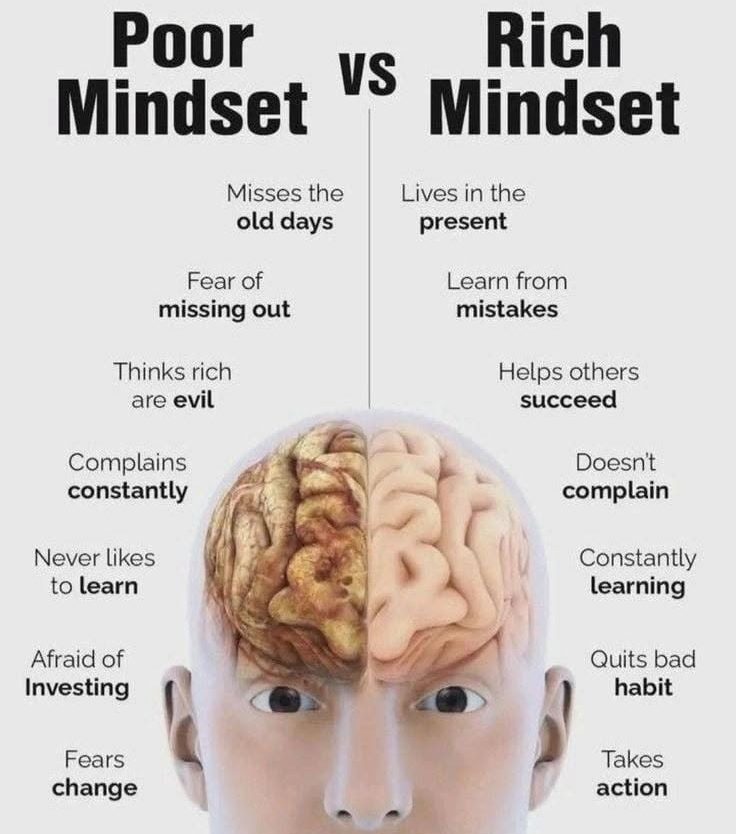


Which do you have?
Our mindset plays a crucial role in shaping our lives, influencing our decisions, and ultimately determining our success. Understanding the difference between a poor mindset and a rich mindset can help you identify where you stand and how you can grow.
Poor Mindset: Scarcity, Fear, and Limitation
A poor mindset is characterized by:
- Scarcity Mentality: This mindset focuses on the belief that resources, opportunities, and success are limited. Individuals with a scarcity mindset often feel that there isn’t enough to go around, leading to competition rather than collaboration.
- Fear of Failure: People with a poor mindset may avoid taking risks due to a fear of failure. They often see setbacks as insurmountable obstacles rather than opportunities for growth.
- Limitation in Thinking: A poor mindset limits one’s potential by fostering negative beliefs about what is achievable. This can lead to a sense of hopelessness and stagnation.
Rich Mindset: Abundance, Possibility, and Growth
In contrast, a rich mindset embodies:
- Abundance Mentality: Those with a rich mindset believe that there are plenty of resources and opportunities available. They see the world as a place full of potential and are open to collaboration and shared success.
- Resilience and Growth: A rich mindset embraces challenges as opportunities to learn and grow. Individuals with this mindset are more likely to bounce back from setbacks and view failures as stepping stones to success.
- Possibility in Thinking: A rich mindset encourages expansive thinking, allowing individuals to envision a future filled with possibilities. This mindset fosters creativity and innovation.
The Role of Personal Growth
The good news is that the only person who can change your mindset is you. Personal growth is essential in shifting from a poor mindset to a rich mindset.
Here are some effective strategies to cultivate a rich mindset:
- Read Inspirational Books: Books that focus on personal development, success stories, and positive thinking can provide valuable insights and motivation.
- Listen to Podcasts: There are countless podcasts that explore topics related to mindset, motivation, and personal growth. These can help inspire you and offer practical strategies for change.
- Attend Motivational Workshops: Participating in workshops and seminars can provide a supportive environment for learning and growth. Surrounding yourself with like-minded individuals can also boost your motivation.
- Practice Gratitude: Regularly reflecting on what you are grateful for can shift your focus from scarcity to abundance, helping to foster a more positive mindset.
- Set Goals and Take Action: Establishing clear goals and taking actionable steps towards achieving them can reinforce a rich mindset, as it creates a sense of purpose and direction.
What Do You Do to Keep a Healthy Mindset?
Maintaining a healthy mindset is an ongoing journey. What practices do you implement in your daily life to support a rich mindset? Whether it’s meditation, journaling, or simply taking time for self-reflection, share your tips for fostering a healthy mindset!
By consciously working on our mindset, we can create a more fulfilling and successful life. Remember, the power to change your mindset lies within you. Choose to embrace abundance, possibility, and growth!
Feel free to share your thoughts in the comments below! How are you cultivating a rich mindset in your life?