Can I Slow Down The Aging Process?

Yes, you can.

Telomeres are the protective caps, located at the ends of chromosomes. They play a critical role when it comes to healthy aging.

But what can we do to extend those telomeres?

  • One study found that daily vitamin D supplemen-tation helps to minimize the shortening of telomeres, which happens as people get older, and thus may protect against diseases tied to age and biological aging.
  • The data suggested that vitamin D’s effects on a cellular level would be equal to a three-year decrease in aging.

Always request your Vitamin D labs so you can keep an eye on this important marker.
Your goal?
Always over 50 and ideally over 60 and beyond!

EPIDEMIC: VITAMIN D DEFICIENCY!

Publications support the theory that we have an epidemic of vitamin D deficiency. It’s estimated that nearly half of Americans have “insufficient” vitamin D levels (under 29 ng/ml) and 14 percent are deficient (under 19.6 ng/ml). On the other hand, Vitamin D blood levels of 50 ng/ml or higher have been found to protect against respiratory infections like influenza and corona-type viruses.

I know many people believe that “I get my Vitamin D from the sun” and I know Ido a well. But there are a few various factors limit adequate D absorption from sun exposure (age, skin tone, your BMI, geographic location, time of year, infection). Just because I’m in Florida and out in the sun every day, it doesn’t mean I don’t need to supplement with Vitamin D and D3/K2 in order to keep my vitamin D at a healthy level. Remember too, when we use sunscreen, we block out 98% of the Vitamin D we would normally absorb..

At your next physical, be sure and request your D3 lab marker. If you don’t request it, the doctor won’t do it!

Battling SAD (Seasonal Affective Disorder)

Winter typically presents challenges to both our physical and emotional health. Seasonal Affective Disorder from the short days, dealing with difficult relationships, financial stress, inclement weather, or a host of other issues, it can be a tough time.

I’m not an authority on this subject, but I have observed a number of things that can help keep you physically and emotionally healthy during this time.

There’s less daylight and your skin is almost totally covered with clothing such that your natural vitamin D production is almost nil. Those short days also lend themselves to Seasonal Affective Disorder (SAD) which can not only depress your immune system, but also affect you emotionally.

Your home and workplace is shut up, so you have a lack of fresh air and a greater exposure to disease-causing microorganisms. That closed environment also makes it easier for you to get infections from those around you.

Colder temperatures are also just more stressful on your body, requiring greater adaptation to stay healthy. So what can you do:

1. Be sure to take at least 2000 i.u.’s of Vitamin D-3 daily — you may need more, especially if you live in a non-sunny climate. Check with your health care provider before adding more than that. Sunlight is the primary source for this essential nutrient. Between sunscreen use and modern lifestyles that keep us indoors during the sunniest parts of the day, most of us don’t get the sun exposure we need to produce required amounts of vitamin D. According to research published in the Archives of Internal Medicine, three-quarters of U.S. adults and teens are vitamin D deficient!

2. Get some fresh air in your home, even if that’s just opening some windows for a few minutes or leaving a window cracked in your bedroom at night.

3. If you are particularly bothered by the short days, consider getting one of the specially designed full-spectrum lights and expose yourself to it in the early morning and late afternoon.

4. Take other immune system stimulating supplements. In  in addition to Vtamin D, I take Activate Immune Complex. It’s a combination of scientifically formulated nutrients, extracts and vitamins ( Vitamin C, Vitamin E, Zinc, Echinacea, Astragalus and Aronia in an exclusive combination that’s been shown in scientific studies to help support the body’s own defense mechanism—the immune system.*

*This statement has not been evaluated by the Food and Drug Administration. This product is not intended to diagnose, treat, cure, or prevent any disease.

Tis the season for vitamin D3

I don’t know about you, but since the time change occurred earlier this month, I feel I’ve been dragging. Yes, I’m still getting 12,000 – 15,000 steps a day and rowing three times a week and swimming twice a week, but I feel tired. It’s probably because I’m not seeing as much sunlight as I was and the current rainy season hasn’t been giving me a healthy dose of sunshine or vitamin D either.

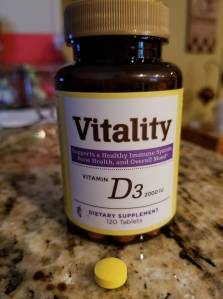
It’s time for me to add vitamin D3 back into my diet.  This is the brand I use to keep my vitamin levels up. I have come to trust this company’s  standards of  development and processed at only $7.49, it’s a bargain to stay healthy!
It helps me battle infections and elevates my mood and with the holidays coming I can’t afford a single down day. How about you? do you take vitamin D?

To learn more about vitamin D and a healthy lifestyle, check out some of my previous blogs on this vitamin supplement.
Vitamin D and the risk of breast cancer 

Sunshine in a bottle: Vitamin D3

Do you need to add vitamin D and calcium to your diet?

Vitamin D and the risk of breast cancer

With the exception of skin cancer, breast cancer is the most common form of cancer among women – the disease claims the lives of about 41,000 women every year in the United States. There is mounting evidence that maintaining healthy vitamin D levels can protect against a variety of diseases, especially breast cancer.

The U.S. Centers for Disease Control and Prevention (CDC) reports that women are at increasing risk for breast cancer as they age, and notes that the average age of diagnosis for women is 61. According to a new study conducted by researchers at University of California San Diego School of Medicine—published in June in PLOS Onewhich involved more than 5,000 postmenopausal female participants over 55 (average age: 63) showed that higher levels of vitamin D are linked with decreasing risk of breast cancer.

The study suggests that the minimum vitamin D blood level for protective health benefits is 60 nanograms per milliliter – exactly three times the 20 ng/mL amount recommended in 2010 by the National Academy of Medicine.

Maintaining optimal levels of vitamin D appears to result in a substantial health dividend – participants with blood levels above 60 ng/mL had one-fifth the risk of breast cancer when compared to women with levels of under 20 ng/mL. The study shows a strong association between vitamin D levels and reduction in breast cancer risk. The team found that women with vitamin D levels of at least 38 ng/mL were 21 percent less likely to develop cancer, when compared with women who had levels of 24.6 ng/mL or less. (Note: a measurement of under 20 ng/mL of vitamin D is considered a deficiency).

Researchers also found that taking a vitamin D supplement at least four times a week could cut cancer risk by 11 percent—this association was even more pronounced in postmenopausal women. Supplement use in this group was linked to a 17 percent reduced risk for breast cancer.

Healthy vitamin D levels have also been associated with lowered risk of lung and bladder cancers, multiple myeloma, adult leukemia, heart attack, heart disease, high blood pressure and stroke. Some scientists say that vitamin D can also help to activate longevity genes.

Not only can vitamin D help prevent cancer, but actually lead to better outcomes in those who develop the disease as a study published in JAMA Oncology stated, breast cancer patients with the highest blood serum levels of vitamin D had the highest likelihood of surviving the disease.

Vitamin D is produced in the skin in response to sunshine, you can raise your level by getting twenty minutes of direct sunlight three times a week. You can also boost your level with diet— eggs, cold-water fatty fish, organic mushrooms, soy and raw dairy foods. However, supplementation with vitamin D3 may be necessary in order to achieve optimal blood levels.

Experts advise vitamin D3, or cholecalciferol, over the D2 form of the vitamin as it has been found to be 87 percent more effective when it comes to raising blood levels.

The National Academy of Medicine recommends that adults take 600 IU of vitamin D3 a day, yet many health experts advise higher dosages because in order to reach the recommended concentrations of 60 ng/mL, most people need to take between 4,000 and 6,000 IU of vitamin D a day.

Obviously, before taking vitamin D, consult your doctor – who can advise a dosage that is right for you and get your vitamin D levels tested periodically.

As research continues to show, vitamin D has a major role to play in cancer prevention. Maintaining optimal levels might be one of the most important things you can do to protect yourself against this life-threatening disease.

Do you need to add vitamin D and calcium to your diet?

Because vitamin D helps your body absorb calcium, it plays a role in your bone health. Studies involving older adults have associated low vitamin D levels with an increased risk of falls and fractures. Another finding shows that at age 50, your kidneys may become less effective at metabolizing inactive vitamin D into its active form.

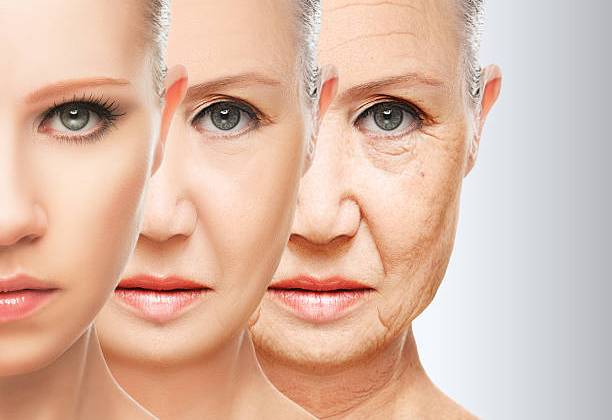
At age 70 and beyond, your body will produce about one-third less vitamin D through sun exposure than it did when you were 21. Plus melanin, which determines your skin pigmentation and protects your body from harmful ultraviolet radiation (UV),can also impair your skin’s ability to produce enough vitamin D from sunlight. Darker-skinned individuals may need up to 10 times more sun exposure to produce adequate vitamin D levels as compared to a person with lighter skin. Who knew?

Another good thing about getting adequate sun exposure is that your mood automatically elevates when you are in the sun, thanks to the brain hormone serotonin. Researchers examining the effects of vitamin D on the moods of 80 elderly patients found the ones with the lowest vitamin D levels were 11 times more likely to suffer from depression. So sunning daily and taking a vitamin D supplement can help ward off depression.

If you are obese, some experts recommend you increase your intake of vitamin D. Why? Because vitamin D is fat-soluble, when your fat cells uptake it, less is available for use elsewhere in your body.

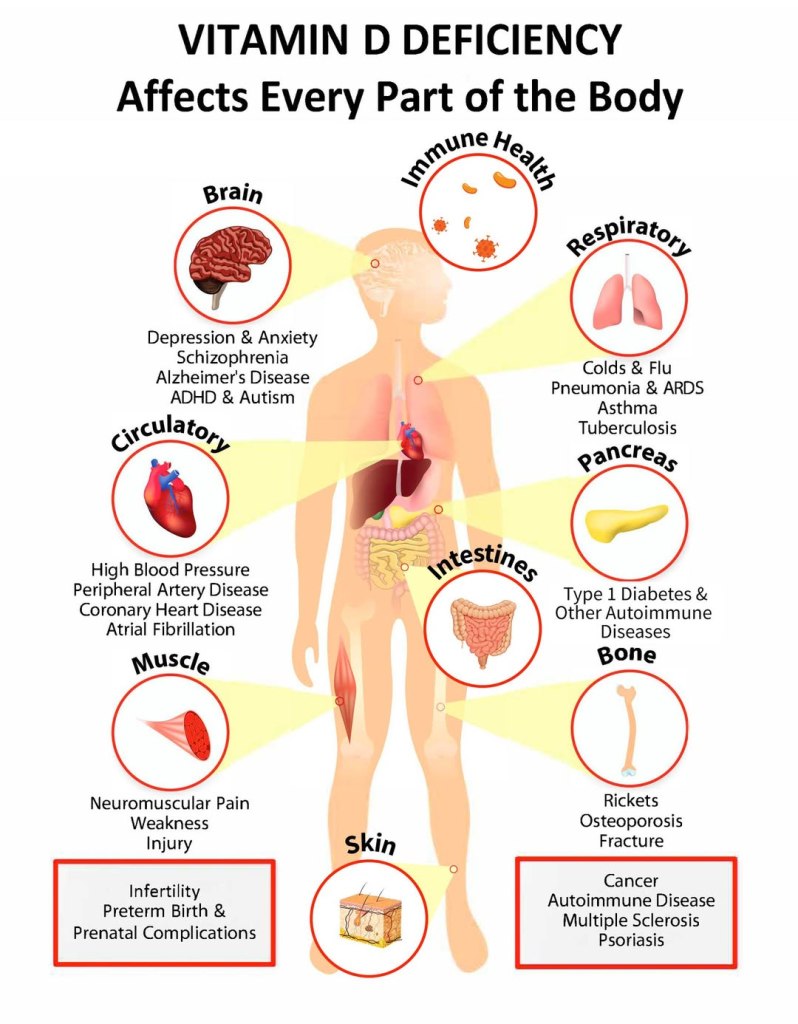
Here is a list of vitamin D deficiency symptoms that most people ignore from Healthyway.com.

The optimal vitamin D level for general health ranges between 40 to 60 nanograms per milliliter (ng/ml). The ideal way to raise your vitamin D is by regularly and sensibly exposing large amounts of your skin, such as your arms, back, chest and legs, to sunshine. Getting outdoors at or around solar noon is the best time to soak up the sun. If for whatever reason you cannot get outdoors, or not frequently enough to receive sufficient UV exposure, consider taking an oral vitamin D3 supplement along with vitamin K2 and magnesium.

My company offers a wonderful K2-D3 supplement, offering the right balance of vitamins K2 and D3 is critical to regulating calcium and helping ensure you get optimal performance from this essential mineral.

Sunshine in a bottle: Vitamin D3

The Harvard School of Public Health suggests an estimated 1 billion people worldwide have low vitamin D levels, with deficiencies noted across all age and ethnic groups.

You are at risk of missing out on vitamin D from natural sun exposure if you spend most of your time indoors, use topical sunscreens or wear long clothing for religious reasons.

This study from Health Impact News supports an important role for vitamin D in prevention of common respiratory infections, such as colds and the flu. Individuals with common lung diseases, such as asthma or emphysema, may be particularly susceptible to respiratory infections from vitamin D deficiency. Another study, done in Japan, indicated schoolchildren taking 1,200 units of vitamin D per day during winter reduced their risk of contracting the flu by about 40 percent.

Here is a list of vitamin D deficiency symptoms that most people ignore from Healthyway.com.

If for whatever reason you cannot get outdoors, or not frequently enough to receive sufficient UV exposure,consider taking an oral vitamin D3 supplement along with vitamin K2 and magnesium.

I take an excellent Vitamin D3 supplement that provides 2000 IUs of vitamin D3 to battle the effects of Vitamin D deficiency to support my immune system, bone health and mood. It’s the same vitamin D my body produces when exposed to the Sun without exposure to, harmful UV rays.
This combined with my Peak Performance = Optimal health!

Even if you are in good health, I encourage you to have your level tested twice a year by your primary health care provider and think about taking a vitamin D supplement like I do.