The art of coffee perfection

Mountain House Premium Coffee

Mountain Cabin Coffee has a unique coffee-crafting process is a careful combination of age-old artistry and state-of-the-art quality control. Their unique coffee-crafting process is a careful combination of age-old artistry and state-of-the-art quality control.
Here are six reasons why this coffee is so darn good!

  1. SOURCING: The exact location of the small, specialty farms that grow this coffee is a treasured secret, guarded so you can experience the most prized characteristics of each premium bean.
  2. SELECTION: To ensure the flavor and integrity of every bean, quality is monitored every step of the way from farm to roastery. Master cuppers continuously test the coffee for superior flavor, body, and aroma.
  3. ROASTING: Under the careful guidance of master roasters, this small-batch roasting process provides consistent, rich flavor and robust aroma in every roast, no matter the season.
  4. GRINDING: Mouontain Cabin uses water-cooled roller mill grinders to achieve the perfect grind without heating or re-roasting the beans.
  5. FLAVORING: The proprietary ribbon blending system ensures consistent flavor in each successive batch.
  6. PACKAGING: Special bagging technique preserves freshness and flavor by keeping oxygen levels at a minimum.

Here’s a list of some of the coffee styles that you can get with Mountain Cabin:
100% Hand Selected Arabica Beans
  • HAZELNUT | Roast:LIGHT
    A mild-bodied, mellow blend with a brilliantly rich hazelnut aroma and nutty flavor.—Mild body, mellow, hints of hazelnut Also comes in Decaf
  • VANILLA | Roast:LIGHT
    A mild-bodied, mellow, and smooth-flavored blend with a creamy, buttery vanilla flavor.—Mild body, mellow, sweet vanilla
  • COLOMBIAN DECAF | Roast: LIGHT MEDIUM
    A creamy-bodied, smooth, complex coffee with gentle acidity, made with 100% Colombian coffee naturally decaffeinated to retain its full flavor.—Creamy body, smooth, complex
  • KONA BLEND | Roast: MEDIUM
    A medium-bodied, balanced, and mellow blend of the finest Kona beans and other premium Arabica beans.—Medium body, balanced, mellow, complex
  • COLOMBIAN | Roast: MEDIUM
    100% supremo Arabica beans grown in the fertile Columbian highlands.—Medium body, complex, thin finish
  • ORGANIC SIGNATURE BLEND | Roast: MEDIUM DARK
    A full-bodied, balanced, complex coffee with gentle acidity, made with 100% organic beans from specialty selected growing regions.—Full body, balanced, complex
  • ORGANIC RAINFOREST BLEND | Roast: MEDIUM DARK
    A medium-bodied, smooth, complex coffee with lively acidic notes, made with 100% organic Arabica beans grown under a lush rain forest canopy.—Medium body, smooth, complex
  • ORGANICBREAKFAST BLEND | Roast: DARK
    A wakeful, inspiring blend of the finest Central and South American beans.—Balanced body, complex, smooth
  • ORGANIC SUMATRA | Roast: DARK
    Shade-grown, triple-picked beans from Sumatra’s Gayo Mountain region.—Full body, complex, smoky, dark

One taste of this and it is so easy to see why I love this brand!

Great news for coffee fans!

You can now justify every cup of coffee you drink because of its official health benefits. On average, coffee drinkers live longer than those who don’t.

I’m sure you’re thinking, “how?” Well, new data has the answer for us! Coffee has several effects which directly improve our chances of living longer, including reducing the risk of certain dangerous conditions. Find out what coffee can do for you—and how much of it you should be drinking—so you can be a healthy, long-lived coffee drinker!

The National Cancer Institute, National Institutes of Health, and the Feinberg School of Medicine at Northwestern University teamed up to analyze data on coffee-drinkers as well as the long-term study of half a million people in the United Kingdom, ranging in age from 38 to 74 by UK Biobank tp determine health benefits.

Keep in mind that the research shows a noted correlation, rather than a direct causal connection. But due to the broad spectrum of people and other evidence provided by the study, we can still say that coffee is a good thing for the following reasons.

  • Cut the Pain: Two cups of coffee can cut post-workout muscle pain by up to 48%. From the Journal of Pain, March 2007 (link)
  • Increase your fiber intake: A cup of brewed coffee represents a contribution of up to 1.8 grams of fiber of the recommended intake of 20-38 grams. From the Journal of Agricultural and Food Chemistry (link).
  • Protection against cirrhosis of the liver: This is a good on, of course, you could just cut down on the alcohol intake. From the Archives of Internal Medicine (link). Another more recent study also showed coffee’s liver protecting benefits. link. Yet another study showed that both coffee and decaffeinated coffee lowered the liver enzyme levels of coffee drinkers. This study was published in the Hepatology Journal.
  • Lowers risk of Type 2 Diabetes: Those who consumed six or more cups per day had a 22% lower risk of diabetes. From the Archives of Internal Medicine (link). A recent review of research conducted by Harvard’s Dr. Frank Hu showed that the risk of type II diabetes decreases by 9% for each daily cup of coffee consumed. Decaf coffee decreased risk by 6% per cup.
    Lowered risk of Alzheimer’s disease: There is considerable evidence that caffeine may protect against Alzheimer’s disease. From the European Journal of Neurology (link). A recent study also isolated the compounds in roasted coffee that may be responsible for preventing the build-up of the brain plaque believed to cause the disease. 
  • Reduces suicide risk and Depression: A 10-year study of 86,000 female nurses shows a reduced risk of suicide in the coffee drinkers. From the Archives of Internal Medicine (link). Another study conducted by the Harvard School of Public Health found that women who drink four or more cups of coffee were 20% less likely to suffer from depression. Study link.
  • Protection against Parkinson’s: People with Parkinson’s disease are less likely to be smokers and coffee drinkers than their healthy siblings. From the Archives of Neurology (link). Research out of Sweden revealed that drinking coffee reduces the risk of Parkinson’s even when genetic factors come into play. link. Yet another study (published here) found that caffeine combined with EHT (a compound found in coffee beans) provided protective benefits to rats that were genetically predisposed to developing Parkinson’s.
  • Coffee drinkers have lowered risk of heart disease: Korean researchers found that study participants who consumed three to five cups of coffee a day were less likely to show the beginning signs of heart disease. The studyOther dietary factors should also be noted as Koreans typically have a different diet than do Westerners. A more recent study conducted in Brazil found that those that consume at least three cups of coffee a day tend to develop less calcification in their coronary arteries.
  • Coffee drinkers have stronger DNA: A study published in the European Journal of Nutrition showed that coffee drinkers have DNA with stronger integrity since the white blood cells of coffee drinkers had far fewer instances of spontaneous DNA strand breakage. Study abstract.
  • Lower Risk of Multiple Sclerosis: Recent research showed that at least four cups of coffee a day may help protect against the development and reoccurrence of MS. It is believed that the coffee prevents the neural inflammation that possibly leads to the disease developing. The study was published in the Journal of Neurology, Neurosurgery & Psychiatry
  • Coffee reduces colorectal cancer risk: Even moderate consumption of coffee can reduce the odds of developing colorectal cancer by 26%. This protective benefit increases with more consumption. The study is described in detail here.

So it’s a safe bet to stick with coffee.

Welcome to my happy place

If you know me you know I love coffee and will normally drink it black, why would I want to hide that rich aroma and coffee flavor? Lately, there have been lots of studies touting the health benefits of coffee and how it is almost a cuure-all for all that ails you.

Personally, I drink an organic brand of coffee, Mountain Cabin Premium Coffee, it’s made from100% Arabica beans which I’m told are hand-selected and small-batch roasted with masterful precision to maximize the flavor, body, and aroma of every bean. All I know is that I love the rich flavor.

Mountain Cabin coffee makers only buy their beans from farmers that meet their strict requirements for quality and fairness. Farm workers must be fairly compensated for their labor and expertise. Farm practices must be environmentally sustainable. They believe that their relationship with the coffee growers is one of the most valuable investments a manufacturer can make. Each coffee batch is packaged within minutes of roasting to maintain freshness and it shows.

BENEFITS OF COFFEE

Mountain House Premium Coffee
  • Naturally occurring antioxidants 
  • Makes you more alert and attentive 
  • May improve energy levels 
  • Can help boost your body’s metabolic rate 
  • Boost physical performance 
  • Awakens your senses & lifts your spirits 
  • Contains essential micronutrients 

My current go-to morning brew is the Kona blend and it is available in single-serve Keurig® 2.0 pods that make it so much easier when you’re in a rush in the morning!

What is your favorite brand?.

Living longer with coffee?

Feel free to pour yourself a cup of coffee before reading this — even if you’ve already had some today.

A study of half a million people found more evidence that drinking coffee is associated with a longer life


Yet another study has found that drinking coffee is associated with a longer life and lower risk of an early death. This adds to a significant body of research indicating that coffee has positive effects on the heart, liver, brain, and more.

The latest study, published in the journal JAMA Internal Medicine, reveals that people who drink more coffee have a lower risk of death even if they drink eight or more cups per day. The study, also found that even people who metabolize caffeine slowly are less likely to die early if they drink more coffee.

The study looked at 500,000 people in the UK for three decades., of whom 387,494 were coffee drinkers. The group studied was 54% female and had an average age of 57. Ten years after the start of the study, 14,225 people had died. The results suggested that people who drank two to five cups of coffee in a day were about 12% less likely to die than non-coffee-drinkers over the 10-year time period in the study. People who drank six to seven cups were 16% less likely to die, and people who drank eight or more cups were about 14% less likely to die.

In this study, coffee drinkers seem to gain health benefits from the habit. The study results showed coffee drinkers had a lower risk of death overall, just as many other studies have found.

It didn’t matter whether the coffee was decaf or regular, ground or instant — all were beneficial (though the connection to lower risk of death was weaker for instant coffee).

As with all studies like this in which researchers observe a group of people over time, this study can’t prove that coffee is the cause of the reduced risk of death. It can just say that people who drink coffee are less likely to die early.

Another large study of 500,000 people in Europe showed similar results to the recent UK research: men who drank three cups of coffee per day were 12% less likely to die over a 16-year period than coffee abstainers, and women who drank that much coffee were 7% less likely to die.

Another study of 185,855 multi-ethnic Americans confirmed that result, too. People who drank one cup per day were 12% less likely to die. Consuming two to three daily cups was associated with an 18% decrease in risk for early death. That study is particularly important, as it shows these benefits apply to African Americans, Native Hawaiians, Japanese Americans, Latinos, and white people. (People of color are not always as well represented in these types of studies.)

Other research has indicated that coffee drinkers are less likely to develop various forms of cancer, Type 2 diabetes, depression, Alzheimer’s, dementia, liver cirrhosis, and heart disease.

In many studies, it hasn’t mattered whether coffee was caffeinated or not, which indicates that many benefits may not be connected to caffeine — there are all kinds of other antioxidant-rich compounds in coffee that could have an effect. Still, at least one recent study attributed the lower risk for cardiovascular disease and stroke to caffeine, though those researchers still cautioned that overdoing it with caffeine was possible.

As all this data shows, coffee is likely beneficial for most of us, and at the very least not harmful. So the next time someone says they’re trying to limit their coffee consumption, you can tell them not to worry about it.

My favorite brand of coffee is Mountain Cabin what’s yours?

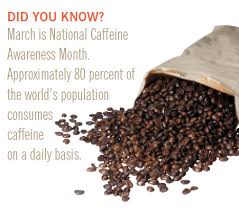
Caffeine Awareness Month

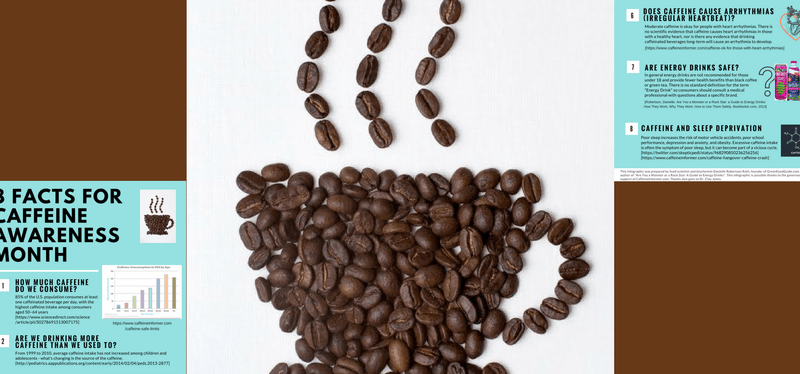
March is Caffeine Awareness Month, which comes at a time when caffeine from coffee, tea, energy drinks, chocolate bars, and other foods and beverages is an especially buzz-worthy topic for consumers around the world.

I love coffee and chocolate and have a tendency to consume one or the other (sometimes both together) daily. A day without chocolate is a day without sunshine! Both are considered sources of caffeine.

The 2015 Dietary Guidelines for Americans (DGAs) published recommendations mentioned caffeine 414 times, and provided an evidenced-based guideline indicating caffeine consumption of up to 400 mg/day, or approximately three to five 8-oz. cups of coffee per day, can be incorporated into healthful, daily eating patterns.

While the DGAs are primarily centered on coffee, there are several sources of caffeine that can contribute to this recommended 400 mg threshold.

Ever wonder which foods contain caffeine and how much is recommended for you?  Let’s take a quick look at a few common food and beverage sources and how much caffeine they contain:

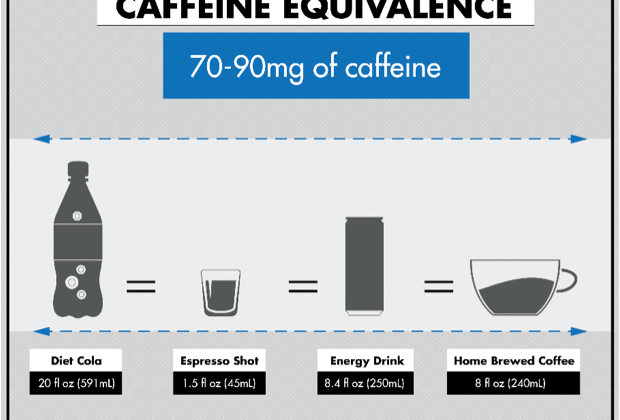
  • An 8.4-oz. energy drink, a 20-oz. diet cola, and a shot of espresso, all sources of caffeine, contain about the same amount as a cup of coffee (80 mg).  Other recognizable choices include:
  • A cup of green tea or a 12-oz. can of soda, both of which contain about 40 mg of caffeine.
  • A 1.5-oz. chocolate bar, which contains about 10 mg of caffeine, whereas a darker chocolate bar the same size contains about 30 mg of caffeine. (No wonder I prefer dark chocolate!)

So know your sources of caffeine and the amounts.  It all adds up across the day.

What’s your favorite chocolate or coffee?

Healthy snacking

Eating healthy doesn’t mean you have to constantly deny yourself of all those delicious treats and snacks forever.

Making and eating healthy homemade snacks can be easy with GC Control Brownies and muffins. and… are they ever delicious!

To make basic muffins:
Preheat oven to 350°
1 egg beaten well
1/2 cup milk
1 cups GC Control any flavor
1 tsp. baking powder
Splash of Vanilla
Thoroughly blend all ingredients in a medium bowl.
Prepare muffin pan by spraying or brushing with a non-stick oil
Pour mixture into muffin pan.
Bake for 12-15 minutes.
Yields 4 – 6 muffins

Breakfast muffins.
I have these for breakfast or as a snack with coffee or tea.
Preheat oven to 350°
2 cups GC Control any flavor ( I used Apple Cinnamon)
1 tsp baking powder 
3 whole eggs
1 cup water or milk 
Bake for 20 minutes.
Yields 12 muffins

Brownies:
Preheat oven to 400°
2 cups GC Control Chocolate
1 tsp. baking powder
1 cup 2% milk (can also use fat free)
Mix all ingredients together and pour into baking pan.
Bake for 20 minutes.

GC Control Chocolate Mousse
1 scoop GC Control Chocolate
1 cup heavy whipping cream
Vigorousl shake ingredients until well-blended
Pour into glass.

GC Control Peanut Butter Cup
4 tbsp Coconut oil
8 tbsp GC Control Chocolate
Small amount of Peanut butter or Almond butter
Melt oil and mix with GC Control until smooth
Fill six muffin cups with half the mixture
Place dollop of nut butter in center of each half-filled muffin cup
Fill muffin cup with remaining chocolate mixture
Freeze for 30 minutes and enjoy
Store in refrigerator

Attain Pudding
1 scoop Attain Shake mix (any flavor)
3 tbsp water
Add ingredients to small ice cream size dish
Mix vigorously until thick and smooth.
Freeze for 20 minutes
Enjoy!

Healthy Gingerbread And French Vanilla Cookies
Preheat oven to 400°.
1/2 cup Unbleached Flour
2 scoops GC Control Gingerbread
1 scoops GC Control French Vanilla 
1/3 cup Eggland Eggwhites
1 cup Organic So Delicious Unsweetened Coconut milk
1 TB Organic Coconut Palm Sugar
2 TB Organic Earth Balance Butter
1tsp Organic ground ginger
2 tsp pure baking soda
1/2 tsp pure vanilla extract
2 tsp ground cinnamon

In large bowl add all ingredients.
Use electric mixer on low for 3-4 minutes.
Put mixture in the fridge for 5-10 minutes to harden slightly.
Spray two flat rectangular trays with non stick Extra Virgin Olive Oil.
Bake for 15 minutes.
Yield: 30 cookies.
Each cookie has 28 cal, 3g carbs, 1g fat, 2g protein, 1g fiber and 1g sugar.

Children’s Nutrition and Health

It’s National Nutrition month and it may come as a surprise to find out that today’s children undernourished. They may be overfed, but they are still undernourished because, children, for the most part, do not eat well. They commonly choose foods high in fats, sugars, and salt—foods that have little, real nutritional value. The top choices among kids are hot dogs, chicken nuggets, French fries, pancakes, pizza, cookies and ice cream. It isn’t the most optimal menu for growing children and it’s definitely not conducive to good health.

This creates a domino effect that results in 97% of children suffering from some form of malnutrition. One in three children ages 2 to 19 is obese or overweight. That’s triple the rate of just a generation ago. Many suffer from high blood pressure and diabetes in children has increased by 21% in the last 10 years! This is caused by poor nutrition and three out of every four children not getting 60 minutes of exercise each day. The result? Childhood obesity health costs over $14 billion a year.

This article from Precision Nutrition will further explain some guidelines and strategies for assuring that your child is well fed and healthy. Supplementation can replace some of the vitamins and minerals missing in your children’s and grandchildren’s diets. Make sure to choose supplements that are safe and effective. Learn more. . .

Watch what you eat

It’s National Nutrition Month® and each March the focus is on the importance of making informed food choices and developing sound eating and physical activity habits.

Benefits and Needs for Fiber

While there is a wide range of foods that provide fiber, in today’s world, it is difficult for most of us to consume enough fiber to satisfy the daily minimums. An article from Food is Medicine, shares twenty foods that provide high levels of fiber.

Today’s Western diet probably satisfies only about half of the recommended amount of fiber that you need. As the article states: this is a big deal because high fiber foods guard against a number of diseases like cancer, heart disease, and obesity. Many processed foods are “fiber enriched”, but these are not the most desirable source of this valuable (and indispensable) dietary need.

The article makes the case for foods high in fiber as the best way to satisfy your needs, it also admits that it is unlikely that you will be able to with diet alone. It also identifies the probability that you will need a supplement to meet your daily requirements. It also points out that the quality of the supplement can and will make a big difference.

An effective supplement will contain a recommended balance of both soluble and insoluble fiber. Insoluble fiber provides bulk in the digestive system which helps the elimination process, expelling carcinogens and toxins from the bowels. Soluble fiber is actually retained in the bodily system, creating a gel that prolongs elimination so that key nutrients can be absorbed more efficiently.

Some fiber supplements do not contain soluble fiber at all. Still, others do not contain enough insoluble fiber to do the job properly. It is important to have the correct balance of both. As has been stated, a healthy diet is best and this list of high in fiber foods will give you a handy guide for healthy meal planning.

The company with whom I am associated offers a complete array of supplements and high-in-fiber snacks that allows me to effectively control my fiber intake daily. They all contain both insoluble and soluble fiber. I am convinced that my good health is as a result of these indispensable products. Here’s to your health! 

High fiber foods article 

Healthy choices.

If you’ve ever been on a diet and failed, you will love how simple this is.
You are not required to weigh food, measure, count calories or keep a journal.

I love that it’s not a diet. Most of all I love my results and how I feel!
So glad I took a chance, I’ll never go back. Its all about healthy choices.