How Often Do You Prepare Home Cooked Meals?

Home-cooked meals offer so many benefits:

  • A reduction in process food consumption — Processed foods generally contain higher levels of unhealthy fats, sodium, dyes, preservatives and added sugars.
  • An increase in the use of fresh produce and whole grains — This can lead to a diet rich in essential nutrients and lower in harmful additives.
  • A greater awareness of portion control and mindful eating — The process of cooking makes us slowdown and make us more aware of how much we put on our plates.
  • Cultivation of life skills — Involving our children in meal prep teaches them healthy eating habits and important life skills they will need as adults.
  • Enhanced mental health — Research shows that creating a meal can positively enhance mood as the creative process helps one experience a sense of achievement.

But there’s a bigger picture. Studies suggest that frequent family dinners help prevent issues such as eating disorders, alcohol and substance use, depression, and suicidal thoughts in teens.

We live in a world where we are less connected than ever before, so why not use cooking as a way to build friendships and family relationships!

𝗜𝘁’𝘀 𝗯𝗲𝗲𝗻 𝗮 𝗹𝗼𝗻𝗴 𝘁𝗶𝗺𝗲 𝗰𝗼𝗺𝗶𝗻𝗴.

I never thought I would look in the mirror and love what I saw looking back ever again. I thought those days were far behind me. Guess what? I’m looking better than ever! Stay tuned as I will be sharing in the near future.

By the way, why plan has a six week challenge beginning on Monday, June third. I can help you get registered. Give it six weeks, I guarantee you will love seeing the changes.

Want to Slow Down the Aging Process?

AVOID THESE 8 HABITS

Often, we are attracted to products that will help us slow down the aging process, such as anti-aging skin care. But what about taking a proactive approach to staying young by AVOIDING habits that ACCELERATE the aging process?

When you read the Fox News article , overall, none of this should be new to you by now, except #8. That might be a surprise. But the two habits that you have the most control over are #3 and #4. 

  • “A nutrient deficient diet has been shown to accelerate aging, experts agree.” That’s why we need to supplement. Several essential minerals are missing from our food these days.
  • “A diet high in processed foods, sugars and unhealthy fats can cause inflammation, damage collagen and accelerate skin aging.” A recent study claims that eating a hotdog reduces life expectancy by 38 minutes, and eating salmon could extend it by 70 minutes. So it’s a good idea to watch how often you eat processed foods
  • “Lack of exercise contributes to aging by causing muscle loss, bone density reduction, weight gain and cardiovascular issues.” No surprise here. We all have been repeatedly told exercise is foundational to our health—so what will be you’re exercise of choice. Mine is rowing..

Which habit can you most easily improve upon?

Click here for the Fox News Article

What a gorgeous Spring day to be able to get outside and get some steps in! There’s a nice cool breeze blowing, birds are singing, the squirrels are running around and I smell the jasmine blooming. Walking always helps clear my mind and I know it’s good for my health. Make it a great day.

Diets are nothing but a vicious circle

Thankfully that circle is no longer part of my life. I have moved on to living a healthy lifestyle.
Are you ready to make the move?

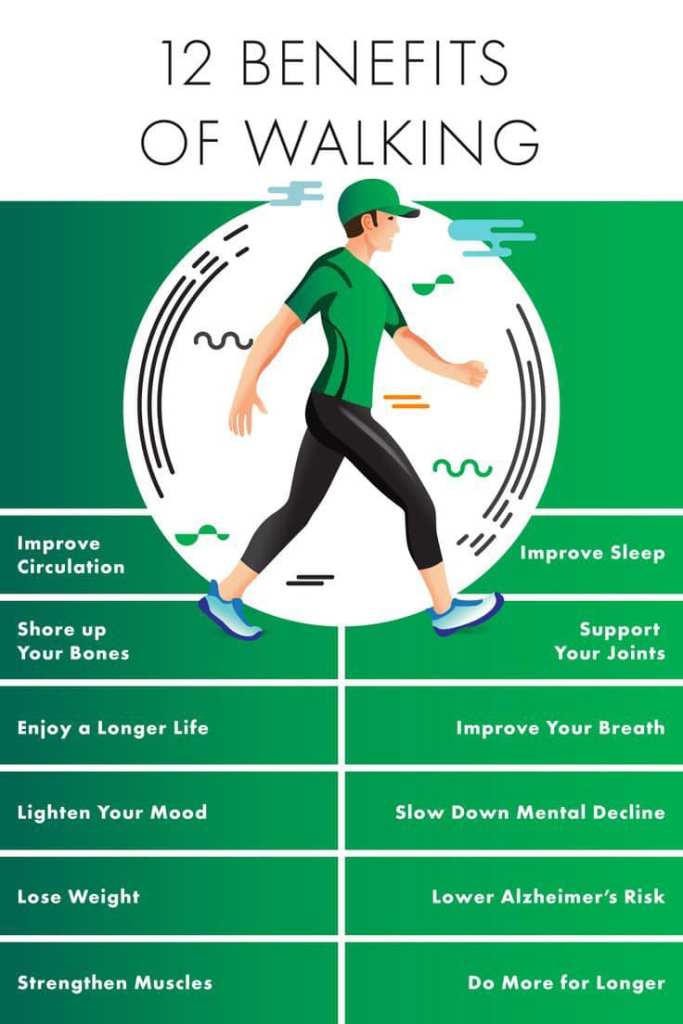
Some benefits of walking

A lot of people say they’d like to get in more exercise, but can’t seem to find the time.
Often, it’s just that you don’t feel like taking the time to go to the gym, or going for a run or a swim.
It’s work. You have to change your clothes, You’ll get sweaty. Then you need to shower and change back.
If there was only an easier way…

There is. Just walk more. You can add more walking or steps to your day simply by making a few simple changes
to your routine.

If you have a dog, you can take them on longer walks. By adding a few extra minutes or blocks to your daily walks,
you will increase your exercise and both you and your dog will benefit.

When running errands, you can park your car a little further away from entrances, Parking further away from the
entrances with give you additional steps. Walking to the mailbox will also help give you added benefits.

So how does walking benefit you?

• Walking 75 minutes each week can add two years to your life

• Walking for 40 minutes three times per week will protect your braine’s memory

• Walking 30 minutes a day can reduce depression by 30%

• Walking 60 minutes every day can cut obesity risk by half!

The best part is that walking doesn’t need to be done all at once in the day, it’s cumulative.
You can take four fifteen-minure walks and it will be akin to a single 60-minute walk. Walking
is easy to fit into your schedule. There is no need to change clothes, all you need is a decent pair
of comfortable, supportive shoes to do your best walking.

So let’s get out there and start walking!

Size Does Matter! – NMR Particle Size Testing for Your Cholesterol!

Next time you go in for your labs, be sure and request a “Particle Size Testing”for your cholesterol. It’s a far more accurate way to measure cholesterol and you can get it done at Quest.

Here’s what doctor’s are discovering:

50% of Americans fall in the category of “high cholesterol” but depending on the size of the cholesterol particle, you may be just fine.

Cholesterol particle size refers to the size of the lipoproteins that carry cholesterol in the blood. The size of LDL particles can vary. Some are small and dense; others are large and fluffy. Believe it or not, you want large and fluffy. Small dense LDL particles are associated with a higher risk of heart disease that larger particles.

So it’s possible to have a high LDL count but if your particles are large and fluffy, it’s highly probably you would not need any medications. If your LDL is low, but your particles are small and dense, you very well might be in a concerning situation.

You should insist on this test when you go in for your next annual physical.

Cancer cases in under-50s worldwide up nearly 80% in three decades, study finds

More than a million under-50s a year dying of cancer and figure projected to rise by another 21% by 2030

Global cases of early onset cancer increased from 1.82 million in 1990 to 3.26 million in 2019, while cancer deaths of adults in their 40s, 30s or younger grew by 27%. More than a million under-50s a year are now dying of cancer, the research reveals.

 The authors of the study, published in BMJ Oncology, say poor diets, alcohol and tobacco use, physical inactivity and obesity are likely to be among the factors.

“Since 1990, the incidence and deaths of early onset cancers have substantially increased globally,” the report says. “Encouraging a healthy lifestyle, including a healthy diet, the restriction of tobacco and alcohol consumption and appropriate outdoor activity, could reduce the burden of early onset cancer.”

Tho read the full article, click here.

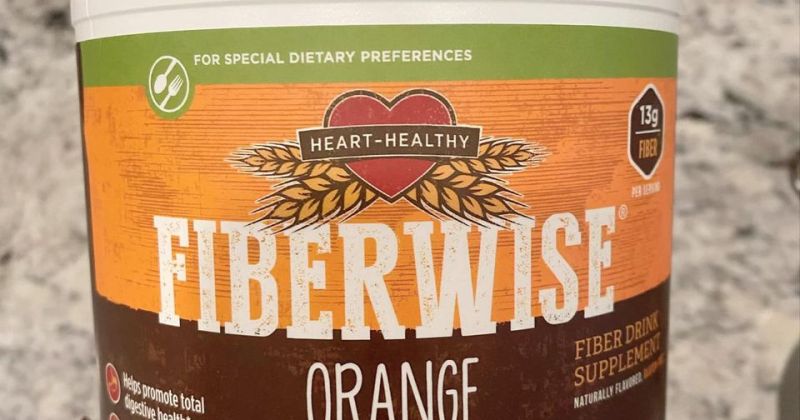
Do you do FiberWise?

I do! Why? Because FiberWise contains a unique blend of multiple fiber sources along with vitamins, antioxidants, soothing herbs, and probiotics that gives a broad spectrum of full-body benefits.

I like it because it promotes digestive health. According to research, a high-fiber diet helps reduce the risk of many serious health concerns in the digestive tract.
It promotes healthy weight loss. I know it helps me feel fuller longer helping to reduce overeating, which in turn helps prevent weight gain and makes it easier to shed excess pounds. Plus there is an added benefit that it helps to reduce the risk of heart disease.

How? Well, soluble fiber may help lower total blood cholesterol and LDL cholesterol, which may in turn help lower the risk of heart disease. Supposedly it helps do this by “sweeping away toxins and waste throughout the body. Fiber helps keep toxins from recirculating in the bile and blood, and speeds the passage of waste from the body. another benefit is that it supports immunity by providing food for the “friendly” bacteria in your large intestine that fight the growth of harmful bacteria and contribute to immune support throughout the body. who can forget the primary selling benefit of fiber? It improves regularity. According to research, a high-fiber diet may help promote a healthy digestive tract.

How does it work? Well, fiber is a component of plant food that is never broken down and absorbed by the body—allowing it to perform important functions that no other food can. The two forms of fiber, soluble and insoluble, both play important roles in maintaining optimal health. 

One of the most treasured forms of fiber is psyllium husk. A flowering annual shrub-like plant, psyllium is a rare, unique ingredient that delivers the perfect balance of soluble and insoluble fiber in small, almost tasteless doses.

Psyllium is 68% soluble fiber and 32% insoluble fiber. Just seven grams of this precious fiber a day may reduce the risk of heart disease. Two servings of FiberWise drink a day will provide 7.0 – 8.0 grams! Diets low in saturated fat and cholesterol that include those seven grams of soluble fiber per day from psyllium husk may reduce the risk of heart disease. One FiberWise bar provides 1.7 grams and one serving of FiberWise drink provides 3.5-4.0 grams of this soluble fiber.

SOLUBLE FIBER. Soluble fiber dissolves in water and forms a gel-like substance during digestion. In this form, it traps excess sugars, fats, and cholesterol as it moves through the intestines, helping sweep them out of the body. It also plays an important role in lowering LDL blood cholesterol and reducing blood glucose levels after eating.

INSOLUBLE FIBER. Insoluble fiber is never dissolved. Instead, it acts like a sponge, soaking up to 15 times its weight in water. Its primary benefit is to provide bulk, which can help promote feelings of fullness while also speeding up the movement of food through the digestive system, promoting regularity.

HOW FIBER HELPS CLEANSE YOUR BODY OF TOXINS. The liver begins producing a substance necessary for digestion called bile. Bile is made of acids as well as cholesterol. Bile is stored and concentrated in the gallbladder until foods that contain fat are eaten. After eating, the bile is dumped into the small intestine, where it breaks up fat, grease, and food particles. At the lower end of the small intestine, the bile is broken down into its individual component parts—cholesterol, fat, toxins, and wastes. If there is an adequate amount of fiber in the intestines, the fiber binds up the cholesterol, fat, and toxins and sweeps them out of the body. If there isn’t enough fiber in the intestines, the toxins reenter the bloodstream and are recirculated throughout the body. These toxins will eventually reach the liver. This forces the liver to process them again and dump them into the intestines in the next batch of bile. That’s a lot of work!

To help my system run in peak condition, I use Fiberwise either in the drink form (Orange or Raspberry) or, in the newer powder that is tasteless and can be added to my foods, such as home baked muffins, pancakes and waffles or even soups and gravies. FiberWise is formulated with a unique, proprietary fiber blend of psyllium, oat, apple, rice bran, chicory root, maltodextrin fiber, and fructooligosaccharide (FOS). FiberWise also contains a proprietary blend of soothing herbs, antioxidants, and probiotics to make each one a truly one-of-a-kind health supplement.

Soothing herbs such as ginger help reduce occasional intestinal gas and bloating, while peppermint and licorice root help balance intestinal flora and soothe mild indigestion. Antioxidants such as vitamins A, C, and E help fight free radical damage during digestion and throughout the entire body. Probiotics such as Lactobacillus acidophilus are “friendly” bacteria that help break down food in the intestines as well as create an environment that keeps “bad” bacteria in check.

On a daily basis, 95% of Americans are only getting about half as much fiber as they need. A single glass of FiberWise provides 13-15 grams of healthy fiber to help you meet your optimal daily fiber. To read more click here.

FiberWise Chart Description

Gluten Free Challenges

If you must (or choose) to go gluten-free, one of the challenges is getting enough dietary fiber. 
Why is that, you may wonder.

You see, on a typical diet, your doctor might tell you to eat more healthy whole grains, like wheat bran, whole wheat bread and cereals to increase your fiber intake. That can be a problem for those with celiac disease who are on a gluten-free diet since many gluten-free foods are low in fiber.

The good news is that there are plenty of gluten-free alternatives to whole wheat that are still high in fiber.

There are two types of dietary fibers – soluble and insoluble.
Soluble fiber soaks up water as it passes through your system, which helps bulk up your stool and guard against diarrhea. Examples of foods with soluble fiber include:

  • Legumes (beans, peas, lentils, chickpeas, soybeans)
  • Fruits (apples, pears, oranges, prunes)
  • Vegetables (carrots, broccoli, Brussels sprouts, eggplant)
  • Sweet potatoes
  • Ground flax seeds and chia seeds

Insoluble fiber helps prevent constipation. Examples of foods with soluble fiber include:

  • Quinoa
  • Buckwheat
  • Millet
  • Wild and brown rice
  • Nuts (almonds, walnuts, pecans)
  • Fruits (strawberries, papayas, mangoes)
  • Vegetables (cucumber, asparagus, okra)

When consuming a diet rich in fiber, it is important to drink water to prevent constipation. Consuming about eight (8-ounce) glasses per day is recommended for adults.