Two empty glass test tubes in a wooden test tube rack on a wooden laboratory bench.

Understanding Cholesterol: Focus on Ratios, Not Just Numbers

The REAL Truth About Cholesterol (Not Taught in Most Clinics):

Most people are told to panic if their total cholesterol is over 200. But honestly, total cholesterol is like a total grade average — it doesn’t show the real story.

The Real Markers That Matter:

  1. Triglycerides
  2. HDL (the “good” cholesterol)
  3. The Ratio: Triglycerides ÷ HDL

Expert Note: This ratio is one of the strongest predictors of heart health, insulin sensitivity, and metabolic function.

  • Ideal ratio: less than 2:1
  • Optimal reset-level: 1:1 or less (Beth’s is 1:1)

Example:

• Triglycerides: 70

• HDL: 70

• Ratio: 1.0 — Metabolic gold

Now compare this:

• Total cholesterol: 210 (looks high to a doctor)

• Ratio still 1.0 SO no danger.

In other words: you can have a total cholesterol of 230 and still be metabolically healthier than someone with a total of 180.

Why Your Doctor’s Solution (Statins) Is Not the Whole Answer:

Statins can lower total cholesterol… but at what cost?

They block your body from producing CoQ10, an essential nutrient for:

  • Heart energy
  • Brain function
  • Cellular repair

Low CoQ10 has been linked to:

  • Muscle aches and weakness
  • Brain fog
  • Increased risk of neurodegenerative disorders (like Parkinson’s and Alzheimer’s)
  • Hormone disruption
  • Mitochondrial dysfunction (your metabolic powerhouse)

I’m Not Saying “No Statins Ever” BUT Here’s What I Am Saying:

Know the full picture before panicking or popping a pill. Focus on lowering triglycerides and raising HDL naturally. Don’t chase numbers — heal the body and let the number correct itself.

If you must take a statin, support your CoQ10 (at least 100–200mg/day)

Stop letting fear take the wheel of your health. Your cholesterol number is just a conversation starter, not a death sentence. Stop staring at your total and start looking at the markers that actually matter. Leafy greens, fiber, clean fats, and sleep lower triglycerides. Prayer, protein, and purpose raise HDL. Learn your ratios, protect your brain, and stop taking prescriptions out of fear.
Does Your Metabolism Slow Down With Age?

As we age, many of us find ourselves questioning how our metabolism changes. The short answer is yes, metabolism does slow down with age, but it may not be as early as you might think.

When Does Metabolism Slow Down?

Women often attribute weight gain to a “slow metabolism,” but research indicates that our metabolism typically does not start to decline until our 60s. Here’s how it works:

  • In Your 20s: Metabolism slows by about 3% each year, but this gradual decline levels off as you enter your 30s.
  • After Age 60: The metabolism slows further at a rate of approximately 0.7% per year.

Why Does Metabolism Slow Down?

Several factors contribute to the slowing of metabolism as we age:

  1. Slower Food Breakdown: As we age, our bodies break down food more slowly, resulting in leftover calories that can turn into fat.
  2. Decreased Activity: Aging often leads to decreased physical activity due to injuries, joint pain, lack of resources, or reduced social involvement. A less active lifestyle equals lower calorie burn.
  3. Changes in Appetite: With age, energy needs decrease, which can lead to a reduced appetite. Additionally, changes in vision, sense of smell, and taste may further diminish our desire to eat.
  4. Loss of Muscle Mass: Starting around age 30, people typically begin to lose muscle mass, with a more pronounced acceleration after age 65 for women and 70 for men. Since muscle burns more calories than fat, this loss can contribute to a slower metabolism.
  5. Dietary Changes: As we age, socializing more often can lead to dietary changes, such as increased alcohol consumption, which may contribute to weight gain.

Take Action!

The good news is that you can take proactive steps to manage your metabolism and combat age-related weight gain.


Skinny Fat

Skinny fat is a term to describe those who might be thin but have a high percentage of body fat. The medical term is sarcopenic obesity. This condition refers to an individual who may have what would be considered a normal/healthy weight, but metabolically, this person shares many health characteristics as someone who is overweight or obese. And that means they are at risk for a variety of health problems.

The Cause?

  • Losing muscle mass and gaining fat mass due to maintaining the same caloric intake and a sedentary lifestyle creates a skinny fat condition

The Description?

  • A person who is sarcopenic obese will have high fat mass and low muscle mass

The Analysis?

  • Getting a body composition test can help assess your body fat and muscle mass distribution

Possible Risks?

  • Increased risk of heart disease
  • High cholesterol
  • Insulin resistance, leading to Type 2 Diabetes 
  • Lower bone mineral density
  • Loss of cognitive function

The Solution?

  • Eating a protein-rich diet
  • Increase Skeletal Muscle Mass with weight training

Just because someone looks skinny, don’t just assume they are healthy.

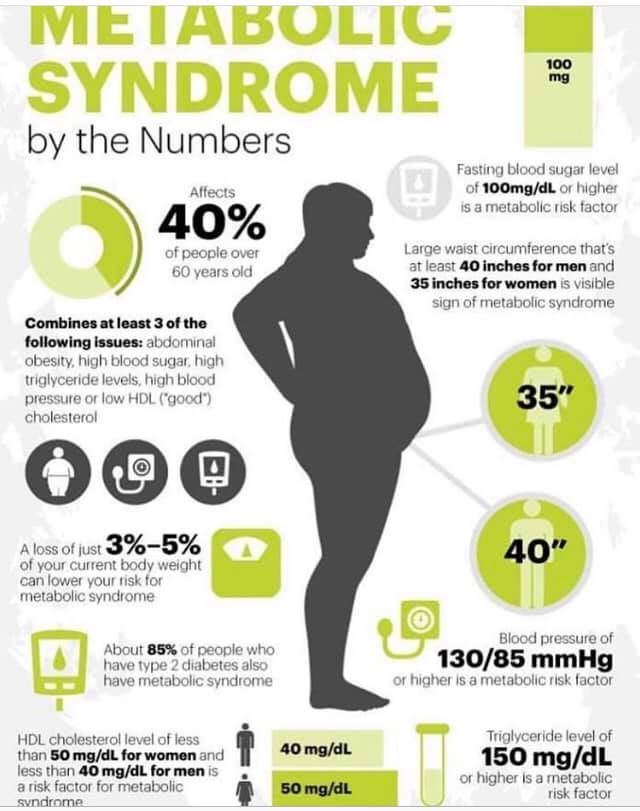
Do you have Metabolic Syndrome?