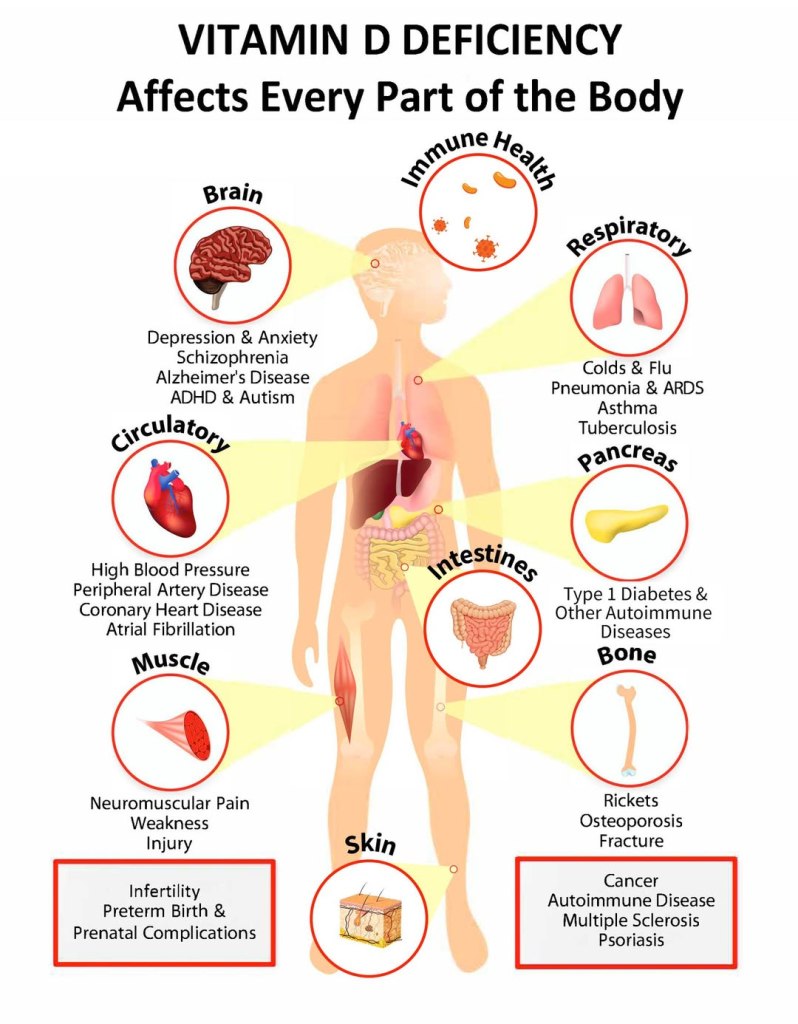
EPIDEMIC: VITAMIN D DEFICIENCY!

Publications support the theory that we have an epidemic of vitamin D deficiency. It’s estimated that nearly half of Americans have “insufficient” vitamin D levels (under 29 ng/ml) and 14 percent are deficient (under 19.6 ng/ml). On the other hand, Vitamin D blood levels of 50 ng/ml or higher have been found to protect against respiratory infections like influenza and corona-type viruses.

I know many people believe that “I get my Vitamin D from the sun” and I know Ido a well. But there are a few various factors limit adequate D absorption from sun exposure (age, skin tone, your BMI, geographic location, time of year, infection). Just because I’m in Florida and out in the sun every day, it doesn’t mean I don’t need to supplement with Vitamin D and D3/K2 in order to keep my vitamin D at a healthy level. Remember too, when we use sunscreen, we block out 98% of the Vitamin D we would normally absorb..

At your next physical, be sure and request your D3 lab marker. If you don’t request it, the doctor won’t do it!

The Heat is on!

How safe and effective is your sunscreen?
Did you know that not all sunscreens are created equal?

Here’s why I only buy from the the Wellness Store:
It’s Made and Manufactured right here in the USA.

Why is a 𝗠𝗜𝗡𝗘𝗥𝗔𝗟 𝗦𝗨𝗡𝗦𝗖𝗥𝗘𝗘𝗡 good for you?
Mineral sunscreens don’t contain:
• harsh synthetic chemicals
• aren’t absorbed into your skin
• they’re safer for sensitive skin.

The American Academy of Dermatology recommends that people with sensitive or acne-prone skin opt for mineral sunscreens.

So, if you’re looking for a sunscreen that is all-natural and/or reef-safe, mineral is the way to go. I know mine is safe, is yours?

Sunscreen and collagen ? Yes, please!

Astaxanthin is a carotenoid found in certain algae. (It’s what gives salmon, lobsters, and flamingoes their pinkish color!!)

This antioxidant is 6,000 times more potent than Vitamin C; 560 times more potent than green tea; and
800 times more potent than CoQ10, providing the highest level of protection for your brain, heart, eyes, skin and entire body!

Astaxanthin protects the skin against the damage associated with sun exposure—because of its potent antioxidant properties, it neutralizes the free radicals produced by the sun’s rays and prevents the typical damage caused by sunburn.

Astaxanthin has an impressive ability to help skin manage photodamage by promoting new skin cells, elastin, and collagen production.But it doesn’t replace topical sunscreen—you still need to use that every two to three hours.

Taking astaxanthin daily can:

• Improve skin elasticity

• Reduce age spots and wrinkles

• Protect cells against UVA-induced skin damage

• Work as an internal sunscreen

It’s a great supplement to take in the summer, but the health benefits are good year-round!

Like this if you love the sun and your skin!

Take Action: Cover Up

With Memorial Day weekend coming up, you may be planning a full three days of being outdoors—basking in the sun; at the beach; at a barbeque or at the park. Since you will be out in the bright and shiny sun’s rays, you will want to take these simple steps to help prevent skin cancer.

Cover up with long sleeves, a hat, and sunglasses.

Wear a long-sleeved shirt and long pants or a long skirt. Clothes made from tightly woven fabrics are best.

Wear a hat. A hat with a wide brim that protects your face and neck works best. Avoid straw hats with holes that let sunlight through. If you wear a baseball cap or visor, be sure to protect your ears and the back of your neck with sunscreen.

Wear sunglasses that block UV light. This will help protect your eyes and the skin around them from sun damage. Wrap-around sunglasses are best, because they block UV rays from the side.

Stay in the shade between 10 a.m. and 4 p.m. The sun’s rays are the strongest from mid-morning to late afternoon. Try to stay out of the sun during these hours. If you are outside, stay in the shade – like under a tree or umbrella.

Use sunscreen with a minimum SPF 15 or higher. Use sunscreen with both UVA and UVB protection, also called broad spectrum sunscreen. My dermatologist recommends using a sunscreen that has an SPF of 30 or higher, is water resistant, and provides broad spectrum coverage. My favorite sunscreen that meets all of those requirements is Sun Shades Sport. Sun Shades Sport’s principal ingredient is Avobenzone. Avobenzone gives my skin a highly effective broad spectrum protection. The photostablized avobenzone maintains its UVA protective power even during long periods of sun exposure. I especially like that I can spray it on and it sticks!

One thing you always need to do is check the expiration date on the bottle to make sure it’s not out of date—especially if you found a bottle from last summer.

To get the most protection:

  • Wear sunscreen even on cloudy days. UV rays can still harm your skin through the clouds.
  • Plan ahead – put sunscreen on 30 minutes before you go outside. Put on more sunscreen every 2 hours and after you swim or sweat.
  • Be sure to use enough sunscreen (a handful). Don’t forget to apply it to your ears, hands, feet, the back of your neck, and any part of your scalp that isn’t covered by hair.
  • Use lip balm with sunscreen to protect your lips.
  • If you wear very lightweight clothing (like a beach cover-up or thin T-shirt), put sunscreen on under your clothes.