My magnesium results are in!

Did you know the general thought is that you use less than 10% of the minerals in supplements off the store shelf?

For eight months, I faithfully took the popular Calm Magnesium every night per my nutritionist’s direction. When my online wellness shopping club introduced MelaOut a short while ago— being the hopeless, trusting fan of my club that I am, I switched immediately.

The decision was easy because I understand the Oligo technology used with the minerals in their supplements; I knew I would be getting much more magnesium than before. Ten times more magnesium in proven studies. About two weeks ago I began drinking a glass of Melaout daily.

𝙒𝙞𝙩𝙝 𝙩𝙝𝙚 𝙈𝙚𝙡𝙖𝙊𝙪𝙩, 𝙄 𝙣𝙤𝙩𝙞𝙘𝙚𝙙 𝙨𝙞𝙜𝙣𝙞𝙛𝙞𝙘𝙖𝙣𝙩 𝙙𝙞𝙛𝙛𝙚𝙧𝙚𝙣𝙘𝙚𝙨 𝙩𝙝𝙚 𝙛𝙞𝙧𝙨𝙩 𝙬𝙚𝙚𝙠:

• my blood (dystolic) pressure dropped 20-30 points.  No other healthy habit had helped for about five years.
• my night time leg cramps (which are often due to poor calcium intake or dehydration – but not my issue) STOPPED. 
• Too much information, I know, but my colon was no longer irritated (from Calm).

So many supplements on the store shelf are not worth their money!  (I have stories!) If my wellness shopping  club cannot do something better for a reasonable price— they just don’t do it.  I’m glad they figured this one out.

For your homework:
Low magnesium levels make vitamin D ineffectivehttps://www.sciencedaily.com/rel…/2018/02/180226122548.htm

“widespread magnesium deficiency is contributing to an epidemic of heart attack and stroke deaths” https://www.lifeextension.com/…/americans-magnesium…

According to Dr. Mark Hyman:
You might be magnesium deficient if you have any of the following symptoms: Muscle cramps or twitches; Insomnia; Irritability; Sensitivity to loud noises; Anxiety; Autism; ADD; Palpitations; Angina; Constipation; Anal spasms; Headaches; Migraines; Fibromyalgia; Chronic fatigue; Asthma; Kidney stones; Diabetes; Obesity; Osteoporosis; High blood pressure; PMS; Menstrual cramps; Irritable bladder; Irritable bowel syndrome; Reflux; Trouble swallowing.
https://drhyman.com/blog/2010/05/20/magnesium-the-most-powerful-relaxation-mineral-available/?fbclid=IwAR0ZWJbLxyhFuEj_p52gepDuXZaj2RDjqaWzBOlyrdCKV-K_Snj-XMM2ADM


High blood caffeine level might curb amount of body fat and type 2 diabetes risk

A high blood caffeine level might curb the amount of body fat a person carries and their risk of type 2 diabetes, suggests research published in the open access journal BMJ Medicine.

In light of these findings, the potential role of calorie free caffeinated drinks for lowering the risks of obesity and type 2 diabetes is probably now worth exploring, say the researchers.

Previously published research indicates that drinking 3-5 daily cups of coffee, a rich source of caffeine, is associated with a lower risk of type 2 diabetes and cardiovascular disease, note the researchers. An average cup of coffee contains around 70–150 mg caffeine.

But most of the published research to date has concerned observational studies, which can’t reliably establish causal effects, because of the other potentially influential factors involved, the researchers note. What’s more, it’s difficult to disentangle any specific effects of caffeine from the other compounds included in caffeinated drinks and foods.

To overcome these issues, the researchers used Mendelian randomization to find out what effect higher blood caffeine levels have on body fat, and the long term risks of type 2 diabetes and major cardiovascular diseases—coronary artery disease, stroke, heart failure, and irregular heart rhythm (atrial fibrillation).

Mendelian randomization is a technique that uses genetic variants as proxies for a particular risk factor—in this case blood levels of caffeine—to obtain genetic evidence in support of a particular outcome—in this study, weight (BMI) and type 2 diabetes risk.

The researchers looked at the role of two common genetic variants of the CYP1A2 and AHR genes in nearly 10,000 people of predominantly European ancestry, who were taking part in 6 long-term studies. The CYP1A2 and AHR genes are associated with the speed of caffeine metabolism in the body.

People who carry genetic variants associated with slower caffeine metabolism drink—on average—less coffee, yet have higher levels of caffeine in their blood than people who metabolize it quickly to reach or retain the levels required for its stimulant effects.

The results of the analysis showed that higher genetically predicted blood caffeine levels were associated with lower weight (BMI) and body fat. Higher genetically predicted blood caffeine levels were also associated with a lower risk of type 2 diabetes.

The researchers then used Mendelian randomization to further explore the extent to which any effect of caffeine on type 2 diabetes risk might principally be driven by the concurrent weight loss.

The results showed that weight loss drove nearly half (43%) of the effect of caffeine on type 2 diabetes risk.

No strong associations emerged between genetically predicted blood caffeine levels and the risk of any of the studied cardiovascular disease outcomes.

The researchers acknowledge various limitations to their findings, including the use of only two genetic variants, and the inclusion of only people of European ancestry.

But caffeine is known to boost metabolism, increase fat burning, and reduce appetite, they explain. And a daily intake of 100 mg has been estimated to increase energy expenditure by around 100 calories a day, which could consequently lower the risk of developing obesity.

“Our Mendelian randomization finding suggests that caffeine might, at least in part, explain the inverse association between coffee consumption and risk of type 2 diabetes,” write the researchers.

“Randomized controlled trials are warranted to assess whether non-caloric caffeine containing beverages might play a role in reducing the risk of obesity and type 2 diabetes,” they conclude.

This article was originally published March 16, 2023 | On MedicalXpress Breaking News-and-Events.

Some notes about “Keto Friendly”

There is a lot to be said about the Keto diet and many store bought items are being marketed as “Keto Friendly”. But be careful purchasing anything listed as “Keto Friendly.”

Why? Because Keto is based on high fat, high protein and many of the foods and food combinations offered in the store are designed purely to get fat grams in the body without any carbs.

For example, most nuts they recommend contain a high calorie to fat ratio and contain very little protein, such as macadamia nuts, hazelnuts, cashews, and pistachios. It’s best to take this snack list in moderation to avoid going into ketoacidosis.

R3 is based on healthy food, learning to adopt clean, healthy, non-emotional eating. R3 allows you to eat many of the snacks listed below in moderation and make certain you are getting your daily protein.

How Do Spices and Herbs Impact Your Health?

  • CINNAMON—Ceylon Cinnamon is known as “true” cinnamon. It’s a powerful antioxidant that helps regulate blood sugar and lower cholesterol.
  • GINGER—Ginger is loaded with gingerol, a natural oil with powerful antioxidant and anti-inflammatory properties. It helps with nausea, muscle relaxation and digestion.
  • TURMERIC—Turmeric boasts curcumin, that counteracts inflammation, improves circulation, and helps with cognitive health.
  • CUMIN—Cumin is the second most popular spice (right after black pepper). It helps to fight infections, reduces coughs and respiratory problems.
  • GARLIC—Garlic is one of the most versatile herbs on the planet. Rich in allicin, garlic helps lower cholesterol and blood pressure.
  • SAFFRON—Saffron is rich in crocetin, a heart healthy compound which acts as an antidepressant to improve mood and energy.

CUCUMBERS!!!

I love cucumbers! I eat at least one cucumber a day.

Cucumbers contain magnesium, potassium, and vitamin K. These three nutrients are vital for the proper functioning of the cardiovascular system. Plus a regular intake of cucumber can lower blood pressure, decrease bad cholesterol and lower blood sugar levels as well!

Cucumbers play a big daily role for me in my meals and salads, but you can also add it to your water!

ASTAXANTHIN: A NEW POWERHOUSE!

I recently started taking a new collagen product and one of the main ingredients is Astaxanthin. I was unfamiliar with this antioxidant so I started doing some research and I think I have a new favorite nutrient! It’s a powerhouse!

Astaxanthin is a reddish pigment found in algae that many consider the “king of the carotenoids.” Look at what all it does:

  • Fights Osteoarthritis — Research shows that Astaxanthin can not only help maintain the balance between new and deteriorating cartilage cells, but it may also reduce inflammation in joints. It also may slow osteoarthritis progression and address symptoms, giving you a better quality of life as you age.
  • Protects Against UV-Induced Skin Aging—A 2018 study compared moisture retention after UV exposure in subjects who were given 4mgs of Astaxanthin versus those who were given a placebo. Results indicated that there was a significant difference between the two groups. Those who took Astaxanthin showed marked moisture retention and less damage to their skin after the equivalent of 1.5 hours in the sun.
  • May Help Retain Cognitive Function in Early-Stage Dementia & Alzheimer’s —In a 2018 clinical trial looking at the effects of Astaxanthin on subjects with mild-cognitive function early-stage dementia, results showed there were significant improvements in cognitive functions related to the ability to understand and complete complex tasks quickly and accurately.
  • Fights Mental Fatique —Brain exhaustion, foggy brain, etc. Studies show that Astaxanthin helps to recover more quickly from brain fatigue.
  • Reverses the Appearance of Wrinkles & Crow’s Feet —Multiple studies showed that both oral consumption and topical application of Astaxanthin resulted in significant improvements in theappearance of wrinkles and crow’s feet in men and women over 8 weeks. Improvements in reducing the appearance of age spots and helping the skin retain more moisture were also observed.
  • Helps Manage Diabetes —A 2018 study found that patients increased their HDL cholesterol (that’s the good one!), reduced blood pressure, and actually improved the metabolism of sugars.
  • Helps with Menopause Symptoms —A 2010 study treated a group of menopausal women with a combination of vitamins and supplements that included Astaxanthin. They found that the women reported a significant reduction in 34 menopausal symptoms, including hot flashes, mood swings, bladder problems, and joint pain.
  • May Reduce Risk of Heart Disease —Studies show that Astaxanthin may reduce LDL cholesterol levels in overweight patients, as well as improve HDL levels after 12 weeks of supplementation. A 2006 study revealed that Astaxanthin may improve the thickness and elasticity of arterial walls. This can help regulate blood pressure and prevent heart failure.

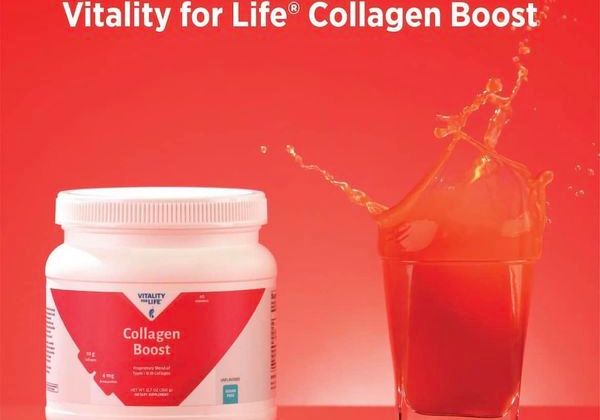
My new Collagen supplement, Vitality for Life Collagen Boost, contains Astaxanthin. Do you see why I’m so excited about this!

Collagen—do you take it?

Finally found a collagen I can stand behind – and I’ll be honest, I’m a little over the moon about it.

While on a girls’ trip, I heard from one of my fellow vacationers how she was looking for a good collagen supplement. I never knew much about it until now. If my brand didn’t it make it, I wasn’t going to purchase it at the store—since who knows how long it’s been sitting on the shelf. 

Since that discussion, I’ve learned quite a bit about Collagen. Collagen’s main role is to provide structure, strength and support throughout your body. Your body produces less collagen as you age, and existing collagen breaks down at a faster rate. 

Did you know there are different kinds of collagen? I surely didn’t. I learned about four types of collagen from the Cleveland Clinic

Hydrolyzed Bovine Collagen—Though collagen can come from many different sources, bovine has been found to be the most potent and effective. Furthermore, when collagen is hydrolyzed it essentially means the amino acids within it have been broken down, so they’re easier for your body to absorb.

Marine Collagen—A problem with marine collagen is that you never know what you’re getting. “Marine” is a blanket term for any aquatic creature whether it be a jellyfish, shellfish, or shark — these sources are not easy for the body to absorb.

Liquid Collagen—Liquid collagen drinks tend to have a longer list of ingredients compared to powders. Additives and flavorings, whether artificial or natural, typically mean empty sugar calories. 

After learning this, I was wondering, what kind of collagen should I take?
NEW Vitality for Life Collagen has 10 grams of a proprietary collagen blend in every serving! This collagen boost supplement is clinically, proven to improve skin elasticity, and reduce the appearance of fine lines and wrinkles! This powder wins on potency, fewer additives, cost savings, and eco-friendly edge.

Here’s to aging gracefully! 

Here’s an exceptional example of how our collagen compares to the leading brands 

Blood Sugar and Insulin

Last year, I found myself waking up in the ICU of a hospital, with no memory of how I got there. My last memory is that I was at the airport. I remember having a vague conversation with a police officer. Other than that, I have no further recollection of that day until I woke up in that ICU two days later. Luckily I carry my health info and medical cards with my drivers license, so they were able to care for me. The diagnosis? DKA – Diabetic Ketoacidosis. My blood sugars had spiked to nearly 600 and I was on the verge of a diabetic coma. Considering I had never had any indication of sugar issues — all my bloodwork always came back perfectly normal.

So what happened? My doctors explained that my recent move, my recently broken shoulder and the resulting pain and lack of sleep, burying a parent, extensive dental work and weight loss (a good thing) put quite a bit of stress on my system. All of these contributed to a metabolic imbalance and my body decided to crash—big time.

Turns out the ability of the body to control insulin can make significant differences in the quality of one’s health. Insulin is a hormone that is generated in the pancreas. It is released, optimally, in small amounts throughout the day and in larger amounts after meals.

Insulin and its effects can also cause weight gain, battle metabolic issues and even lead to diabetes. The below article from “Get Your Lean On” gave me some insight and tips on controlling the insulin my body manufactures and I thought I’d share.

It recommends avoiding all forms of sugar, which led me to the R3 lifestyle. The study results showed sugar promotes insulin resistance. Refined carbohydrates are another food to moderate or avoid completely, if you are able, since they are converted to sugars. With my new R3 eating plan, I rarely crave sweets or carb-loaded foods—but I still crave grapefruit and indulge that craving every other day.

The article also recommends eating foods that are higher in soluble fiber and will help stabilize and regulate blood sugar levels. Soluble fiber also produces higher levels of good “gut’ bacteria and makes you feel fuller, longer. I make certain I get lots of veggies (especially cucumbers and peppers) and drink Fiberwise daily. With R3 I do have two healthy snacks every day, usually veggies.  I’m never hungry between meals anymore.

Of course, the study recommends that regular exercise should also be a part of a good daily, healthy regime. Unfortunately with my broken shoulder and subsequent shoulder replacement, I’ve not been working out or exercising for the past year—other than walking the dog, that is.

Finally, I’ve followed the suggestion to increase consumption of lean protein. With R3 I make it a point to have protein within an hour of waking up each morning. I didn’t believe it when I was first told to do this, but it works! Turns out the protein helps to absorb valuable amino acids that build muscle. Eating the right proteins is critical to the overall effect of an insulin “smart” diet, so I pay attention to the types and amounts of the protein I eat at every meal.

You may also want to consider some supplementation in your plan, regardless if your goals are weight-loss or simply universal good health. My company has developed a great tasting shake in several different flavors that allow me to easily and conveniently control my blood sugar and insulin levels.

www.getyourleanon.com/blog_home/2016/08/13/5-ways-lower-blood-sugar-and-insulin-levels-naturally-get-your-lean/

Blueberry power to attain my goals

This is a healthy snacking secret. When I want something delicious, filling and refreshing for my 3:00 p.m. snack, I reach for Blueberry Attain with revolutionary, natural CraveBlocker®. This simple shake helps stop cravings at both critical sources, putting me back in control. I have been able to manage and lose weight without feeling irritable or hungry all the time—and I don’t deprive myself of the nutrition I need. Controlling my cravings is an essential part of losingand keeping  weight off for good. Since it is blueberry month, I blended in a few fresh blueberrys for an added jolt of antioxidants.

Beyond Empty Calories: Curbing sugar intake

When it comes to weight management, refined sugar in all its forms — high-fructose corn syrup, dextrose, rice syrup, sucrose and many others — is certainly one of the top items to get knocked off an eating list.

Harvard University’s School of Public Health suggests that to achieve a healthy weight, you should limit “lower-quality foods” including sugar-sweetened beverages, refined sugar and highly processed snacks. But your waistline isn’t the only thing affected by excess sugar consumption. Overindulgence on the sweet stuff can affect you in some other surprising ways:

1. Sleep Interuption. According to the National Sleep Foundation, an after-dinner dessert is a great way to get a terrible night of sleep. In fact, the organization notes, the more sugar you eat during the day, the more likely it is you’ll wake up during the night. That’s because sugar lowers the activity of orexin cells, a neuropeptide that regulates how wakeful you are. More bad news: These cells also help control appetite, so if they’re feeling off-kilter, you’re more likely to eat more.

2. Increased Colds and Flu. When it comes to an effective immune response — your system needs to be on high alert during cold and flu season — sugar could be defeating your white-blood-cell army. When you eat a big dose of sugar, like a soda or a candy bar, you temporarily suppress your immune system’s ability to respond to invaders. If that happens occasionally, it may be no big deal, but since the effect lasts for a few hours, you could be consistently sabotaging your immune syste if you eat sugary food regularly.

3. Increased Risk of Heart Disease. Sugar can affect your weight goals, but it affects your heart even more. A major study published in JAMA Internal Medicine suggested a sugar-packed diet may raise your risk of dying of heart disease, even if you aren’t overweight. In the 15 year-long study, participants who ingested 25% or more of their daily calories from added sugar were more than twice as likely to die of heart disease than those who consumed less than 10% of added sugar.

4. Potential Depression. Although much is made of the mind-body connection when it comes to health and wellness, less attention has been put on the mood-food link. But sugar can be notorious for causing emotional fluctuations, including anxiety, frustration and even depression, according to Dr. Elson Haas, author of Staying Healthy With Nutrition. He notes that refined sugar has been shown to deplete important nutrients, such as protein, vitamin B, zinc, chromium and manganese—deficiencies can lead to lower levels of emotional and mental functioning. When these nutrients remain in the immune system, individuals notice a marked difference in their moods and emotional states.

5. Skin Problems. Refined sugar and many other high-glycemic foods raise insulin levels in the body and that increases inflammation. When that happens, the inflammation produces enzymes that break down collagen and elastin, the structural building blocks of skin. The digested sugar permanently attaches to the collagen in your skin through a process known as glycation, which results in sagging skin and wrinkles. Glycation can also exacerbate skin conditions like acne and rosacea. Plus, the more sugar you eat, the more likely it is you’ll develop insulin resistance, possibly leading to excess hair growth on the skin, as well as dark patches on the neck and other areas.

With side-effects like these, you might be tempted to swear off sweets forever. You really don’t need to cut out refined sugar products completely to see benefits and lower your health risks, instead, focus on mindful eating and awareness — in other words, make a sugary treat into exactly that, so it’s a sometime occasion and not a regular habit. Start by eating your next sugary snack very slowly, and notice how it smells as well as tastes. You don’t need to become a mealtime snail, but doing this a few times can help you “reset” when it comes to sugar—and helps to reduce sugar cravings. Being more mindful when you eat, especially when it comes to sugar, can keep you off autopilot and change your eating habits.