Antibiotic Overuse

As soon as we get the sniffles, a sore throat or a drippy nose, the first thing many of us do is reach for an antibiotic. They’re usually readily available in our medicine cabinets. They are available because they are over-prescribed by doctors and emergency rooms everywhere.

47,000,000 prescriptions in the U.S. are unnecessarily prescribed. Efforts need to be made to improve the way we take these drugs and the way physicians prescribe them. This should be a national priority.

The article below from the Centers for Disease Control outlines the dangers of overuse of antibiotics. Surprisingly at least 23,000 people a year die from antibiotic misuse.

The article states when antibiotics are needed and should be taken. Additionally, it explains when antibioticsare NOT needed and should not be taken. There are recommended alternatives that can be used (and things to do) to feel better. While antibiotics can be very effective when prescribed and taken properly, they can also cause physical problems like reductions in good bacteria and immunity to the antibiotics themselves.

Of course, the best way to fight disease is to stay healthy in the first place. A good diet, plenty of water and moderate to vigorous exercise are good lifestyle choices that help avoid the onset of disease. A pure and effective vitamin regimen can also be effective. Be sure that you research the supplements you choose and make sure there are studies that support your choice.

www.cdc.gov/features/antibioticuse/index.html

Benefits and Needs for Fiber

While there is a wide range of foods that provide fiber, in today’s world, it is difficult for most of us to consume enough fiber to satisfy the daily minimums. The article below from “Food is Medicine”, shares twenty foods that provide high levels of fiber.

Today’s Western diet probably satisfies only about half of the recommended amount of fiber that you need. As the article states: this is a big deal because high fiber foods guard against a number of diseases like cancer, heart disease, and obesity. Many processed foods are “fiber enriched”, but these are not the most desirable source of this valuable (and indispensable) dietary need.

The article makes the case for foods high in fiber as the best way to satisfy your needs, it admits that it is unlikely that you will be able to satisfy minimum needs with diet alone; and suggests that you will need a supplement to meet your daily requirements. It also points out that the quality of the supplement can, and will, make a big difference.

An effective supplement will contain a recommended balance of both soluble and insoluble fiber. Insoluble fiber provides bulk in the digestive system which helps the elimination process, expelling carcinogens and toxins from the bowels. Soluble fiber is actually retained in the bodily system, creating a gel that prolongs elimination so that key nutrients can be absorbed more efficiently.

Some fiber supplements do not contain soluble fiber at all. Still, others do not contain enough insoluble fiber to do the job properly. It is important to have the correct balance of both. As has been stated, a healthy diet is best and this list of high in fiber foods provides a handy guide for healthy meal planning.

The company with which I am associated, offers a complete array of supplements and high-in-fiber snacks that allows me to effectively control my fiber intake daily. These products and supplements contain both insoluble and soluble fiber. I am convinced that my good health is as a result of these indispensable products. Here’s to your health!   

draxe.com/high-fiber-foods/

High blood pressure: the hidden killer

High blood pressure is considered the “silent disease” and should not be taken lightly, nor should it be ignored.

In April 2012, a dear friend had a stroke. He was hospitalized, in ICU for a few weeks, had a tracheotomy and afterward his life was never the same. The stroke had caused brain damage leaving him unable to do many of the things he loved on his own.

On May 16, 2013, he died of Hypertensive and Arteriosclerotic Cardiovascular Disease.

He was 63 years old. According to WebMD, arteriosclerosis is “One of the most serious health problems related to untreated high blood pressure,” which is plaque build-up in the arteries.⠀

Are you aware of the changes in the American Heart Association and American College of Cardiology regarding blood pressure?

If your blood pressure is above 130/80, you are now considered to be at risk for HIGH blood pressure. Normal blood pressure is now considered 120/80 or lower, elevated is 120-129/80-89; stage one hypertension is now 130-139/80-89 and stage two hypertension is anything over 140/80.⠀

These changes will affect millions of people across America who will have to find ways to lower their blood pressure. Exercise is exceedingly important.

Now more than ever, it’s important to use the right supplements to help target these areas without the use of blood pressure medications and blood thinners.

My company manufactures a full line of heart healthy vitamins and supplements to help battle this in-going problem. I’m grateful for my company’s Peak Performance Pack, which has helped keep my numbers at optimal levels and is helping to reduce any risk of me developing heart disease.

It’s too late for my friend, but it’s not too late for me, and definitely not too late for you.

Fiber for optimal health

Colorectal cancer is the third most common cancer in the United States and the second leading cause of death from cancer.

Colorectal cancer affects all racial and ethnic groups and is most often found in people ages 50 and older. People over age 50 have the highest risk of colorectal cancer. You may also be at higher risk if you are African American, smoke, or have a family history of colorectal cancer.

The good news?

The best way to prevent colorectal cancer is to get screened regularly starting at age 50.
If everyone age 50 and older were screened regularly, 6 out of 10 deaths from colorectal cancer could be prevented.

There are often no signs or symptoms of colorectal cancer – that’s why it’s so important to get screened.

Everyone can take these healthy steps to help prevent colorectal cancer:

  • Get screened starting at age 50.
  • Encourage your family members and friends over age 50 to get screened.
  • Quit smoking and stay away from secondhand smoke.
  • Get plenty of physical activity and eat healthy.

One healthy addition to your diet is fiber. On a daily basis, 95% of Americans are only getting about half as much fiber as they need. Fiber is a component of plant foods that is never broken down and absorbed by the body—allowing it to perform important functions that  no other food can. The two forms of fiber, soluble and insoluble, both play important roles in maintaining optimal health as well as helping  to keep your colon “clean”.

Why fiber?

Well, according to research fiber can help prevent serious issues developing in your digestive tract because it  can sweep away toxins and waste throughout your body. Studies also show that the adequate amount of fiber helps supports immunity, improves regularity, and can help reduce the risk of heart disease.

I’m lucky to have found a great fiber product that’s a scientifically balanced blend of seven fiber sources, plus vitamins, antioxidants, soothing herbs, and probiotics. A single glass of this broad spectrum fiber provides 12 grams of healthy fiber to help me meet my optimal daily fiber and offers several benefits I don’t get from traditional fiber products.

Quick quiz: True or false?

You should get tested regularly for colorectal cancer starting at age 50.

Answer: 

Starting at age 50, get tested regularly for colorectal cancer. When it comes to colorectal cancer screening, you do have options. Learn more about screening here.

Decide which screening test you prefer here.

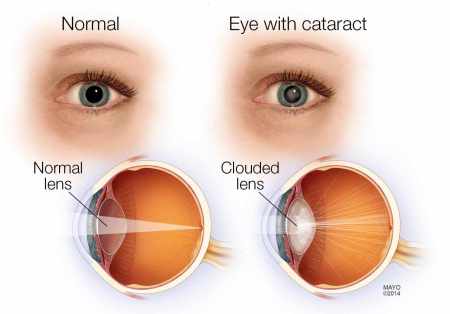
Are you at risk for cataracts?

The group, Prevent Blindness Vision Problems in the U.S., reports more than 22.3 million Americans have cataracts.

A cataract is a clouding of the eye’s lens, which blocks or changes the passage of light into the eye. The lens of the eye is located behind the pupil and the colored iris, and is normally transparent. The lens helps to focus images onto the retina—which transmits the images to the brain. When a cataract develops, your vision may become blurry or dim because the cataract stops light from properly passing through to your retina.

Cataracts are a leading cause of blindness among older adults in the United States. More than half of all Americans have cataracts by the time they are 80 years old. Cataracts can sometimes be found in young people or even newborns. The exact cause of a cataract is unknown. Most often, a cataract is part of the aging process—as you age, you are at a greater risk of developing a cataract.

There are several possible risk factors for cataracts, such as: 
• Intense heat or long-term exposure to UV rays from the sun
• Certain diseases, such as diabetes
• Inflammation in the eye
• Hereditary influences
• Events before birth, such as German measles in the mother
• Long-term steroid use
• Eye injuries
• Eye diseases and
• Smoking

The following problems may indicate that you have a cataract:
• You have blurred vision, double vision, ghost images, or the sense of a “film” over your eyes.
• Lights seem too dim for reading or close-up work, or you are “dazzled” by strong light.
• You change eyeglass prescriptions often and the change does not seem to help your vision.
• You may also be able to see the cataract in your eye. It may look like a milky or yellowish spot in your pupil.

Generally, a cataract does not cause pain, redness or tears. Cataracts are most likely caused by changes related to aging. Throughout our lives, our bodies replace old cells with new ones. As we grow older, the old cells in our eye’s lens build up and block light as it tries to pass through. The end result is cloudy vision.

The National Eye Institute recently sponsored the Age-Related Eye Disease Study 2 (AREDS2), which revealed that lutein and zeaxanthin supplementation reduced the risk of progression of AMD, one of the leading causes of blindness and visual impairment today.

They recommend it is best to take steps to slow down, if not prevent developing cataracts in your precious eyes. Preventing vision damage starts with replenishing the nutrients your eyes lose before it starts. Specialized supplements designed for eye health help safeguard your sight—naturally.

The eye supplement I use offers  superior vision support in high-glare and low-light conditions while promoting macula, retina, and lens health. I take just one softgel a day to helps maintain my visual acuity. After all, it’s never too late to protect your eyes!

PreventBlindness.org offers this Facts & Myths About Cataracts Fact Sheet to further explain cataracts.

.

Magnesium: the forgotten supplement

Vitamins and minerals are called “essential” because they are needed to sustain life and health, and almost all must be obtained from your diet. The most common source is fruit and vegetables, but only 14% of U.S. adults and 9.5% of U.S. teens are eating the recommended servings.

Because magnesium is the fourth most abundant mineral in your body, a deficiency can wreak havoc on your health. The fact that researchers have detected more than 3,750 magnesium-binding sites on human proteins should give you a sense of how important this mineral is for your body’s optimal functioning. Your body needs magnesium for:

  • Activating muscles and nerves
  • Creating energy in your body by activating adenosine triphosphate (ATP)
  • Helping digest proteins, carbohydrates and fats
  • Serving as a building block for RNA and DNA synthesis
  • Acting as a precursor for neurotransmitters like serotonin

The human body is not capable of storing most vitamins and minerals, so optimal health relies on nourishing the body with ideal amounts throughout the day. Dietary sources of magnesium include avocados, Brazil nuts, brown rice, cashews, dark leafy greens like spinach and Swiss chard, oily fish, raw cacao, seaweed and seeds.

You may be suffering from magnesium insufficiency if you experience:

  • Constipation
  • Eye twitches, muscle spasms — especially “charley horses” or spasms in your calf muscle that
    occur when you stretch your legs, numbness or tingling in your extremities and seizures
  • Headaches and/or migraines
  • High blood pressure, heart arrhythmias and/or coronary spasms
  • Low energy, fatigue and/or loss of appetite

Since the body’s ability to utilize some minerals diminishes with age, I supplement my diet with additional calcium, magnesium, and chromium with a Multivitamin & the Mineral supplement of that provides 100% or more of the daily recommended dose I need. How about you?

Do you need to add vitamin D and calcium to your diet?

Because vitamin D helps your body absorb calcium, it plays a role in your bone health. Studies involving older adults have associated low vitamin D levels with an increased risk of falls and fractures. Another finding shows that at age 50, your kidneys may become less effective at metabolizing inactive vitamin D into its active form.

At age 70 and beyond, your body will produce about one-third less vitamin D through sun exposure than it did when you were 21. Plus melanin, which determines your skin pigmentation and protects your body from harmful ultraviolet radiation (UV),can also impair your skin’s ability to produce enough vitamin D from sunlight. Darker-skinned individuals may need up to 10 times more sun exposure to produce adequate vitamin D levels as compared to a person with lighter skin. Who knew?

Another good thing about getting adequate sun exposure is that your mood automatically elevates when you are in the sun, thanks to the brain hormone serotonin. Researchers examining the effects of vitamin D on the moods of 80 elderly patients found the ones with the lowest vitamin D levels were 11 times more likely to suffer from depression. So sunning daily and taking a vitamin D supplement can help ward off depression.

If you are obese, some experts recommend you increase your intake of vitamin D. Why? Because vitamin D is fat-soluble, when your fat cells uptake it, less is available for use elsewhere in your body.

Here is a list of vitamin D deficiency symptoms that most people ignore from Healthyway.com.

The optimal vitamin D level for general health ranges between 40 to 60 nanograms per milliliter (ng/ml). The ideal way to raise your vitamin D is by regularly and sensibly exposing large amounts of your skin, such as your arms, back, chest and legs, to sunshine. Getting outdoors at or around solar noon is the best time to soak up the sun. If for whatever reason you cannot get outdoors, or not frequently enough to receive sufficient UV exposure, consider taking an oral vitamin D3 supplement along with vitamin K2 and magnesium.

My company offers a wonderful K2-D3 supplement, offering the right balance of vitamins K2 and D3 is critical to regulating calcium and helping ensure you get optimal performance from this essential mineral.

Arsenic, Lead Found in Popular Protein Supplements

Whether for weight loss, muscle building, or simply as a convenient quick meal on the go, many Americans turn to protein powders and drinks.

But a new study shows that many of the top-selling powders and drinks may contain concerning levels of heavy metals such as arsenic, cadmium, mercury, and lead, and toxins like bisphenol A (BPA), a chemical found in some plastic containers and food can liners.

These substances have been linked to cancer, brain damage, and reproductive issues. When products were tested, many contained detectable levels of at least one heavy metal and 55 percent tested positive for BPA.The problem is, these toxins accumulate in your body and can stay there for years. Frequent consumption of foods that contain them can have adverse effects on your health.

This article from Consumer Reports provides a review of popular protein powders and drink supplements available today, and whether they’re necessary for most people.

The company I work with manufactures protein supplements and happily each product is made from only the finest ingredients to deliver the healthy, benefits. Every product in one line is also soy-free, gluten-free, and GMO-free, does not contain artificial sweeteners, and is kosher. A few specific products are also dairy-free and vegan.

Whether your goal is to maintain healthy blood sugar, build muscle, achieve a healthy weight, or just snack smarter, you need to be knowledgeable to protect your body every step of your journey. I’ve attached this article to help learn more about healthier for you flavors and formulas. You owe it to yourself to make an informed healthy choice.

Sunshine in a bottle: Vitamin D3

The Harvard School of Public Health suggests an estimated 1 billion people worldwide have low vitamin D levels, with deficiencies noted across all age and ethnic groups.

You are at risk of missing out on vitamin D from natural sun exposure if you spend most of your time indoors, use topical sunscreens or wear long clothing for religious reasons.

This study from Health Impact News supports an important role for vitamin D in prevention of common respiratory infections, such as colds and the flu. Individuals with common lung diseases, such as asthma or emphysema, may be particularly susceptible to respiratory infections from vitamin D deficiency. Another study, done in Japan, indicated schoolchildren taking 1,200 units of vitamin D per day during winter reduced their risk of contracting the flu by about 40 percent.

Here is a list of vitamin D deficiency symptoms that most people ignore from Healthyway.com.

If for whatever reason you cannot get outdoors, or not frequently enough to receive sufficient UV exposure,consider taking an oral vitamin D3 supplement along with vitamin K2 and magnesium.

I take an excellent Vitamin D3 supplement that provides 2000 IUs of vitamin D3 to battle the effects of Vitamin D deficiency to support my immune system, bone health and mood. It’s the same vitamin D my body produces when exposed to the Sun without exposure to, harmful UV rays.
This combined with my Peak Performance = Optimal health!

Even if you are in good health, I encourage you to have your level tested twice a year by your primary health care provider and think about taking a vitamin D supplement like I do.


Beauty Comes from the Inside

Shiny hair, robust nails, and bright skin can be signs of a great beauty regime…the things you do for the outside of your body. But as the article below from “The Healthy Food Guide” explains, your skin, hair, and nails are even more dependent on what’s going on INSIDE your body.

Your diet can be a huge determinant of the appearance of your skin, hair, and nails. The discussion from dietitian, Cindy Williams, speaks to the things that you can do to ensure that you are as beautiful as can be.

Be sure your diet includes plenty of protein (preferably lean) because our skin, hair, and nails are mostly protein. Essential fats are also part of internal health and beauty. Avoid the fats that are part of sugary snacks you may crave. The fats we refer to are essential Omega-3 and Omega-6 which occur in many seafoods. Eating fish, especially oily fish two or three times a week can help.

Foods high in iron not only will help maintain the cosmetic results you are seeking, it will bolster your energy levels, as well. Red meats are the best source of iron. If you avoid meats, you can get iron from legumes and whole grains, remember to assure proper absorption by supplementing with vitamin C.

Whole grains will add vitamin B (the skin vitamin) and the powerful antioxidant, vitamin E, will guard against dry skin. Nuts should also be part of your “beauty diet”. They provide additional essential fats. Nuts also offer a healthy alternative to higher calorie snacks and control your appetite.

Citrus for vitamin C, orange, yellow, red and green vegetables provide beta-carotene and vitamin A. Finally, hydrate with water and black, green and white tea to get the benefits of flavonoids which will help protect your skin from UV damage. 

I’m excited that the company I am associated with keeps its pulse on the consumer trends. They just developed an incredible supplement designed to target skin, hair, and nails. I plan on adding it to my daily supplements. Balance your dietary changes with healthy exercise and supplements that really work!

https://www.healthyfood.co.nz/articles/2008/june/8-steps-to-healthy-skin-hair-and-nails