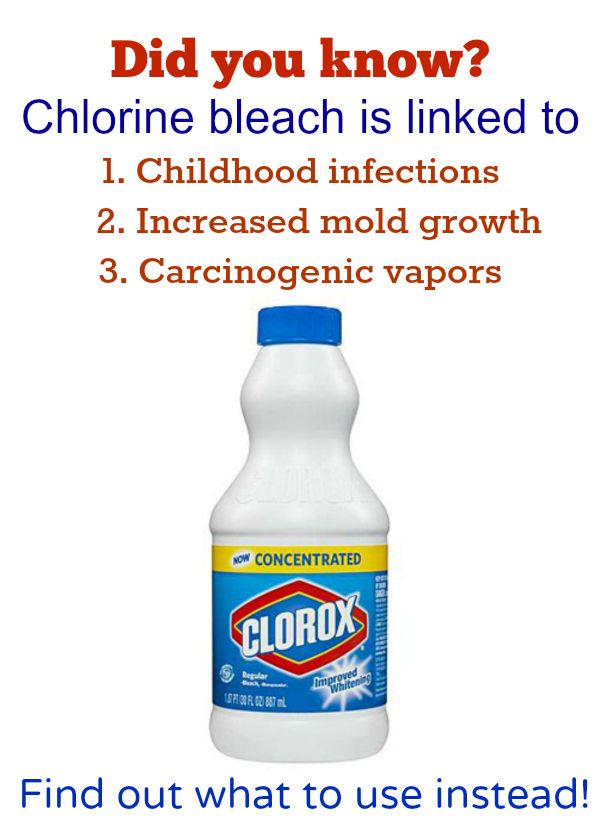
What you should know if you use bleach

I don’t know about you, but I really am not a fan of those bleach commercials. You know, the ones where they tell you that to get something clean, you need to use bleach. Otherwise, you’re not cleaning properly, because bleach is the only thing can can get your house clean, fresh and bacteria free.

Common household bleach (sodium hydroxide) can be found in a variety of household products in both liquid and granular form and is not, technically speaking, considered corrosive or toxic, even if ingested. However, bleach exposure  is highly irritating and corrosive to the eyes, mouth and lungs. Fumes from bleach are very potent, as you can tell by the smell, and when inhaled can cause nervous system and brain damage, individuals with asthma or other breathing problems are particularly susceptible. In fact, inhaling the fumes is potentially carcinogenic.

Dermal contact of bleach can cause rash and burning. The longer the bleach is left on your skin,  the more likely it is that you will begin to experience burning, itching and other types of irritation. If the bleach is left on your skin for an inordinately long period of time, it can cause pigment lightening and permanent tissue damage.

Serious side effects of using bleach can include respiratory problems, skin burns, damage to the nervous system, asthma flares, extreme headaches, migraines, and vomiting. Inhalation of chlorine gas or drinking highly concentrated sources of chlorine (such as household bleach) can lead to vomiting, coma, and even death.

Athough it is not considered “technically toxic” stories abound concerning bleach and the side effects.

From the “Pharmaceutical Press”: A young girl had suffered episodes of vomiting, abdominal pain, and bronchopneumonia over a period of a year which was finally traced to her habit of sucking socks that had been bleached.

From Clinical Toxicology of Commercial Products:  An 18 month old girl who swallowed a “few tablespoons” of liquid household bleach coughed, choked and vomited. Promptly thereafter she became lethargic and was admitted to a local hospital in a state of coma. Death occurred 19 hours after ingestion.

Why would you add a half cup of chemical toxins to your load of laundry?
Well, that’s what you’re doing when you add Clorox® Bleach to your wash. The culprit in Clorox Bleach is chlorine—that toxic chemical with vapors irritating to your eyes and damaging to your respiratory system. Products with the word bleach in its name obviously contain bleach, however; a variety of products contain bleach and it may not be obvious at first glance, or smell. Some examples are: Drano, Tilex, Palmolive, and Cascade.

The statistics are startling.

An estimated 61% of toilet bowl cleaners use chlorine bleach. Another 26% of adults use chlorine bleach directly in their toilets. That means 87% of all toilets are being cleaned with a known poison that is then flushed into city water systems. That water must then be treated with more chemicals before being released into our water ways.

Not only can bleach be toxic, but it can increase my risk of an asthma attack and make the condition worse, as well as lead to COPD or cancer. I admit it, I was an ardent user of bleach until I decided to spend time reading labels and go green 15 years ago when I discovered a manufacturer providing greener products through an online shopping club.

I now use an EPA-registered botanical disinfectant, powered by thyme oil and citric acid, which kills over 99.9% of common household germs—no caustic chlorine bleach or quats required. I admit disinfecting my home has never been easier! For toilets, there’s an alternative powered by organic cleaners and thyme oil that has the same environmental impact as a bowl of lemons. It cleans beautifully, and smells great. I found a great way to get my home even cleaner than using bleach and my cleansers smell so much better! I know my home is safer too.

The link to the article below offers alternatives to using bleach in your laundry:

It’s time to break up with bleach and move up to MelaBrite Plus Oxi!

Switching stores and switching from bleach allowed me to get rid of a lot more than just the stains and dirt, it got rid of Ammonia; Chlorine Bleach; Petroleum Distillates; Gloves; Toxic Ingredients; no special ventilation is required and I have NO WORRIES!

It’s time to talk about dishwashing

I want to share something I learned a long time ago— you know it’s prohibited to vent your automatic dishwasher outdoors. Most dishwashers will have a vent on the outside of the door, others (like mine) will have a concealed vent located on the inside of the door, but both went the hot steam/air into your kitchen.

Why?

Because it’s prohibited to have chlorine gases emitted into the environment. Consider this, when you use an automatic dishwashing detergent that contains chlorine bleach, or other name-brand product containing a bleach chemical, it combines with the heat and steam which creates chlorine gas.

Since it’s not released outdoors, but released into our homes through the machines vents it creates an unhealthy or even toxic indoor air quality. That’s why it’s recommended to open your windows regularly to circulate air. If you don’t, those chlorine-based outgases can stay in your home for up to seven days! How unhealthy is that? No wonder so many children today suffer from asthma and other lung-related issues.

I stopped using those bleach-based toxic automatic dish soaps years ago.

I am so glad  I switched to a product that is free of phosphates and chlorine bleach. It’s also made with 100% nontoxic ingredients—because what’s on your dishes can also go into your body. The product also comes highly concentrated so the new resealable pouch uses 90% less plastic than the previous bottle, which was already significantly smaller than the competition!

It uses naturally derived water-softening agent naturally derived enzymes and all natural melaleuca oil. No bleach. No phosphates. No poisons. I love having sparkling dishes without endangering my family, and without polluting my home or the environment!

I like shopping with my online shopping club. Not only are the products non-toxic and the best of natural ingredients and science combined, but because I save so much money!

Recently, I placed my online shopping order and received two packages of this fabulous Automatic Dishwashing product FREE with my loyalty shopping dollars, saving me $14.33. Each time I shop, I get loyalty rewards, up to 18% back! I’ve yet to find another store that offers this type of reward, Even after 15 years of shopping with this club, I still get excited each time I order because of the savings!

Can you say that about your store?

Pancakes can be a powerhouse

Getting a good healthy start to your day with a hearty breakfast can set the tone for a productive day. Eggs are a great choice, but eggs day after day can get boring. A tasty alternative can be pancakes. But knowing what the dangers packed in pancakes are can help you make them a healthy choice.

Pancakes are high in carbs and contain a wide range of vitamins and minerals, but they can contain lots of fat, calories, and sodium. Still, pancakes can be a great addition to the variety of your morning meal. Knowing what they contain can be helpful to your healthy diet.

A 3.5 oz. serving of pancakes (2 cakes) contains about  221 calories, although the addition of butter and maple syrup can add considerable calories, obviously. A serving of pancakes contains 8.8 g of fat/ 3.8g are saturated fat. Avoid more than 15g of saturated fat per day. They also contain 27.2 g of carbohydrates, which is about 10% of what you should have in a day. You also get 8.1 g of protein which is about 17% of the average amount of this macronutrient.

Pancakes pack both a savory and sweet taste which is what makes them so satisfying. They contain about 4.3 g of sugar. The American Heart Association recommends under 25 g for women and 37 g for men. Salt in your batter constitutes 308 mgs of sodium and the recommended limit is at about 2000 mg, so measure your daily intake carefully.

But pancakes are a good source of phosphorus (20%) and calcium (18%) of your daily requirements. This makes them a good option for increasing bone strength and your body’s ability to manufacture RNA and DNA. Pancakes also provide significant levels of iodine and riboflavin as well as smaller amounts of vitamin C, Thiamin, vitamin B-6, niacin, vitamin B-12, magnesium, zinc, copper, and iron.

Whole-wheat flour will provide extra fiber and whole grains. I have also have attached some great recipes for high protein versions of these little-griddled beauties. While we found the recipes to contain great food additives, we in no way endorse the brands promoted. We use the recipes as additional options to our already great pancake recipes. We shop directly from a manufacturer that manufactures an entire suite of performance supplements that can “jack up” the nutritional value of your morning meal, as well as help control blood sugar! We have discovered the amazing power of pancakes when made with the proper ingredients. No syrup needed. Yes, they are that good!

81 Percent of Dollar Store Products Tested Contain Chemicals Linked To Learning Disabilities, Cancer and Serious Illnesses

HealthyStuff, in collaboration with the Campaign for Healthier Solutions, released a report today about toxic chemicals found in Dollar store products. The report — A Day Late and a Dollar Short: Discount Retailers are Falling Behind on Safer Chemicals — includes testing results for 164 dollar store products such as toys, jewelry, school supplies and other household items, that found over 81% (133 of 164) contained at least one hazardous chemical above levels of concern.

On average the dollar store products are some of the poorest peforming from a chemical hazard perspective. There is a comparatively high percentage of products containing hazardous plasticizers. The chemicals of concern found in Dollar store products tested for this report include: phthalates, linked to birth defects, reduced fertility, cancer, learning disabilities, diabetes, and other health
issues; polyvinyl chloride plastic (PVC or vinyl), which creates hazards throughout its life cycle and has been linked to asthma and lung effects; and toxic metals such as lead, which harms brain development, leading to learning disabilities, lower IQ, and cause other serious health impacts, especially in children. Combined these discount chains have sales totaling over $36 billion
and operate more stores nationally than Walmart.

The attached article from Healthy Holistic Living gives a full report and explains what consumers can do.

In the meantime, families and communities let dollar store chains know that they want safer products, and join local and national efforts advocating for nontoxic products. Most importantly, consumers should read product labels to protect themselves and their families.

My company works hard every day to make sure that our products and business practices are environmentally friendly and safer for your home and family. We are passionate about and committed to eco-friendly practices that contribute to sustaining our environment and our customers health. Instead of harsh chemicals like chlorine bleach, ammonia, and formaldehyde, our products are powered by naturally derived ingredients including essential oils.

No matter how big or how small, nations, companies, communities, and families have the responsibility and opportunity to make a lasting, positive difference for our beautiful planet.

Are you at risk for harmful toxins in your home?

Smoking can put you at risk for many diseases, including colorectal cancer. If you don’t smoke because of health risks, then you need to check out your cleaning products as well.

This remarkable 20-year study shows that the cleaning products you uses can be just as harmful as smoking and second-hand smoke.

I love that I switched stores and get everything I need for my healthy home in one place. I don’t have to make my own cleaners and they are super cost effective, good for the environment and, most of all, affordable!

If you are a smoker, and would like to improve the air quality in your home, Healthfinder.gov offers these steps to help you quit: http://bit.ly/2kuGwCh

We all need to breath healthy air in our own homes.

Do you need to add vitamin D and calcium to your diet?

Because vitamin D helps your body absorb calcium, it plays a role in your bone health. Studies involving older adults have associated low vitamin D levels with an increased risk of falls and fractures. Another finding shows that at age 50, your kidneys may become less effective at metabolizing inactive vitamin D into its active form.

At age 70 and beyond, your body will produce about one-third less vitamin D through sun exposure than it did when you were 21. Plus melanin, which determines your skin pigmentation and protects your body from harmful ultraviolet radiation (UV),can also impair your skin’s ability to produce enough vitamin D from sunlight. Darker-skinned individuals may need up to 10 times more sun exposure to produce adequate vitamin D levels as compared to a person with lighter skin. Who knew?

Another good thing about getting adequate sun exposure is that your mood automatically elevates when you are in the sun, thanks to the brain hormone serotonin. Researchers examining the effects of vitamin D on the moods of 80 elderly patients found the ones with the lowest vitamin D levels were 11 times more likely to suffer from depression. So sunning daily and taking a vitamin D supplement can help ward off depression.

If you are obese, some experts recommend you increase your intake of vitamin D. Why? Because vitamin D is fat-soluble, when your fat cells uptake it, less is available for use elsewhere in your body.

Here is a list of vitamin D deficiency symptoms that most people ignore from Healthyway.com.

The optimal vitamin D level for general health ranges between 40 to 60 nanograms per milliliter (ng/ml). The ideal way to raise your vitamin D is by regularly and sensibly exposing large amounts of your skin, such as your arms, back, chest and legs, to sunshine. Getting outdoors at or around solar noon is the best time to soak up the sun. If for whatever reason you cannot get outdoors, or not frequently enough to receive sufficient UV exposure, consider taking an oral vitamin D3 supplement along with vitamin K2 and magnesium.

My company offers a wonderful K2-D3 supplement, offering the right balance of vitamins K2 and D3 is critical to regulating calcium and helping ensure you get optimal performance from this essential mineral.

Arsenic, Lead Found in Popular Protein Supplements

Whether for weight loss, muscle building, or simply as a convenient quick meal on the go, many Americans turn to protein powders and drinks.

But a new study shows that many of the top-selling powders and drinks may contain concerning levels of heavy metals such as arsenic, cadmium, mercury, and lead, and toxins like bisphenol A (BPA), a chemical found in some plastic containers and food can liners.

These substances have been linked to cancer, brain damage, and reproductive issues. When products were tested, many contained detectable levels of at least one heavy metal and 55 percent tested positive for BPA.The problem is, these toxins accumulate in your body and can stay there for years. Frequent consumption of foods that contain them can have adverse effects on your health.

This article from Consumer Reports provides a review of popular protein powders and drink supplements available today, and whether they’re necessary for most people.

The company I work with manufactures protein supplements and happily each product is made from only the finest ingredients to deliver the healthy, benefits. Every product in one line is also soy-free, gluten-free, and GMO-free, does not contain artificial sweeteners, and is kosher. A few specific products are also dairy-free and vegan.

Whether your goal is to maintain healthy blood sugar, build muscle, achieve a healthy weight, or just snack smarter, you need to be knowledgeable to protect your body every step of your journey. I’ve attached this article to help learn more about healthier for you flavors and formulas. You owe it to yourself to make an informed healthy choice.

Should you be gluten-free?

If you have been diagnosed with celiac disease you should most certainly be gluten-free. Celiac disease is a genetic phenomenon which scientists trace to certain genes. There is a disorder called gluten intolerance that indicates that you should avoid excessive exposure to gluten.

Oddly, scientists know less about gluten intolerance than they do about full-blown celiac disease. The article below from Medical News Today will provide you with some more detailed information about gluten intolerance.

Gluten is the name for the proteins that give wheat its unique baking qualities. While wheat is the greatest source of gluten, there are other grains, which contain these proteins as well. This article gives us valuable insights into the foods and symptoms of gluten intolerance.

Remember, there are differences between celiac disease, wheat allergies, and gluten intolerance. You will find some answers here. Become a label reader (which most of us should do more of). Make sure you know which of the foods you eat contain wheat and try to avoid them.

Gluten can cause inflammation, which can be the source of risks to other diseases. While the gut is the most vulnerable to this inflammation, there is evidence that the inflammation can worsen symptoms of rheumatoid arthritis, multiple sclerosis, asthma, lupus and inflammatory bowel disease.

My company has developed, manufactures and offers many gluten-free products that can make living with gluten intolerance much more tolerable. It will never be easy, but it can be easier. It begins by knowing what you are ingesting and what it contains. Be well.

https://www.medicalnewstoday.com/articles/312898.php

Sunshine in a bottle: Vitamin D3

The Harvard School of Public Health suggests an estimated 1 billion people worldwide have low vitamin D levels, with deficiencies noted across all age and ethnic groups.

You are at risk of missing out on vitamin D from natural sun exposure if you spend most of your time indoors, use topical sunscreens or wear long clothing for religious reasons.

This study from Health Impact News supports an important role for vitamin D in prevention of common respiratory infections, such as colds and the flu. Individuals with common lung diseases, such as asthma or emphysema, may be particularly susceptible to respiratory infections from vitamin D deficiency. Another study, done in Japan, indicated schoolchildren taking 1,200 units of vitamin D per day during winter reduced their risk of contracting the flu by about 40 percent.

Here is a list of vitamin D deficiency symptoms that most people ignore from Healthyway.com.

If for whatever reason you cannot get outdoors, or not frequently enough to receive sufficient UV exposure,consider taking an oral vitamin D3 supplement along with vitamin K2 and magnesium.

I take an excellent Vitamin D3 supplement that provides 2000 IUs of vitamin D3 to battle the effects of Vitamin D deficiency to support my immune system, bone health and mood. It’s the same vitamin D my body produces when exposed to the Sun without exposure to, harmful UV rays.
This combined with my Peak Performance = Optimal health!

Even if you are in good health, I encourage you to have your level tested twice a year by your primary health care provider and think about taking a vitamin D supplement like I do.


Household Items can be Dangerous

You have probably read about the new “trend” on the Internet. Young adults (teenagers) actually ingesting Tide laundry pods on digital videos. The article below from FOX Business will give you some gruesome details. Solving this problem is about common sense in our teens.

While common sense and mentoring can solve this practice, there are other dangers that exist in our homes that we expose ourselves and our families to that are not as obvious. More importantly, we voluntarily take these risks in the name of cleanliness and convenience.

If I were to take you into a grocery or drug store where you buy many of your household cleaning products, in a blindfold, your nose would direct you to the aisle where the cleaning products were displayed. The chemicals in these products fill the air with scents…and TOXINS.

The other article from House Beautiful explains how some of the household items expose our families and homes to unknown dangers. In a world of “going green”, it is counter-intuitive to continue exposing our domestic environment to these unnecessary risks.

There is a reason why many traditional products are equipped with “child-proof” packaging and warnings that guard against manufacturer liability as much as consumer safety. Be aware of the chances you take every day. Breathing and exposing skin to these products presents the real possibility of risks to your health. Everything from skin cancer to respiratory or gastrointestinal infections are just some of the possibilities.

I learned of a manufacturer that I can actually purchase directly from for products I use every day WITHOUT all the toxins. I have been getting my products, like laundry detergent, from them for a while now. I absolutely love how well they work. I’ve learned that cleaning products do not have to have skull and bones and child-proof safety caps on them to be effective.  As adults, we can take all the safety precautions in the world and a child will still figure out how to access things they shouldn’t! We should not have to worry about making a trip to the hospital if that happens. And thanks to the manufacturer I purchase from, I don’t worry. 

http://www.foxnews.com/health/2018/01/22/utah-state-university-student-hospitalized-after-eating-tide-pod.html

http://www.housebeautiful.com/lifestyle/cleaning-tips/tips/a1492/dangerous-household-items/