It’s National Iced Tea Day!

National Iced Tea Day is  June 10th.

This day is set aside to celebrate one of summer’s favorite drinks. Whether it is sweetened or unsweetened, with or without lemon, it is loved and enjoyed all summer long.

Tea is already the world’s most-consumed beverage, second only to water, and its popularity is on the rise around the world. With gourmet tea leading the way, more and more people are discovering the magic of tea. In the United States, iced tea is popular as an alternative to carbonated soft drinks and makes up about 85% of all tea consumed.

It is believed that iced tea started to appear in the United States in the 1860′s and became widespread in the 1870s where it was offered on hotel menus and on sale at railroad stations. Recipes for iced tea have been found in The Buckeye Cookbook, published in 1876 and Housekeeping in Old Virginia, published in 1877. The popularity of iced tea drink grew rapidly after it was introduced at the 1904 World’s Fair in St. Louis.

Today, iced tea can be found in many flavors, including: lemon, peach, raspberry, lime, passions fruit, strawberry and cherry.  It is found in restaurants, convenience stores, vending machines, grocery stores and self-serve soda fountains.

Both black and green tea have been recommended for a variety of positive health benefits, such as: reducing the risk of cardiovascular disease and certain forms of cancer. Tea’s antibacterial and antiviral activity helps maintain good oral health and normal blood pressure aand in some cases help;manage weight control.

We like to make our iced tea with Hidden Garden English Breakfast Tea. It’s a full-bodied, invigorating blend of Indian and Ceylon black tea. It makes a delicious tall glass of iced tea and it is our go to summer cooler. What’s yours?.


Another powerful reason to avoid drinking diet sodas

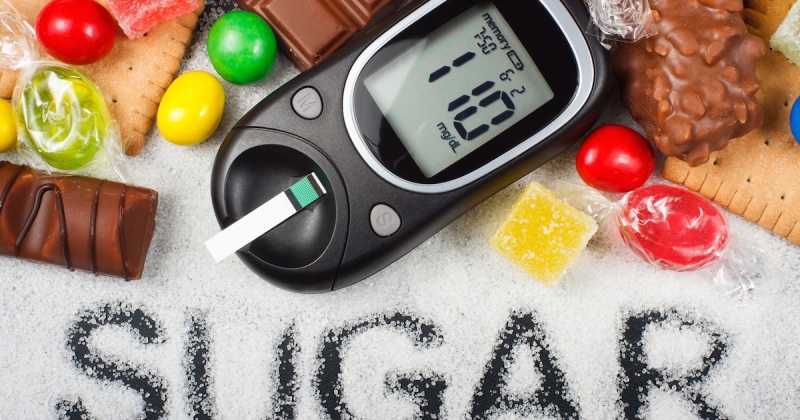
We already knew drinking sugary drinks was bad. Nutrition experts believe high levels of sugar contribute not just to rising levels of obesity, but also other health conditions such as diabetes, heart disease, dental cavities and cancer.

Boston University researchers found aspartame, a low-calorie sweetener, wreaks havoc on the arteries – as opposed to sugar-sweetened drinks. This means drinking diet soda is far worse for your health than drinking regular soda sweetened with sugar.

The results showed that adults who had one or more diet drinks a day were 2.9 times more likely to develop dementia and three times more at risk of strokes compared to those who virtually had none at all.

The team of scientists from Boston University believe the artificial sweeteners including aspartame and saccharine may be affecting the blood vessels, eventually triggering strokes and dementia.

This new study involved data on 2,888 adults older than 45 and 1,484 adults older than 60 from the town of Framingham, Massachusetts. The data came from the Framingham Heart Study, a project of the National Heart, Lung, and Blood Institute and Boston University.

“Our study shows a need to put more research into this area given how often people drink artificially sweetened beverages,” said Matthew Pase, a senior research fellow in the department of neurology at Boston University School of Medicine and lead author of the new study.

“Although we did not find an association between stroke or dementia and the consumption of sugary drinks, this certainly does not mean they are a healthy option. We recommend that people drink water on a regular basis instead of sugary or artificially sweetened beverages.”

Now, you have proof that  Drinking One Diet Drink A Day Can Triple Risk Of Dementia And Strokes. Only one a day!

So what to do? Drink ordinary water? That’s boring. We know getting eight glasses of water every day can be tough, but we’ve found a solution, SplasH2O.

SplasH2O® transforms plain water into a thirst-quenching, body-revitalizing, flavor sensation with tantalizing bursts of fresh fruit that will keep you making smarter choices. It’s a fantastic alternative to high-calorie, high-sugar drinks, and replaces them with sugar-free deliciousness. This fun, lively fusion of 5 classic fruits makes ordinary water taste refreshingly good—with no calories, sugar, or artificial flavors and colors.

We are so glad we found a way to turn water into a refreshing, flavorful drink that satisfies – without the sugar, calories, or cost of soda or fruit juice. We also know that we are reducing the chance of developing dementia or a stroke by switching products.

Now that’s something to consider.

The Centers For Disease Control And Prevention (CDC) have great information about the devastating consequences
of eating too much sugar. It is very important to Know Your Limit for Added Sugars.

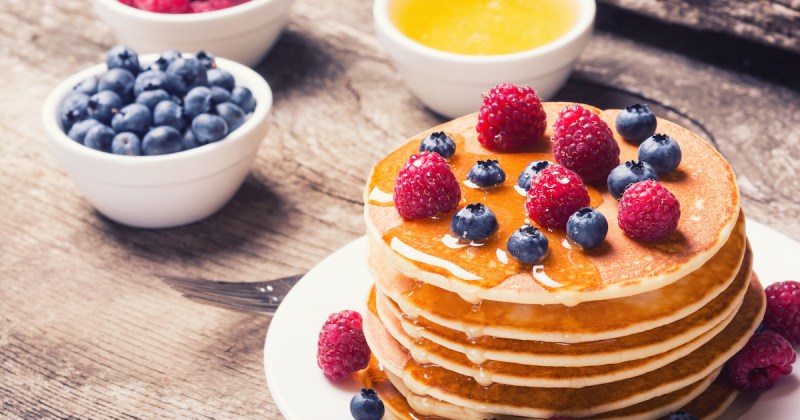
Pancakes can be a powerhouse

Getting a good healthy start to your day with a hearty breakfast can set the tone for a productive day. Eggs are a great choice, but eggs day after day can get boring. A tasty alternative can be pancakes. But knowing what the dangers packed in pancakes are can help you make them a healthy choice.

Pancakes are high in carbs and contain a wide range of vitamins and minerals, but they can contain lots of fat, calories, and sodium. Still, pancakes can be a great addition to the variety of your morning meal. Knowing what they contain can be helpful to your healthy diet.

A 3.5 oz. serving of pancakes (2 cakes) contains about  221 calories, although the addition of butter and maple syrup can add considerable calories, obviously. A serving of pancakes contains 8.8 g of fat/ 3.8g are saturated fat. Avoid more than 15g of saturated fat per day. They also contain 27.2 g of carbohydrates, which is about 10% of what you should have in a day. You also get 8.1 g of protein which is about 17% of the average amount of this macronutrient.

Pancakes pack both a savory and sweet taste which is what makes them so satisfying. They contain about 4.3 g of sugar. The American Heart Association recommends under 25 g for women and 37 g for men. Salt in your batter constitutes 308 mgs of sodium and the recommended limit is at about 2000 mg, so measure your daily intake carefully.

But pancakes are a good source of phosphorus (20%) and calcium (18%) of your daily requirements. This makes them a good option for increasing bone strength and your body’s ability to manufacture RNA and DNA. Pancakes also provide significant levels of iodine and riboflavin as well as smaller amounts of vitamin C, Thiamin, vitamin B-6, niacin, vitamin B-12, magnesium, zinc, copper, and iron.

Whole-wheat flour will provide extra fiber and whole grains. I have also have attached some great recipes for high protein versions of these little-griddled beauties. While we found the recipes to contain great food additives, we in no way endorse the brands promoted. We use the recipes as additional options to our already great pancake recipes. We shop directly from a manufacturer that manufactures an entire suite of performance supplements that can “jack up” the nutritional value of your morning meal, as well as help control blood sugar! We have discovered the amazing power of pancakes when made with the proper ingredients. No syrup needed. Yes, they are that good!

Arsenic, Lead Found in Popular Protein Supplements

Whether for weight loss, muscle building, or simply as a convenient quick meal on the go, many Americans turn to protein powders and drinks.

But a new study shows that many of the top-selling powders and drinks may contain concerning levels of heavy metals such as arsenic, cadmium, mercury, and lead, and toxins like bisphenol A (BPA), a chemical found in some plastic containers and food can liners.

These substances have been linked to cancer, brain damage, and reproductive issues. When products were tested, many contained detectable levels of at least one heavy metal and 55 percent tested positive for BPA.The problem is, these toxins accumulate in your body and can stay there for years. Frequent consumption of foods that contain them can have adverse effects on your health.

This article from Consumer Reports provides a review of popular protein powders and drink supplements available today, and whether they’re necessary for most people.

The company I work with manufactures protein supplements and happily each product is made from only the finest ingredients to deliver the healthy, benefits. Every product in one line is also soy-free, gluten-free, and GMO-free, does not contain artificial sweeteners, and is kosher. A few specific products are also dairy-free and vegan.

Whether your goal is to maintain healthy blood sugar, build muscle, achieve a healthy weight, or just snack smarter, you need to be knowledgeable to protect your body every step of your journey. I’ve attached this article to help learn more about healthier for you flavors and formulas. You owe it to yourself to make an informed healthy choice.

Should you be gluten-free?

If you have been diagnosed with celiac disease you should most certainly be gluten-free. Celiac disease is a genetic phenomenon which scientists trace to certain genes. There is a disorder called gluten intolerance that indicates that you should avoid excessive exposure to gluten.

Oddly, scientists know less about gluten intolerance than they do about full-blown celiac disease. The article below from Medical News Today will provide you with some more detailed information about gluten intolerance.

Gluten is the name for the proteins that give wheat its unique baking qualities. While wheat is the greatest source of gluten, there are other grains, which contain these proteins as well. This article gives us valuable insights into the foods and symptoms of gluten intolerance.

Remember, there are differences between celiac disease, wheat allergies, and gluten intolerance. You will find some answers here. Become a label reader (which most of us should do more of). Make sure you know which of the foods you eat contain wheat and try to avoid them.

Gluten can cause inflammation, which can be the source of risks to other diseases. While the gut is the most vulnerable to this inflammation, there is evidence that the inflammation can worsen symptoms of rheumatoid arthritis, multiple sclerosis, asthma, lupus and inflammatory bowel disease.

My company has developed, manufactures and offers many gluten-free products that can make living with gluten intolerance much more tolerable. It will never be easy, but it can be easier. It begins by knowing what you are ingesting and what it contains. Be well.

https://www.medicalnewstoday.com/articles/312898.php

Low Sodium Foods to promote heart health

Most people eat much more sodium (salt) than they need. This can lead to health problems like high blood pressure. To lower the amount of sodium in your diet, follow these tips when you go food shopping:

  • Choose fresh instead of processed foods when you can.
  • Use the Nutrition Facts label to check the amount of sodium. Look for foods with 5% Daily Value (DV) or less. A sodium content of 20% DV or more is high.
  • Look for foods labeled “low sodium,” “reduced sodium,” or “no salt added.”
To preserve your heart and keep pressure in check, get plenty of fruit and vegetables.
  • Any fresh fruits, like apples, oranges, or bananas
  • Any fresh vegetables, like spinach, carrots, or broccoli
  • Frozen vegetables without added sauce
  • Canned vegetables that are low in sodium or have no salt added
  • Low sodium vegetable juice
  • Frozen or dried fruit (unsweetened)
  • Canned fruit (packed in water or 100% juice, not syrup)
Breads, Cereals, and Grains

Compare labels to find products with less sodium. When you cook rice or pasta, don’t add salt.

  • Rice or pasta
  • Unsweetened oatmeal
  • Unsalted popcorn

Tip: If your food comes with a seasoning packet, use only part of the packet. This will lower the amount of sodium in the food.

Meats, Nuts, and Beans

Choose fresh meats when possible. Some fresh meat has added sodium, so always check the label.

  • Fish or shellfish
  • Chicken or turkey breast without skin
  • Lean cuts of beef or pork
  • Unsalted nuts and seeds
  • Dried peas and beans
  • Canned beans labeled “no salt added” or “low sodium”
  • Eggs
Dairy Products

Choose fat-free or low-fat milk and yogurt. Be sure to check the label on cheese, which can be high in sodium. Milk and yogurt are also good sources of potassium, which can help lower blood pressure.

  • Fat-free or low-fat (1%) milk
  • Fat-free or low-fat yogurt
  • Low- or reduced-sodium cheese (like natural Swiss cheese)
  • Soymilk with added calcium
Dressings, Oils, and Condiments

When you cook, use ingredients that are low in sodium or have no sodium at all.

  • Unsalted margarine and spreads (soft, tub, or liquid) with no trans fats
  • Vegetable oils (canola, olive, peanut, or sesame)
  • Sodium-free, light mayonnaise and salad dressing
  • Low-sodium or “no salt added” ketchup
  • Vinegar
Seasonings

Try these seasonings instead of salt to flavor your food.

  • Herbs, spices, or salt-free seasoning blends
  • Chopped vegetables, like garlic, onions, and peppers
  • Lemons and limes
  • Ginger

Heart-Healthy Foods to Prolong Your Life

When it comes to your heart, what you eat matters. Follow these tips for heart-healthy eating:

  1. Eat less saturated and trans fat. Stay away from fatty meats, fried foods, cakes, and cookies.
  2. Cut down on sodium (salt). Look for the low-sodium or “no salt added” types of canned soups, vegetables, snack foods, and lunch meats.
  3. Get more fiber. Eat vegetables, fruits, and whole grains to add fiber to your diet.

Take this list with you the next time you go food shopping.

Vegetables and Fruits

Eat a variety of vegetables and fruits. Buy vegetables and fruits that are in season, frozen, or canned.

  • Fresh vegetables such as tomatoes, cabbage, and broccoli
  • Leafy greens for salads, like spinach and kale
  • Canned vegetables low in sodium (salt)
  • Frozen vegetables without added butter or sauces
  • Fresh fruits such as apples, oranges, bananas, pears, and peaches
  • Canned fruit in 100% juice, not syrup
  • Frozen or dried fruit (unsweetened)
Dairy Products

Look for fat-free or low-fat milk products. Or choose soymilk with added calcium.

  • Fat-free or low-fat (1%) milk
  • Fat-free or low-fat yogurt (choose options with less added sugar)
  • Cheese (3 grams of fat or less per serving)
  • Fat-free or low-fat soymilk with calcium
Breads, Cereals, and Grains

For products with more than one ingredient, make sure whole wheat or another whole grain is listed first.

  • 100% whole-wheat bread
  • Whole-grain breakfast cereals like oatmeal
  • Whole grains such as brown or wild rice, barley, and bulgur
  • Whole-wheat or whole-grain pasta
Meat, Beans, Eggs, and Nuts

Choose lean cuts of meat and other foods with protein.

  • Seafood, including fish and shellfish
  • Chicken and turkey breast without skin
  • Pork: leg, shoulder, tenderloin
  • Beef: round, sirloin, tenderloin, extra lean ground beef (at least 93% lean)
  • Beans, lentils, and peas
  • Eggs and egg substitutes
  • Unsalted nuts and seeds
Fats and Oils

Cut back on saturated fat and look for products with no trans fats.

  • Margarine and spreads (soft, tub, or liquid) with no trans fats
  • Vegetable oil (canola, olive, peanut, or sesame)
  • Non-stick cooking spray
  • Light mayonnaise
  • Salad dressings that are oil based instead of creamy
Daily Supplements

For most people, diet and exercise aren’t enough to deliver optimal heart health. That’s why we use proven, natural solutions yo address six controllable factors for optimal heart health.

  • Omega-3s are good fats—polyunsaturated fats—that are derived from fish, nuts, and seeds. Our favorite is Crème Delight®— Peach Mango Tango with 1,080mg of research-proven EPA/DHA essential fatty acids, this supplement provides daily support for eye, heart, and brain health–in a flavor the whole family loves.
  • Mom used to give us cod-liver oil every morning especially in winter to help us avoid flu and keep us healthy. The taste was not a favorite and we weren’t enamored of it. Today we use Vitality Coldwater Omega-3® a pure, concentrated DHA and EPA Omega-3’s for superior cardiovascular and brain health benefits. Two soft gels include the research-recommended dose with no fishy aftertaste.  
  • CardiOmega EPA®with 1,000 mg of EPA plus 100 mg DHA this supplement is designed to support high levels of activity, since we’ve become serious about fitness and getting to a healthy weight, we find this helps promote rapid recovery and reduce activity-induced inflammation all while protecting our heart. 

Take care of your heart, it’s the only one you have!

Keep Your Heart Healthy

Take steps today to lower your risk of heart disease. Heart disease is the leading cause of death for both men and women in the United States.

To help prevent heart disease, you can:

  • Eat healthy.
  • Get active.
  • Stay at a healthy weight.
  • Quit smoking and stay away from secondhand smoke.
  • Control your cholesterol (“koh-LEHS-tuh-rahl”) and blood pressure.
  • If you drink alcohol, drink only in moderation.
  • Manage stress.

Everyone is at risk for heart disease. But you are at higher risk for heart disease if you:

  • Have high cholesterol or high blood pressure
  • Smoke
  • Are overweight or obese
  • Don’t get enough physical activity
  • Don’t eat a healthy diet

Your age and family history also affect your risk for heart disease. Your risk is higher if:

  • You are a woman over age 55
  • You are a man over age 45
  • Your father or brother had heart disease before age 55
  • Your mother or sister had heart disease before age 65

But the good news is there’s a lot you can do to prevent heart disease. Throughout National Heart month we will be sharing healthy heart tips and stories.


Do you Get Enough Calcium?

Since you were a kid, your mom has been telling you, “Drink your milk. You need the calcium.”  It’s true. You need calcium for strong bones and teeth.

Everyone needs calcium, but it’s especially important for women and girls. Many people, including most women, don’t get enough calcium.

  • Calcium is essential for optimal bone health
  • Calcium helps with proper muscle contraction
  • Calcium is critical to nerve function

Calcium can help prevent Osteoporosis, which makes your bones fragile and more likely to break. Some people don’t know they have it until they break a bone. One in 3 women and 1 in 5 men over the age of 50 will break a bone because of osteoporosis. Calcium helps to keep your bones strong and less likely to break.

Protect your bones – get plenty of calcium every day.
Women:
  • If you are age 19 to 50, get 1,000 mg (milligrams) of calcium every day.
  • If you are age 51 or older, get 1,200 mg of calcium every day.
Men:
  • If you are ages 19 to 70, get 1,000 mg of calcium every day.
  • If you are age 71 or older, get 1,200 mg of calcium every day.
Kids:
  • Kids ages 9 to 18 need 1,300 mg of calcium every day.
How can you get enough calcium?

There are 2 easy ways to get your calcium.

1. Eat foods with calcium every day.

But, did you know milk is not the only source of calcium? Calcium is also found in vegetables like kale, most nuts and in the following foods:

  • Fat-free or low-fat (1%) milk, yogurt, and cheese
  • Soymilk with added calcium
  • Broccoli and dark green leafy vegetables
  • Tofu with added calcium
  • Orange juice with added calcium

For more ideas, check out this list of foods that are high in calcium.

2. Take a calcium pill every day.

You can take a multivitamin or a pill that has calcium. We like Vitality Calcium Complete. It contains four sources of calcium for timed release replenishment plus magnesium and Vitamin D to help maintain healthy bones and teeth. Plus, it’s powered by Oligo® for maximum mineral absorption.

Recent studies have shown that the benefits of calcium and Vitamin D extend far beyond strong teeth and bones. Vitality Calcium Complete goes above and beyond “daily minimum values” to deliver the optimal amounts of minerals from the best possible sources. Calcium is essential to optimal bone health as well as the proper function of the heart and nerves. But without Vitamin D3, calcium is very difficult for the body to absorb. Absorption isn’t the only difficulty. Once it’s in the body, calcium can remain in the bloodstream unless there is enough vitamin K2 to direct it to your bones and teeth for proper storage. To maximize the benefits of Vitality Calcium Complete, we pair it with Vitamins K2-D3.

Talk to your doctor before you start taking extra calcium.

Check food labels.

nutrition label highlighting percent daily value of calciumThe Daily Value (DV) on a food label tells you the amount of a nutrient (like calcium) that’s in a serving of the food. Foods that have at least 20% DV of calcium are excellent choices. Foods with at least 10% DV of calcium are good, too.

For example:

  • A cup of fat-free milk has about 300 mg of calcium, or 30% DV.
  • Some kinds of breakfast cereal have 600 mg of calcium per serving, or 60% DV.
If you take a calcium pill, make it easy to remember.
  • Take it at the same time every day. For example, take it when you brush your teeth before bed.
  • Leave the pill bottle out where you will see it, like on the kitchen counter or by the bathroom sink.
Get enough vitamin D.

Vitamin D helps your body absorb (take in) calcium. Your body makes vitamin D when you are out in the sun. You can also get vitamin D from:

  • Salmon and tuna
  • Milk with added vitamin D
  • Some breakfast cereals, yogurt, and juices with added vitamin D
  • Mushrooms
  • Vitamin D pills

Talk to your doctor before taking vitamin D pills.

Eat healthy.

Along with eating foods high in calcium or taking a calcium pill, it’s important to eat other healthy foods– like vegetables, fruits, whole grains, and foods with protein.

Do you get enough Folic Acid?

 Women of childbearing age (typically ages 11 to 49) need 400 to 800 micrograms (mcg) of folic acid every day. Folic acid is found in vitamins and foods like breakfast cereal or bread that have folic acid added.

Everyone needs folic acid, but it’s especially important for women who are pregnant or who may become pregnant. Folic acid is a vitamin that can prevent birth defects. If you are pregnant or breastfeeding, your doctor can help you figure out how much folic acid is right for you. You may need more than 400 mcg folic acid if you have a health condition or are taking certain medicines.

Getting enough folic acid is important even when you aren’t planning to get pregnant. It’s needed during the first few weeks of pregnancy, often before a woman knows she’s pregnant.

How can I get enough folic acid?
Getting enough folic acid every day is easy. You can eat foods like breakfast cereal or bread that have folic acid added. Or you can take a vitamin with folic acid.

Look for breakfast cereal with folic acid.
Check the Nutrition Facts label on the side of the box to see how much folic acid the cereal has. Choose cereal that has 100% DV (Daily Value) of folic acid.

Take a vitamin with folic acid.
You can take a multivitamin or a small pill that has only folic acid. Vitamins and folic acid pills can be found at most pharmacies and grocery stores. We like Vitality Multivitamin and Mineral—it’s formulated with 24 essential nutrients and 200% DV. It comes in formulations for women, men, prenatal and 50+.

 It’s easy to get the folic acid you need. Just eat a bowl of cereal with 100% DV of folic acid – or take a vitamin – every day.

Check the label.
nutrition label with folic acid highlightedWhen you are at the grocery store, look for foods with folic acid in them. Choose cereal that has 100% DV of folic acid.

Folic acid is also in foods like enriched breads, pastas, and other foods made with grains. Check the Nutrition Facts label.

If you buy vitamins, be sure to check the label for folic acid. This label shows a vitamin with 100% DV of folic acid.


If you take a vitamin, make it easy to remember.

  • Take it at the same time every day. For example, take it when you brush your teeth in the morning or when you eat breakfast.
  • Leave the vitamin bottle somewhere you will notice it every day, like on the kitchen counter.

Eat healthy.
Eating healthy means getting plenty of vegetables, fruits, whole grains, and foods with protein. A healthy diet also includes foods with folate (a different type of folic acid).

In addition to eating cereal that has 100% DV of folic acid or taking a vitamin, it’s important for women to eat foods with folate, such as:

  • Spinach and other leafy greens
  • Asparagus
  • Oranges and orange juice
  • Beans and peas
Table 2: Selected Food Sources of Folate and Folic Acid [7]
Food mcg DFE
per serving
Percent DV*
Beef liver, braised, 3 ounces 215 54
Spinach, boiled, ½ cup 131 33
Black-eyed peas (cowpeas), boiled, ½ cup 105 26
Breakfast cereals, fortified with 25% of the DV† 100 25
Rice, white, medium-grain, cooked, ½ cup† 90 23
Asparagus, boiled, 4 spears 89 22
Spaghetti, cooked, enriched, ½ cup† 83 21
Brussels sprouts, frozen, boiled, ½ cup 78 20
Lettuce, romaine, shredded, 1 cup 64 16
Avocado, raw, sliced, ½ cup 59 15
Spinach, raw, 1 cup 58 15
Broccoli, chopped, frozen, cooked, ½ cup 52 13
Mustard greens, chopped, frozen, boiled, ½ cup 52 13
Green peas, frozen, boiled, ½ cup 47 12
Kidney beans, canned, ½ cup 46 12
Bread, white, 1 slice† 43 11
Peanuts, dry roasted, 1 ounce 41 10
Wheat germ, 2 tablespoons 40 10
Tomato juice, canned, ¾ cup 36 9
Crab, Dungeness, 3 ounces 36 9
Orange juice, ¾ cup 35 9
Turnip greens, frozen, boiled, ½ cup 32 8
Orange, fresh, 1 small 29 7
Papaya, raw, cubed, ½ cup 27 7
Banana, 1 medium 24 6
Yeast, baker’s, ¼ teaspoon 23 6
Egg, whole, hard-boiled, 1 large 22 6
Vegetarian baked beans, canned, ½ cup 15 4
Cantaloupe, raw, 1 wedge 14 4
Fish, halibut, cooked, 3 ounces 12 3
Milk, 1% fat, 1 cup 12 3
Ground beef, 85% lean, cooked, 3 ounces 7 2
Chicken breast, roasted, ½ breast 3 1
* DV = Daily Value. The FDA developed DVs to help consumers compare the nutrient contents of products within the context of a total diet. The DV for folate is 400 mcg for adults and children aged 4 and older. However, the FDA does not require food labels to list folate content unless a food has been fortified with this nutrient. Foods providing 20% or more of the DV are considered to be high sources of a nutrient.
† Fortified with folic acid as part of the folate fortification program.

Check out this list of foods with folate.