

Worry less, dance more: Life’s a dance. The music will never be perfect, but don’t let that stop us from enjoying the rhythm!

Worry less, dance more: Life’s a dance. The music will never be perfect, but don’t let that stop us from enjoying the rhythm!

Frown less, smile more: Smiles are infectious, spread them around! Each smile makes the world a bit more beautiful.

It has often been mentioned that Dawn dish soap has formaldehyde in it and I often receive a response something like, “Surely not! Wildlife rescues use Dawn to wash wildlife after commercial oil tanker spills. I remember the commercials!”
Dawn Dish Soap is toxic because it contains harmful ingredients like Triclosan, 1,4-dioxane, synthetic dye, fragrance, and the dreaded methylisothiazolinone. These ingredients can cause mild to severe health conditions like nerve and liver damage, skin irritation, and allergic reactions.
You see, companies are not required to list all ingredients on personal use products, just industry level. Did you know formaldehyde has about 14 different names? If you research, you will see methylisothiazolinone and Methylchloroisothiazolinone are both forms of formaldehyde.
Many dish soap brands have labels that state the product is “biodegradable” with Methylisothiazlinone and Methylchloroisothiazolinone listed as ingredients. If you are, like me, are allergic to formaldehyde, you may want to make certain you are avoiding that these chemicals to prevent skin reactions.
Dawn soap is also toxic to wildlife, especially the aquatic community, because it poisons the water. This liquid cleaning agent contains 1,4-dioxane, a substance renowned for polluting or contaminating the water.
Methylisothiazolinone is highly toxic for freshwater and estuarine organisms. Dawn also contains plenty of other dangerous chemicals. Pei-14 PEG-24/Ppg-16 Copolymer has links to cancer, organ effects, skin irritation, and damage to your vision.
Even the company EWG, which allows companies to buy good ratings, give Dawn a D rating!
That’s why I threw away all my Dawn and switched to Lemon Brite, because I want to ensure my family’s health.
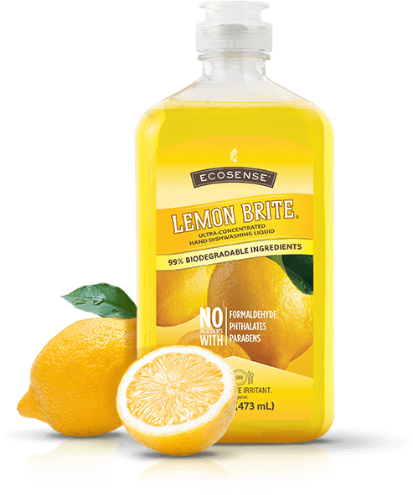
You can learn more about dish detergents and biodegradability by clicking on this link

New research published in the journal Neurology suggests that brushing your teeth can boost the brain — helping to reduce the risk of dementia.
People with good dental hygiene had more neurons in the hippocampus, the study found; the hippocampus plays a role in memory.
Gum disease and tooth loss were linked with less gray matter and declining mental health.
These findings have clinical implications as regular visits to the dentist may help prevent Alzheimer’s, scientists pointed out.
Said lead author Dr. Satoshi Yamaguchi, of Tohoku University in Japan, “Tooth loss and gum disease, which is inflammation of the tissue around the teeth that can cause shrinkage of the gums and loosening of the teeth, are very common,” SWNS, the British news service, reported of the findings.
“So evaluating a potential link with dementia is incredibly important,” he also said.
“Our study found these conditions may play a role in the health of the brain area that controls thinking and memory — giving people another reason to take better care of their teeth.”
BE WELL: FLOSS YOUR TEETH DAILY FOR BETTER HEART HEALTH
Chewing boosts blood and oxygen flow to the head — keeping the brain healthy. Gum disease is caused by inflammation of tooth-supporting tissues. It affects about one in seven adults. The study involved 172 Japanese participants whose average age was 67; they did not have memory problems at the outset.
For those with mild gum disease, fewer teeth was associated with a faster rate of brain shrinkage in the left hippocampus — key for remembering words and language. The same phenomenon was identified in those with severe gum disease and more teeth.
Said Dr. Yamaguchi, “These results highlight the importance of preserving the health of the teeth and not just retaining the teeth. The findings suggest retaining teeth with severe gum disease is associated with brain wasting.”
DENTISTS REVEAL WHY YOU SHOULDN’T BRUSH YOUR TEETH IN THE SHOWER
He also said, “Controlling the progression of gum disease through regular dental visits is crucial, and teeth with severe gum disease may need to be extracted and replaced with appropriate prosthetic devices.”
In mild and severe gum disease, one less or one more tooth was equivalent to nearly one year and 1.3 years of brain aging, respectively, the study noted.
Participants underwent dental exams and memory tests. They also had brain scans to measure the volume of the hippocampus at the beginning of the study — and again four years later, as SWNS reported of the results. For each participant, researchers counted the number of teeth and checked for gum disease by looking at periodontal probing depth, a measurement of the gum tissue.
Healthy readings are from one to three millimeters.
Mild gum disease involves probing depths of three or four mms in several areas, and severe gum disease five or six mms as well as more bone loss. It can cause teeth to become loose and eventually fall out.
Fox News contributor Dr. Marc Siegel, a clinical professor of medicine and a practicing internist at NYU Langone Medical Center in New York City, told Fox News Digital, “There is something to this.”
He said a large study in 2020 by the National Institute on Aging “linked gum disease to dementia. It is because bacteria is associated with inflammation — and inflammation leads to neurodegeneration.”
So “it makes sense that brushing your teeth and caring for your gums decreases both bacteria and inflammation and thereby dementia,” he said. Dr. Siegel added, “It is also connected with staying active and caring for yourself, which decreases depression, and is also associated with dementia. Keeping the brain active and working slows neurodegeneration and dementia.”
To read the full article, click here
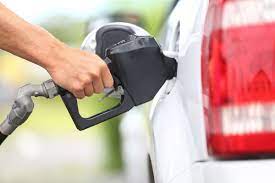
Here are some tips on how to save money at the pumps! Get the most out of your gas dollars.
Tip #1: Only buy or fill up your car or truck in the early morning when the ground temperature is still cold.
Remember that all service stations have their storage tanks buried below ground. The colder the ground the more dense the gasoline, when it gets warmer gasoline expands, so buying in the afternoon or in the evening….your gallon is not exactly a gallon. In the petroleum business, the specific gravity and the temperature of the gasoline, diesel and jet fuel, ethanol and other petroleum products plays an important role.
A one-degree rise in temperature is a big deal for this business—service stations do not have temperature compensation at the pumps.
Tip #2: When you’re filling up do not squeeze the trigger of the nozzle to a fast mode.
If you look you will see that the trigger has three (3) stages: low, middle, and high. You should be pumping on low mode, thereby minimizing the vapors that are created while you are pumping. All hoses at the pump have a vapor return. If you are pumping on the fast rate, some of the liquid that goes to your tank becomes vapor. Those vapors are being sucked up and back into the underground storage tank so you’re getting less for your money.
Tip #3: One of the most important tips is to fill up when your gas tank is HALF FULL.
The reason for this is the more gas you have in your tank the less air occupying its empty space. Gasoline evaporates faster than you can imagine. Gasoline storage tanks have an internal floating roof. This roof serves as zero clearance between the gas and the atmosphere, so it minimizes the evaporation. Unlike service stations, most trucks are loaded and have temperature compensated so that every gallon is actually the exact amount.
Tip #4: If there is a gasoline truck pumping into the storage tanks when you stop to buy gas, DO NOT fill up; most likely the gasoline is being stirred up as the gas is being delivered, and you might pick up some of the dirt that normally settles on the bottom.
And lastly, put a smile on your face. ..at least you have a vehicle and the money to put gas in it.

Judge less, accept more: Acceptance opens up doors and hearts. Let’s be more accepting and less judgmental.
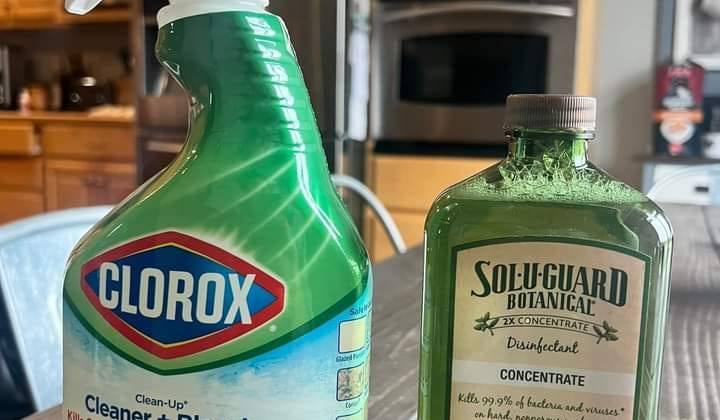
Just a little comparison of one of my favorite products and how it compares to brand name products.
The one on the left (Clorox)kills 99.9% of viruses when used as directed.
The one on the right (Sol-u-Guard) kills 99.9% of viruses when used as directed.
The one on the left damages your lungs akin to smoking a pack of cigarettes a day.
The one on the right has ZERO harsh chemicals and is safe to use around food.
The one on the left needs to be rinsed off before anyone touches the surfaces it was on.
The one on the right is safe on food surfaces.
The one on the left costs $14.11 for a single bottle.
The one on the right is concentrated and makes TWO bottles at a cost of $10.49.
I don’t understand why people are so loyal to the one on the left, but I DO UNDERSTAND why 20,000 Americans make the switch to my favorite store and brand each and every single month.
Products made in America.
Better.
Safer.
Cleaner.
More affordable.
Delivered to me “Amazon speed” without the layoffs.

As we wind down our vacation trip , part of me can’t wait to get back to my normal eating schedule. My body is not used to eating out for every meal. Travel destinations often offer different eating habits than we have at home and we can learn from these different styles of eating
Take time in preparing your food. From the shopping to the cooking to the plating, treat it as an art. After all, if we are going to put it into our bodies, isn’t it worth some time and effort?
Eat smaller portions.
Take more time to eat. Not only will you truly enjoy the experience and the conversation, it’s better for your digestion.
Eat with others and have fun. As Americans, we are always on the go. Family dinners are a rarity. Eating should be about enjoyment – talking, relaxing and socializing.
Eat REAL food. Use butter, not margarine. Whole Milk. No artificial sweeteners. Better ingredients contribute to tasty food that is often rich, fatty and sweet. And yet, in many other countries, including France, there are lower rates of obesity-related illnesses like cardiovascular disease. This so-called “French paradox” demonstrates that enjoying food may be conducive to health and fitness.
Why not take this week to tweak your eating habits and see how you feel at the end of the week?

Take less, give more.
Giving enriches our souls, it brings out the best in us, & it creates a positive ripple effect in our world.

Consume less, create more. We’re not just consumers, we are creators!
We have the ability to create, change, and influence!
Let’s do it.
 Hayseeds Creative