Medications can impact nutrition

Did you know that when we take medications, they impact our bodies nutritionally?

I am NOT saying don’t take meds. I AM saying that when you take a medication, you need to address the depletion of nutrients caused by that medication.

I am NOT saying don’t take meds. I AM saying that when you take a medication, you need to address the depletion of nutrients caused by that medication.

Step out in confidence

Filters are fun, but nothing beats the confidence of naturally beautiful skin.

Discover Deep Marine Age Protection collection designed for dry, thin, aging skin! It uses the power of marine-sourced ingredients and an oriental tea complex to reduce the appearance of the signs of aging.

Beautiful skin is ageless!

Are Your Children Snuggling with Toxins?

Did you know toxins can be found in many brand name Fabric Softeners:?
It’s true. I was surprised when I found out that one potentially carcinogenic chemicals could be in my laundry.
Clothing and blankets that touch our skin and who doesn’t inhale that fresh clean fabric scent?
Her’s a list of chemicals that can be found in Snuggles brand fabric softener:

Alpha-Terpineol – Linked to disorders of the brain and nervous system, loss of muscle control, depression, and headaches
Benzyl acetate – Linked to cancer of the pancreas
• Benzyl alcohol – Linked to headaches, nausea, vomiting, dizziness, depression, and disorders of the brain and nervous system.
• Chloroform- Listed on the EPA’s Hazardous Waste list as a carcinogen and neurotoxin (toxic to the brain and nervous system)
•Ethanol –Listed on the EPA’s Hazardous Waste list for its ability to cause brain and nervous system disorder
• Ethyl Acetate – Causes headaches and is on the EPA Hazardous Waste list
• Linalool – Causes loss of muscle coordination, nervous system and brain disorders, and depression
• Pentane – Causes headaches nausea, dizziness, fatigue, drowsiness, and depression

I just want you to know Safer options are a switch away.

.

Setting Boundaries

The past year almost brought me to a dead stop. After decades of “doing it all” (and loving it), I had to learn to do almost none of it. But I still want to be useful and able to do so much more. So healthy living and healthy choices has to become my focus. It’s my response to “take care of yourself.”

Learning to make healthy choices in eating, exercising, sitting still and feeding my soul, sleeping enough, has become a necessity. That makes making those decisions so much easier! With the virus season upon us…those things are really important if we want to remain useful in the present.

My work with a wellness shopping club and hanging around on social media with healthy minded people motivates me and makes saying “no” to unhealthy choices a whole lot easier. But boundaries are not popular—saying “no” to friends never gets easier.

I owe a lot to the simple changes I made as well as eating healthier. Why not join me in this adventure?

I can’t believe it’s been 20 years

You know twenty years ago, I ordered some laundry soap and house cleaners because I was tired of all the nasty smelly products I got from the grocery store. I was tired of having the toxin- filled products I had then. In fact, most of us still have those very same product in our homes today..

My house has been 100% converted for years and we’ve seen major change in my allergies and asthma. For me it’s been a win-win.

This month I woke up to some really great things our company is doing for the little guy. The everyday mom and dad who want more for their babies. The person who knows there is something out there that can help them….yet not knowing what it truly is. This is it.

Sharing wellness means WE ALL win. We all wash our hair, brush our teeth, eat popcorn, use candles, take supplements, spray room spray and bathe regularly. This company offers it all. Plus grad A beef, too.

This is a company where all of us little guys are celebrated.

Why 10,000 Steps?

I used to think 10000 steps a day was more than I could handle—some days I barely logged a thousand steps. Really! I wasn’t walking a lot. I was going from my home to my car, then parking close to the door at work and to my sedentary desk job. At the end of the day the process would be done in reverse. I thought I was getting enough steps in —I swam at the pool and I rode my bike but that was about it. The health club I belonged to held a month-long 10,000 steps challenge for the members. I admired my friends who monitored their steps on their smart watches, and logged in impressive numbers of steps throughout the challenge. The concept was interesting, but with my schedule, I just couldn’t seem to bypass 5,000 steps in one day.

Then I got a new job. It required me to be on my feet most of the time working with customers. Suddenly, my feet hurt. I needed better shoes. I quickly found out shoe choices were a hot topic among my coworkers. The better the shoe for walking, the less you ached at the end of the day! I quickly found good sneakers. Soon I was logging more than 10,000 steps a day. A lot more. Most days I would log 22,000 steps.

I had always wondered why experts chose 10,000 steps. I discovered for me, 10,000 was equal to walking about five miles—so I became more active. Yay! But my research also shows there’s science behind the actual number.

  • A study in JAMA Neurology found a possible link between walking 10,000 steps per day and a reduced risk of developing cardiovascular disease, 13 types of cancer, stroke, and heart failure
  • Research indicates a link between walking and improved mental clarity and the creative flow of ideas.
  • A study of over 72,000 people found that walking 9,000–10,000 steps per day may reduce the risk of death by more than a third.
  • Walking an extra 10,000 steps per day can burn 2,000–3,500 calories per week, which could lead to weight loss depending on your weight and exercise intensity.

I still try to get in 10,000 steps per day, no longer for health reasons but because I enjoy it and my canine companion does too!

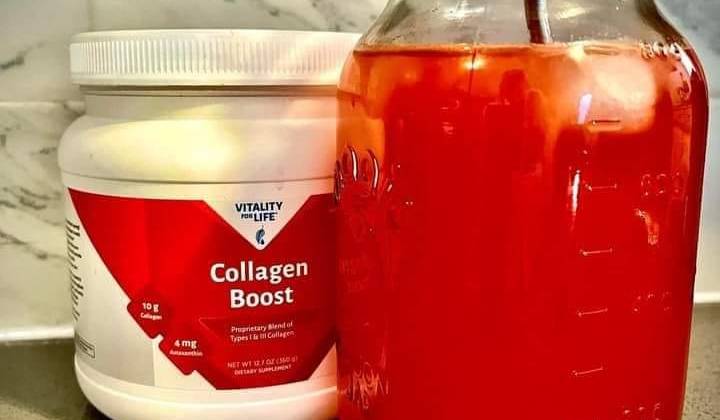
So you need collagen?

Did you know that there are 28 types of collagen but only THREE types you need to focus on:
Type I , Type II and Type III.

Type I and Type III are in skin, muscles, tendons, ligaments, hair, nails bones and more. Type II is found in cartilage and in the joints to give support.

Interestingly enough, Collagen’s job is NOT to replace collagen in your body. It’s not a “Oh I’m deficient and i need to supplement” type of supplement. This supplement is meant to trick the cells into increasing production and activation of collagen. Think of collagen as the key to unlock the cells/ production line.

In order for the cells to be activated, they have to recognize the collagen supplement our body is consuming as the exact type the cells produce. If the cells don’t recognize that particular collagen, that collagen is literally sitting in the body doing absolutely NOTHING. Which means high gram amounts of collagen are irrelevant.

What matters is the TYPE of collagen it is and the PROCESS it went through in order for it to be recognized by the cells in your body to activate them to produce more collagen.

Most companies cannot make a direct claim about what their collagen does, but will give you a list a mile long of what the added ingredients will do, But the collagen I take can tell you what it will do for your cells.

Here are a few facts about the science behind my collagen:

• 5g hydrolyzed collagen. Bovine-sourced — because it is the closest in DNA structure to humans and it is the best to be able to activate the collagen production.

• 5g collagen peptides. Peptide sequence — the exact one your body needs:

This collagen contains astaxanthan (a red algae) which is a super charged antioxidant to help prevent further cell breakdown.Plus, this collagen is clinically proven to REDUCE CELLULITE, FINE LINES, AND SAGGING SKIN.

If you’re under the impression that liquid collagen is queen —here’s a secret, all liquid collagen starts as powder.

An affordable collagen with a 100% money back guarantee!

Do you use mouthwash?

Have you ever read or compared the label information on your brand? I have. What I found was amazing. That’s why I I love my mouthwash brand so much!

Not only is it refreshing, it helps heal those sore spots you get in your mouth. It helps bleeding gums and it does it quickly.

I love my Online Shopping Club’s Mouth Rinse it is awesome stuff!

How do you feel about yours?

TIPS TO AVOID PROCESSED MEAT 

If processed meat products are part of your diet, you can take steps to reduce or eliminate them.

  • Read the label. Check the ingredient list for words like nitrate, nitrite, cured or salted. If you spot these words, it’s a processed meat and should be avoided.
  • Be an educated buyer. Even meats labeled “uncured” still can have nitrates and nitrites in them.
  • Skip nitrate-free meats. These meats may have less nitrates and nitrites, but they’re not nitrate-free. When you eat these foods labeled nitrate-free, your stomach actually turns some nitrates into nitrites. And some of these nitrites can then form cancer-causing substances in your body.
  • Reduce portion sizes of processed meats and eat less frequently.
  • Choose a plant-based diet most often and have some meatless days.

Think outside the box. Eating less processed meat is easier than you think. Here are some healthy swap tips to get you started.

  • Add grilled chicken, hard-boiled egg, beans, tofu or flaked tuna to your salad instead of cubed deli meat.
  • Order a grilled chicken or fish sandwich instead of a deli sandwich.
  • Add vegetables to your omelet instead of bacon, ham or sausage.

Keeping a food log can help you be more mindful of just how much processed meat you are eating. Be sure to carry healthy substitutions like hummus and vegetables that can replace that deli sandwich. Once you become of aware of your eating habits and start choosing healthier foods, reducing and even eliminating processed meats from your diet will become easier.

Do you take Niacin?

You may want to rethink the amount of this supplement you take. A new study reveals there are many connections between niacin and heart disease. For a while, many cardiologists were prescribing niacin for cardiovascular prevention, but more recent studies didn’t show much of a benefit from niacin—and this medication has significant side effects for many individuals.

These side effects include things like flushing, difficulty tolerating hot showers, increased blood sugar levels, insulin resistance, and dizziness, and have caused some cardiologists like himself to be skeptical about niacin for years.

Read more about the latest study results here at MedLinx