
Are you at risk for cataracts?

The group, Prevent Blindness Vision Problems in the U.S., reports more than 22.3 million Americans have cataracts.

A cataract is a clouding of the eye’s lens, which blocks or changes the passage of light into the eye. The lens of the eye is located behind the pupil and the colored iris, and is normally transparent. The lens helps to focus images onto the retina—which transmits the images to the brain. When a cataract develops, your vision may become blurry or dim because the cataract stops light from properly passing through to your retina.

Cataracts are a leading cause of blindness among older adults in the United States. More than half of all Americans have cataracts by the time they are 80 years old. Cataracts can sometimes be found in young people or even newborns. The exact cause of a cataract is unknown. Most often, a cataract is part of the aging process—as you age, you are at a greater risk of developing a cataract.

There are several possible risk factors for cataracts, such as: 
• Intense heat or long-term exposure to UV rays from the sun
• Certain diseases, such as diabetes
• Inflammation in the eye
• Hereditary influences
• Events before birth, such as German measles in the mother
• Long-term steroid use
• Eye injuries
• Eye diseases and
• Smoking

The following problems may indicate that you have a cataract:
• You have blurred vision, double vision, ghost images, or the sense of a “film” over your eyes.
• Lights seem too dim for reading or close-up work, or you are “dazzled” by strong light.
• You change eyeglass prescriptions often and the change does not seem to help your vision.
• You may also be able to see the cataract in your eye. It may look like a milky or yellowish spot in your pupil.
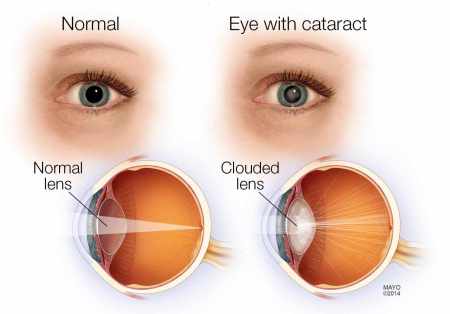
Generally, a cataract does not cause pain, redness or tears. Cataracts are most likely caused by changes related to aging. Throughout our lives, our bodies replace old cells with new ones. As we grow older, the old cells in our eye’s lens build up and block light as it tries to pass through. The end result is cloudy vision.

The National Eye Institute recently sponsored the Age-Related Eye Disease Study 2 (AREDS2), which revealed that lutein and zeaxanthin supplementation reduced the risk of progression of AMD, one of the leading causes of blindness and visual impairment today.

They recommend it is best to take steps to slow down, if not prevent developing cataracts in your precious eyes. Preventing vision damage starts with replenishing the nutrients your eyes lose before it starts. Specialized supplements designed for eye health help safeguard your sight—naturally.

The eye supplement I use offers  superior vision support in high-glare and low-light conditions while promoting macula, retina, and lens health. I take just one softgel a day to helps maintain my visual acuity. After all, it’s never too late to protect your eyes!

PreventBlindness.org offers this Facts & Myths About Cataracts Fact Sheet to further explain cataracts.

.

Beauty Comes from the Inside

Shiny hair, robust nails, and bright skin can be signs of a great beauty regime…the things you do for the outside of your body. But as the article below from “The Healthy Food Guide” explains, your skin, hair, and nails are even more dependent on what’s going on INSIDE your body.

Your diet can be a huge determinant of the appearance of your skin, hair, and nails. The discussion from dietitian, Cindy Williams, speaks to the things that you can do to ensure that you are as beautiful as can be.

Be sure your diet includes plenty of protein (preferably lean) because our skin, hair, and nails are mostly protein. Essential fats are also part of internal health and beauty. Avoid the fats that are part of sugary snacks you may crave. The fats we refer to are essential Omega-3 and Omega-6 which occur in many seafoods. Eating fish, especially oily fish two or three times a week can help.

Foods high in iron not only will help maintain the cosmetic results you are seeking, it will bolster your energy levels, as well. Red meats are the best source of iron. If you avoid meats, you can get iron from legumes and whole grains, remember to assure proper absorption by supplementing with vitamin C.

Whole grains will add vitamin B (the skin vitamin) and the powerful antioxidant, vitamin E, will guard against dry skin. Nuts should also be part of your “beauty diet”. They provide additional essential fats. Nuts also offer a healthy alternative to higher calorie snacks and control your appetite.

Citrus for vitamin C, orange, yellow, red and green vegetables provide beta-carotene and vitamin A. Finally, hydrate with water and black, green and white tea to get the benefits of flavonoids which will help protect your skin from UV damage. 

I’m excited that the company I am associated with keeps its pulse on the consumer trends. They just developed an incredible supplement designed to target skin, hair, and nails. I plan on adding it to my daily supplements. Balance your dietary changes with healthy exercise and supplements that really work!

https://www.healthyfood.co.nz/articles/2008/june/8-steps-to-healthy-skin-hair-and-nails

Contamination in Cosmetics

We all know that we have to take care with what we put IN our bodies. It is not as evident that we must take care of what we put ON our bodies, as well. Recently, news came to light about asbestos discovered in cosmetic products at Claire’s stores. They were quickly removed from the shelves.

There are other dangers that can be associated with cosmetics and other beauty products. We assume that government regulations are protecting us, but as the article below points out, The F.D.A. has only 6 inspectors to monitor the millions of cosmetic shipments coming into the U.S. each year.

I have included two articles below (of which there are many) that point out some of the risks that we take when using cosmetics and other beauty products. The majority of imported products are safe, but a surprising number of those imports (15-20%) led to adverse findings. Among the problems found were bacterial contamination, illegal color additives and unsafe chemical substances like mercury were discovered.

The problem is that the F.D.A. does so few inspections of imports (less than 0.3 percent) from South Korea, China, India, Canada, and France that it is impossible to predict how widespread the problems really are.

The government is attempting to get more control over the problems. Yet for now, the best anyone can do to protect themselves is to purchase and use domestically produced personal care products from companies that use the highest standards for approval methods. I’m proud to be associated with a company that applies only the highest standards in their ingredient formulation and manufacturing processes. For the safety of myself and my family, I choose to use products that have already been proven safe and effective. 

www.nytimes.com/2017/08/02/us/politics/fda-has-6-inspectors-for-3-million-shipments-of-cosmetics.html

www.asbestos.com/news/2017/12/28/claires-recall-asbestos-makeup/

Low Sodium Foods to promote heart health

Most people eat much more sodium (salt) than they need. This can lead to health problems like high blood pressure. To lower the amount of sodium in your diet, follow these tips when you go food shopping:

  • Choose fresh instead of processed foods when you can.
  • Use the Nutrition Facts label to check the amount of sodium. Look for foods with 5% Daily Value (DV) or less. A sodium content of 20% DV or more is high.
  • Look for foods labeled “low sodium,” “reduced sodium,” or “no salt added.”
To preserve your heart and keep pressure in check, get plenty of fruit and vegetables.
  • Any fresh fruits, like apples, oranges, or bananas
  • Any fresh vegetables, like spinach, carrots, or broccoli
  • Frozen vegetables without added sauce
  • Canned vegetables that are low in sodium or have no salt added
  • Low sodium vegetable juice
  • Frozen or dried fruit (unsweetened)
  • Canned fruit (packed in water or 100% juice, not syrup)
Breads, Cereals, and Grains

Compare labels to find products with less sodium. When you cook rice or pasta, don’t add salt.

  • Rice or pasta
  • Unsweetened oatmeal
  • Unsalted popcorn

Tip: If your food comes with a seasoning packet, use only part of the packet. This will lower the amount of sodium in the food.

Meats, Nuts, and Beans

Choose fresh meats when possible. Some fresh meat has added sodium, so always check the label.

  • Fish or shellfish
  • Chicken or turkey breast without skin
  • Lean cuts of beef or pork
  • Unsalted nuts and seeds
  • Dried peas and beans
  • Canned beans labeled “no salt added” or “low sodium”
  • Eggs
Dairy Products

Choose fat-free or low-fat milk and yogurt. Be sure to check the label on cheese, which can be high in sodium. Milk and yogurt are also good sources of potassium, which can help lower blood pressure.

  • Fat-free or low-fat (1%) milk
  • Fat-free or low-fat yogurt
  • Low- or reduced-sodium cheese (like natural Swiss cheese)
  • Soymilk with added calcium
Dressings, Oils, and Condiments

When you cook, use ingredients that are low in sodium or have no sodium at all.

  • Unsalted margarine and spreads (soft, tub, or liquid) with no trans fats
  • Vegetable oils (canola, olive, peanut, or sesame)
  • Sodium-free, light mayonnaise and salad dressing
  • Low-sodium or “no salt added” ketchup
  • Vinegar
Seasonings

Try these seasonings instead of salt to flavor your food.

  • Herbs, spices, or salt-free seasoning blends
  • Chopped vegetables, like garlic, onions, and peppers
  • Lemons and limes
  • Ginger

Heart-Healthy Foods to Prolong Your Life

When it comes to your heart, what you eat matters. Follow these tips for heart-healthy eating:

  1. Eat less saturated and trans fat. Stay away from fatty meats, fried foods, cakes, and cookies.
  2. Cut down on sodium (salt). Look for the low-sodium or “no salt added” types of canned soups, vegetables, snack foods, and lunch meats.
  3. Get more fiber. Eat vegetables, fruits, and whole grains to add fiber to your diet.

Take this list with you the next time you go food shopping.

Vegetables and Fruits

Eat a variety of vegetables and fruits. Buy vegetables and fruits that are in season, frozen, or canned.

  • Fresh vegetables such as tomatoes, cabbage, and broccoli
  • Leafy greens for salads, like spinach and kale
  • Canned vegetables low in sodium (salt)
  • Frozen vegetables without added butter or sauces
  • Fresh fruits such as apples, oranges, bananas, pears, and peaches
  • Canned fruit in 100% juice, not syrup
  • Frozen or dried fruit (unsweetened)
Dairy Products

Look for fat-free or low-fat milk products. Or choose soymilk with added calcium.

  • Fat-free or low-fat (1%) milk
  • Fat-free or low-fat yogurt (choose options with less added sugar)
  • Cheese (3 grams of fat or less per serving)
  • Fat-free or low-fat soymilk with calcium
Breads, Cereals, and Grains

For products with more than one ingredient, make sure whole wheat or another whole grain is listed first.

  • 100% whole-wheat bread
  • Whole-grain breakfast cereals like oatmeal
  • Whole grains such as brown or wild rice, barley, and bulgur
  • Whole-wheat or whole-grain pasta
Meat, Beans, Eggs, and Nuts

Choose lean cuts of meat and other foods with protein.

  • Seafood, including fish and shellfish
  • Chicken and turkey breast without skin
  • Pork: leg, shoulder, tenderloin
  • Beef: round, sirloin, tenderloin, extra lean ground beef (at least 93% lean)
  • Beans, lentils, and peas
  • Eggs and egg substitutes
  • Unsalted nuts and seeds
Fats and Oils

Cut back on saturated fat and look for products with no trans fats.

  • Margarine and spreads (soft, tub, or liquid) with no trans fats
  • Vegetable oil (canola, olive, peanut, or sesame)
  • Non-stick cooking spray
  • Light mayonnaise
  • Salad dressings that are oil based instead of creamy
Daily Supplements

For most people, diet and exercise aren’t enough to deliver optimal heart health. That’s why we use proven, natural solutions yo address six controllable factors for optimal heart health.

  • Omega-3s are good fats—polyunsaturated fats—that are derived from fish, nuts, and seeds. Our favorite is Crème Delight®— Peach Mango Tango with 1,080mg of research-proven EPA/DHA essential fatty acids, this supplement provides daily support for eye, heart, and brain health–in a flavor the whole family loves.
  • Mom used to give us cod-liver oil every morning especially in winter to help us avoid flu and keep us healthy. The taste was not a favorite and we weren’t enamored of it. Today we use Vitality Coldwater Omega-3® a pure, concentrated DHA and EPA Omega-3’s for superior cardiovascular and brain health benefits. Two soft gels include the research-recommended dose with no fishy aftertaste.  
  • CardiOmega EPA®with 1,000 mg of EPA plus 100 mg DHA this supplement is designed to support high levels of activity, since we’ve become serious about fitness and getting to a healthy weight, we find this helps promote rapid recovery and reduce activity-induced inflammation all while protecting our heart. 

Take care of your heart, it’s the only one you have!

Does the concept of earning a secondary income from home intrigue you?

Let’s face it; there are many inviting things about a work from home opportunity.

Flexibility of your schedule, earning while you sleep, living debt free, being your own boss etc.  I am sure you have heard all the promises before but something has you skeptical. GOOD FOR YOU! There is a lot of reason to have that doubt!  News paper articles about the FTC shutting businesses down for bad practices, stories of people getting scammed out of investment money, stocking a crap load of product only to be stuck with it and sometimes even seemingly legit opportunities that have made many people money close their doors leaving thousands with shattered dreams. I’m here to tell you that it is not all bad!

My good friend Ed Bestoso shares with us in this quick 2 minute video a few of the reasons you should review when looking at different companies.  We are doing things for the right reasons with the right formula and the right way! If it makes sense to you, I have a checklist after the video to help you determine if you already shop for these products.


CLICK HERE TO CHECK AND SEE IF YOU ALREADY SHOP FOR THESE PRODUCTS! 


Do your research


Range Of Cost To Start An At Home Business

If you are thinking about starting your own business from home, this article will give you some valuable input. According to this SBA consultant, you can expect to invest at least $1000-$5000. Depending on the business it could be much more. There are also some collateral costs as well.

I was fortunate to find a business that allowed me to invest between $19 and $300 and it was all refundable within 90 days, if it didn’t suit me. The company is over 30 years old and boasts 1.5 billion in annual income.

The company also provides me with accounting, distribution, fulfillment, and new product development among dozens of support items, all at no charge. Below is a short video that includes a list of requirements I used to determine which company was most fitting for me.

http://c.brightcove.com/services/viewer/federated_f9?isVid=1&isUI=1

Make your clothes last longer

Let’s face it. Clothes are expensive. Whether it’s men’s or women’s clothing, the prices are daunting no matter where you purchase them. First, don’t hesitate to shop around and try not to be impulsive. Make sure you really need what it is you are about to purchase. OK, you can indulge yourself from time to time.

The attached article offers some interesting, useful and sometimes surprising tips to make your clothes last longer. It points out that the best start is to carefully read the care label. If you have the place or space, hang your clothes to dry.

My company developed and manufactures laundry products including a detergent that is based on natural enzyme cleaning agents and it really is the WOW. The balance of the laundry suite of products is also naturally based.

No matter what your income, you can save money on great clothing by shopping responsibly and taking care of those clothes you love.

The dangers of household bleach

If your household is one of the plethora of homes that use chlorine bleach as a disinfectant and cleaning agent, you may want to read this article and rethink your choices. Chlorine bleach is downright dangerous, especially to children.

The creation of chlorine bleach is actually caused by an electric shock and simply reading the disclosures on the bottle is shocking, too. Any products (including the bleach itself) that contain bleach can produce toxic effects. Ammonia mixes with bleach to create a “deadly” gas. In your toilet bowl bleach can mix with urine and have the same effect (remember urine contains ammonia). In the confinement of your toilet those fumes can concentrate and cause you, and your family, harm.

I can give you access to an entire suite of cleaning and disinfecting products that are chlorine bleach free and actually do a better job than what you are currently using among them is even a toilet bowl cleaner that will leave the bowl clean and fresh and remove the risk. The next time you reach for that chlorine bleach bottle, reach for the phone instead and ask me how you can obtain these safer (and affordable) alternatives.

This Summer prevent skin cancer

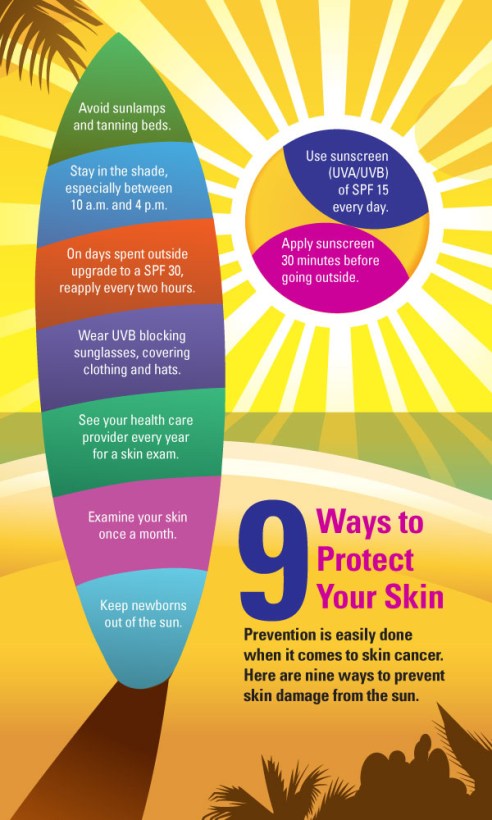
Skin cancer is the most common type of cancer in the United States. Ultraviolet (UV) radiation from the sun is the main cause of skin cancer, although tanning booths or sunlamps also emit UV radiation. Melanoma is the most dangerous kind of skin cancer.

The good news? Skin cancer can almost always be cured when it’s found and treated early. Communities, health professionals, and families can work together to prevent skin cancer or detect it early on.

Here are just a few ideas to prevent or detect skin cancer:

  • Stay out of the sun as much as possible between 10 a.m. and 4 p.m.
  • Use sunscreen with SPF 15 or higher. Put on sunscreen every 2 hours and after you swim or sweat.
  • Cover up with long sleeves and a hat.
  • Check your skin regularly for changes.