
Gluten Free Challenges

If you must (or choose) to go gluten-free, one of the challenges is getting enough dietary fiber. 
Why is that, you may wonder.

You see, on a typical diet, your doctor might tell you to eat more healthy whole grains, like wheat bran, whole wheat bread and cereals to increase your fiber intake. That can be a problem for those with celiac disease who are on a gluten-free diet since many gluten-free foods are low in fiber.

The good news is that there are plenty of gluten-free alternatives to whole wheat that are still high in fiber.

There are two types of dietary fibers – soluble and insoluble.
Soluble fiber soaks up water as it passes through your system, which helps bulk up your stool and guard against diarrhea. Examples of foods with soluble fiber include:

  • Legumes (beans, peas, lentils, chickpeas, soybeans)
  • Fruits (apples, pears, oranges, prunes)
  • Vegetables (carrots, broccoli, Brussels sprouts, eggplant)
  • Sweet potatoes
  • Ground flax seeds and chia seeds

Insoluble fiber helps prevent constipation. Examples of foods with soluble fiber include:

  • Quinoa
  • Buckwheat
  • Millet
  • Wild and brown rice
  • Nuts (almonds, walnuts, pecans)
  • Fruits (strawberries, papayas, mangoes)
  • Vegetables (cucumber, asparagus, okra)

When consuming a diet rich in fiber, it is important to drink water to prevent constipation. Consuming about eight (8-ounce) glasses per day is recommended for adults.
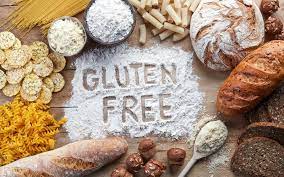
To go gluten-free or not: That is the question!

Actually, it’s not that simple.

There are benefits of going gluten free, true. For those with celiac disease, it’s a priority! If you don’t have celiac disease, there are several things to consider before going gluten-free:

  • Lack of fiber. Most Americans already miss the mark on fiber. Women require 28 grams of fiber/day, men need 35 grams. The average American gets less than 15 grams a day. That means you will need to think about taking a fiber supplement.
  • Increased risk of Type II Diabetes. Research showed that when participants ate gluten, they were less likely to be diagnosed with type 2 diabetes. The study showed that the more gluten in the diet, the lower the risk of diabetes. Fiber, vitamins and nutrients found in healthy foods containing gluten proved to be beneficial to the overall health of the participants.
  • Weight Gain. Many gluten-free baked items like muffins, cookies or brownies are higher in calories and sugar than their ‘normal’ gluten-containing counterparts. That’s because the items still need to taste good and offer similar texture, but one one item is removed another is there to take it’s place and it can be in the form of a higher sugar or fat content. Because people are tricked into thinking they’re making a ‘healthier’ decision when they choose a gluten-free diet, they often don’t take the time to check labels and nutrition facts. This can lead to weight gain and mote unhealthy choices.
  • Lack of essential vitamins and nutrients. Switching to a gluten-free diet by choice means you also need to be mindful of what you eat. This makes it more difficult to maintain a balanced diet, which may lead to completely unnecessary added stress in the grocery store aisles for limited benefits. Reseach shows that people on a gluten-free diet have increased levels of heavy metals in their blood and urine – possibly due to the increased consumption of rice in gluten-free foods.

Making the choice of going gluten-free is not an easy one. Based on the way that gluten works, it’s an all or nothing decision. If you think going gluten-free is for you, please do your research.

Things Magnesium can do for you

Magnesium is a key factor in helping your body run smoothly.
It may:

  • Boost exercise performance
  • Combat depression
  • Support healthy blood sugars
  • Promote heart health
  • Lower inflammation
  • Prevent migraines
  • Improve PMS
  • Promote bone health
  • Support better sleep

FUN FACT: More than half of the magnesium in our body is stored in bones, and the remaining in various tissues throughout the body!

What us the best time to take your vitamins?

Have you ever given thought as to the best time to take your vitamins?
Do certain supplements cancel out others?

Although you can take a multivitamin any time of day, it’s best to take with food. Stomach acid can not only upset your stomach, it can also destroy the multivitamin and make absorption impossible. I take one that comes in an acid resistant capsule so to address both of those issues, but most vitamin companies don’t bother. Regardless, I recommend taking your supplements with a meal (that means more than just a banana).

The answer to the second question is yes. It can become a problem when we try to be our own pharmacy and not consult experts. By experts, I’m not talking doctors. Doctors have all of three hours of nutrition education when they go through medical school. That’s one of (a few) reasons why they don’t support nutrition in their protocol.

For instance, did you know that Iron can interfere with the absorption of calcium? That means you shouldn’t take your iron supplement with high calcium foods. Truth is, most people DO NOT NEED AND SHOULD NOT USE an iron supplement. When a friend’s husband started his immunotherapy, they learned that iron can be a magnet for cancer. So, the iron that comes in your multivitamin is usually enough for most people.

During Covid, some people were advised by their doctors to take Vitamin A, but that comes with a huge risk. Large doses of Vitamin A (or beta-carotine) can raise your chances of lung cancer if you are (or were) a smoker.

People who have Hashimoto’s (hypothyroidism) often take a medication called Synthroid. If you take a thyroid medication, taking calcium, magnesium, or iron within four hours of taking Synthroid can cut your dosages strength. 

Luckily for me, the supplements I take have a little infographic on them that show what i the best time of day to take them.

My favorite online shopping club

When you shop on Tuesday, your package is scheduled to arrive on Monday, but it shows up three days later, on Friday morning before a hurricane hits. Just in time delivery or what some of my fellow shoppers would call a shopping club win.

I used to think that I had to choose between buying inexpensive toxic household and personal care products over those more expensive, safe, non-toxic products. That is until I found this amazing shopping club 20 years ago where I can have both…safe, non-toxic products AND affordability!

I was never more grateful for my online shopping club than I was during those Covid lockdown years! With the Covid lockdowns, empty shelves due to supply-chain issues and now these crazy inflation costs are even affecting big box stores like Costco, Target and Walmart. This shopping club just didn’t have those issues (although they did limit the number of hand sanitizers you could buy at one time). There were also no supply-chain issues. All thru the lock downs, I still got my monthly shopping order delivered right to my door on time.

All of the products and packaging are made in the US and that makes a huge difference. I also save money every month because of the just in time manufacturing and deliver.

Not only am I a non-toxic purchaser, I am a bargainshopper! I like a deal and I like saving. I can’t add up the thousands of dollars I have saved by shopping at my shopping club for my monthly household and personal care necessities over shopping at Walmart!

Cheers to 19 years since ditching the bleach and all the other toxic products I used to buy, beating inflation and putting my family first and never looking back.

I am a life-time happy shopper.

THE CANCER/FIBER CONNECTION 

Colorectal cancers are the third leading cause of cancer mortality rates in the US with over 100,000 new cases of colon cancer and over 40,000 new cases of rectal cancer reported in 2020.

There is evidence linking that eating a high-fiber diet from whole grains and cereals can lead to a lower risk for colon cancer. Fiber also improves satiety and prevents overeating. It prevents obesity, which is linked to higher cancer risk. Healthy sources of fiber include barley, beans, nuts, fruits, and peas.

But getting enough fiber every day can be challenging. Women need 28 grams/day and men need 35 grams. So here’s my tip:

Russ and I add our Fiber mix to our protein shakes. By mixing it in the blender, you’d never know we were drinking fiber! Plus one serving of my favorite fiber mix is 15 grams! That makes it super easy to get the right amount every day!

But here are other ways to add 15 grams of fiber:

  • Breakfast: Switch from juice to ½ to ¾ cup of fruit on cereal, sliced on toast or eaten out of hand: + 2 more grams of fiber
  • Lunch: Swap 2 slices white bread for whole-wheat bread: + 2 grams of fiber. Instead of potato chips, choose 1 cup of raw pepper strips or other vegetables: + 1 gram of fiber
  • Afternoon snack: Instead of a candy bar, tide yourself over with an ounces of nuts: + 2-4 grams of fiber
  • Dinner: Replace part of the chicken or meat in your stir-fry, chili or casserole with ½ cup of black beans or lentils: + 8 grams of fiber
  • TOTAL: 15-17 grams of additional fiber

Fiber matters!

MILK THISTLE 

Milk thistle is a spiky purple flowering plant in the same family as the daisies and ragweed. It’s considered an herb, so the FDA does not regulate it. Milk Thistle encourages healthy liver function, promotes healthier skin, aids digestive health, boosts your immune system and more.

I first learned about milk thistle when my dog, Rusty, came down with Cushing’s Disease —a disease that affects the liver. The vet told me to get it and, if you know me, I had to research it. I discovered that Milk Thistle offers quite a few benefits — more than I knew. Then, I found out it was also good for diabetes.

Here are a few things I learned that benefit from milk thistle:

  • LIVER HEALTH. Helps to fight free radicals in the liver. Researchers believe it is the most well researched plant in the treatment of liver disease.
  • DIABETES MANAGEMENT. Some studies suggest that Milk Thistle can help lower blood sugar, but precautions are necessary for those with hypoglycemia.
  • BONE HEALTH. Studies show that Milk Thistle can strengthen bones, prevent bone loss and osteoporosis.
  • BRAIN HEALTH. Since Milk Thistle is an antioxidant and anti-inflammatory, it is suggested that it can help with Parkinson’s and Alzheimer’s, and help with slowing down cognitive decline.
  • CHEMOTHERAPHY AID. Milk Thistle is known to help with the different side effects of chemo and improve chemo results, but that may be because milk thistle is both an antioxidant and an anti-inflammatory.

Recently the Wellness Company where I shop came out with a new supplement, Berberine.This Berberine has milk thistle added to it. Because I have diabetes and asthma, I am trying this supplement to support my liver and pancreas. I like the bonus of two supplements in one. I love it when I can get a double or triple benefit from one supplement. Saves me money!

Friends are the best kind of advertisement.

Twenty years ago, I had a conversation went something like this:

Me: With a string of complaints about the need to take a nap to make it through the day after yet anther asthmatic attack. Back then I was on a lot of medications including sever corticosteroids.

My friend Debbie: You need to try this supplement pack.

Me: I already take quality vitamins. Doctor-approved and it costs me $120 dollars every month!

Debbie: You really should just try these. A few other customers have commented their asthma improved after taking these – especially this Provex – after a few months. You can easily try it. There is a 90-day money-back guaranteed and this one costs just $20.

Me: (not wanting to appear closed-minded) Okay, I’Il try it for ONE month – I said in my head only. I was totally skeptical of her company claims.

Well, in less than a month, my energy level was drastically different. I suspected a tricky ingredient
There was no trick. Just quality vitamins and minerals in a single supplements. Long story short: that $20 vitamin/mineral pack helped to improve my asthma, I was able to get off many of the medications and fewer attacks meant I no longer needed to nap. Plus, these saved me $100 a month in just the supplements, I was also saving on medications. Twenty years of feeling healthier and stronger.

I am forever grateful that my friend Debbie had that conversation with me that day.

Not all vitamins are created equal. Trust me.

When a little means a lot

When it comes to cleaning your laundry, a little does a lot with MelaPower 9x!

In fact, MelaPower is so powerful that all it takes is one pump (10 mL or 2 tiny teaspoons) to clean an entire load! And while you may be tempted to add more, don’t. Using too much detergent can stain your clothes or leave them looking dingy and less vibrant. It can also lead to buildup in your machine that leads to stinky clothes!

If you have a load of heavily soiled clothes, you can add the occasional second pump, but it’s more effective to treat potential stains with PreSpot. PreSpot and MelaPower are designed to work together to keep your laundry clean and looking new longer! Need an added boost of scent? Add MelaBoost!

Using the recommended amount of MelaPower is the best way to keep your laundry clean and fresh and your washer smelling its best!

I have been on a wellness journey

I have been on a wellness journey for more than 20 years. Over 19 years ago, I was introduced to the Wellness Company and it simplified my journey as this company has more than 600 products made with the best of science and nature. The company’s goal is to make the best products they can in the USA while offering families a safer and more natural way to care for the health of their family and their home environment without breaking the family budget.

If you are overwhelmed by all the information out there and are seeking a better health journey, let’s have coffee.