I said yes

Over the years, I’ve realized one thing more than ever: Everyone needs additional income.
Business owners are having to hustle twice as hard, just to make the same money. Employees are worried about cutbacks and layoffs. Most people who work from home are struggling to make it. In most home based businesses, people are faking it till they make it, but they never make it or ashamed to be honest. They put on a show for everyone to see that has nothing to do with reality. Many are one month away from bankruptcy or losing everything.

My heart aches for those people. Those good, God-loving, church-going people that deserve to have A Good Life. One without worry and fear of losing everything. I’ve been there. More than once. I know what it’s like to be on food stamps and to require a box of food a week from the ministry. Or driving for Uber until you nearly run out of gas with a car full of passengers. Knowing that depression was the result and still trying my hardest to be strong for me and family.

Today, I’m grateful. I’m grateful that I had the courage to say yes to something new. Something different. Twenty years ago, I said yes. Because of that yes, I have stability and security. It’s a real business, with real customers buying things they really want. It’s real. It’s fresh. It’s honest. And I love it!

Time = Freedom.

Being self-employed or building a side business has many benefits for the right person:
– Flexible schedule
– Creative freedom
– Unlimited impact and income potential
– Personal growth opportunities
– Independence and autonomy
– Tax deduction advantages
– Pursuing personal passions
– Building a legacy

At the same time there are challenges … like having staff meetings with yourself.
In my experience, the benefits far outweigh any challenges. Just this past week a friend needed my support and I was able to make a choice to be there.

The benefits of being self-employed:
– Work from anywhere fitting my purpose around a personal choice.
– Being in-touch but out of reach as I decide on what gets priority at any particular moment
– Being in business for myself, but not by myself with colleagues with a common purpose who can cover for me.

What do you love about being self-employed? Or are you looking to build a PlanB side business into time freedom?

Make it a great Tuesday!

Thinking About the Freedom of a Home Based Business?

THINK, THEN DO.
The recent demise of several companies that used network marketing (or a facsimile) to sell their products to consumers, led me to reflect on the reasons that these, and many other companies, like them, fail.

Having been associated with a Consumer Direct Marketing business (a successful one) myself for more than 10 years makes me, at least somewhat, qualified to share some of my observations. I became an independent marketing executive with my company after being introduced by my enroller to the 12 success factors that portend a successful company and personal career with that company. My company possessed them all, so I was encouraged.

But in reflecting on the companies that have failed in the past, both long ago and recently, I came to a conclusion that, if there were success factors, there must be failure factors, as well. Some of these are simply reciprocals of the success factors, which would make it easy. As you and I both know, nothing comes easy, so I’m sharing a few of “think out loud” thoughts here. 

First, if the company you are considering is a pyramid business model—where only a few early “fortunates” will prosper—it is, first of all, illegal and finally, destined to fail, just because of the structure. It’s not the shape, because most direct marketing businesses have the “shape” of a pyramid. The downfall of the pyramid model is that the preponderance of compensation is not based on product sales, but on signing up others at a significant fee or large unsold product commitments. Don’t go there.

Another failure factor: a company that offers one or two products (even if size and applications vary). A company with a large variety of products and product categories that embrace duplicated, family spending; budget allocations that are already being made; offer an opportunity to expand your approach market exponentially, and your potential for success, greatly. However, a wide variety of products aren’t enough—the products must be higher in quality or unique in valuable ways and they MUST be competitively priced with their alternatives. Unique, superior, competitively priced products are what make the Consumer Direct Marketing model work.

A start-up company is sometimes a good bet in the technology/software business, but is almost never a good bet when it comes to consumer goods. A company with no history is using YOU to test every idea. Unless you enjoy being a lab rat, avoid this environment.

Another factor to examine is the company’s balance sheet (you will have to source that for yourself since that likely will not be shared).
Next, is the company you are considering partnering with carrying bundles of unexplainable debt? If so, their future may be in doubt, and therefore, so is yours.

So a definite failure factor is unfunded spending in a business, as it is in our personal lives.

I’m happy to say the company I represent has absolutely no debt—as in zero—even in capital investments. So a definite “failure factor” is unfunded spending in a business, as it is in our personal lives.

Now let’s talk about the effort you invest in creating a consumer, it is considerable, particularly if you do a more than adequate job explaining your products and your business. If the association you are considering allows you to continue benefiting from those efforts in the form of continuing residual income, those efforts are (or eventually will be) worth it. But, there are many direct marketing models that provide breakaways, which simply means the money your consumer is still spending, is not enriching you any longer. Call me crazy, but that’s not a good deal, and certainly, qualifies as a failure factor.

So as you choose a business model to represent, use the above-mentioned success factors as a benchmark. For my choice, I was able to avoid all of the failure factors. The fact is that my choice was so sound that the only failure factor I had to overcome was myself!
Yep, I was the only variable. Was I going to try this business or was I going to do this business? In the direct marketing arena, once you have sorted the successes from the failures, it always comes down to that choice…TRY or DO. I am not going to attempt to influence your ultimate choice, but when you have made yours, commit yourself to the do and not the try or don’t make the choice at all.

Stay where you are, it may work out. Really… REALLY?

Inspiration vs. Motivation

Many of us use the words inspiration and motivation interchangeably as though they are the same word. In fact, the two words, their meanings and the emotions they evoke are distinctly different.

Inspiration is an external, driving force—usually associated with some newly discovered information. Motivation, on the other hand, is an internal, pulling force that only comes from within. 

In many ways, these two concepts seem to conflict because we “feelinspired, which comes from within and motivation has some elements of external factors, which cause us to take action.

A great convention speaker informational presentation can inspire us, but the call to action comes from within. We are responsible for taking that action.

Motivation is when you get an idea and take it to its conclusion.

Inspiration is when an idea gets a hold on you and drives you where you intend to go.

Create your motives (and your motivation). Inspiration will come from your spirit. Keep exposing yourself to new information and you will continue to “fill your tank” with inspiration. Your motivations for initiating your actions are YOUR responsibility. Don’t shirk it; embrace it and it will soon become a very good and successful habit. Habits are activities that duplicate themselves.    

Challenges to Millennials

Millennials are facing significant and unique challenges as they enter the workforce, the housing market and attempt to construct their futures. The article below from the Detroit Free Press illustrates the realities and the obstacles they face.

Many millennials have accumulated thousands in education debt.These 25-34 year-olds now average over $33,000 in education debt. Nearly 50% of families with the head of household under 40 years of age owe money for student-related loans.

Although the recent economic recovery, has helped some, there are still challenges to finding decent jobs in this demographic. Many drop out of college because of anxiety regarding growing debt. And indicators are that even those who have not accumulated debt by choosing higher education are facing the same challenges to their financial futures.

Millennials are bringing home significantly smaller paychecks making it less likely for them to be able to own a home or save anything for their retirement. In essence, millennials are accumulating assets at a much lower rate than those even only 25 years ago.

Many are seeking alternative careers. Some becoming entrepreneurs and experimenting in businesses of their own. So they are searching for answers. But new businesses contain risks of their own including significant up-front investments which can begin the debt cycle all over again.

The company with which I am associated offers millennials alternatives that can help turn their frustrations into opportunities. It eliminates risk and is virtually at no investment. It gives millennials the opportunity to begin wealth creation and much brighter futures. There is hope, young people. 

www.freep.com/story/money/personal-finance/susan-tompor/2018/04/25/student-loans-millennials-generation/537227002/

Benefits Of Mentoring

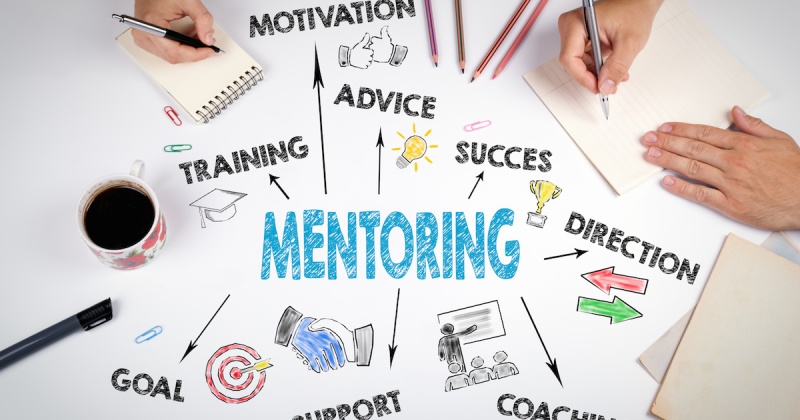
Mentoring is a practice that is touted by many contemporary companies. You have probably also heard it referred to as “coaching”. No matter what it is called, it is a practice that, obviously, is an asset to those being mentored (mentees).

But, have you stopped to think that there are also significant benefits to those doing the mentoring? The article below from “The Chronicle” helps point out some ways where the benefits of mentoring not only flow down to the mentee, but up to the mentor. You see it is not a one-way street.

The lessons you teach can serve as a relearning experience for the mentor. As you increase the confidence and the posture, it improves your own and reinforces the skills that got you to where you are. So as you remind your mentees to have confidence in themselves and their personal resources, take an inventory of your own realizations.

Mentorship forces you to step back to when you were being mentored. As they ask questions you will be faced with your own past experiences that will put their questions in the context of your experiences. How did I learn that? What helped me when I was in their position?

Just because you are now the mentor does NOT mean you are all-knowing. Keep perspective on the perceived hierarchy and remember you can learn from those that you mentor, as well. So keep an open mind and be willing to learn from them. They are usually younger than you are and have a much more contemporary perspective than yours.

Let your mentoring experience make you a better leader. Bear in mind that, as you help them, you should be helping yourself increase your leadership skills. And always be aware that the mentoring journey is all about them. What you get back is collateral knowledge. They are happy to share with you because of what they have gleaned from your relationship.

The company, with which I have associated myself, has established the mentoring (coaching) process as the cornerstone of owning and growing a healthy business that will pay “lifetime” dividends.  It is so integral to their culture; it has been incorporated into the Mission Statement. I keep it on my desk so that I am able to review it every day.

chronicle.umbmentoring.org/four-ways-mentoring-benefits-mentor/

Maintaining Your Personal Energy

No matter who you are or what you do; your energy levels (and motivation) will hit flat spots. This article below from “Whole Life Challenge” will give you some insight and tips on dealing with these energy flat spots and reenergize yourself when they “rear” their ugly heads.

The energy we refer to is not just physical. It is a combination of physical, mental, emotional and professional phenomena. Physically the signs can be fairly obvious; fatigue, headaches, slowing of reflexes and even blurred vision. Mentally and emotionally, it can produce moodiness, irritability, and lack of focus and concentration.

All in all, these symptoms can dramatically affect your personal and professional lives. It can even make you more susceptible to illness and disease. It is easy to see why guarding against these energy “valleys” is to your advantage. But, how do you do it?

Physically: Eat well, move well, and sleep well. Manage your ultradyne rhythms (our energy cycle repeats every 90-120 minutes). Take regular breaks, a 5-minute walk; stretching, and deep breathing can all help. Avoid distractions; believe it or not, multitasking is a myth. It is not efficient or productive.

Emotional and mental levels can be restored, by feeding your mind. Stop negative self-talk. Be conscious and aware of the things that drain you both emotionally and physically. Make a list of the things that uplift you and do them often. Then, there are the people who drain your energy…avoid them. Aim to connect with the people who make you feel happy. Finally, set some time aside to decompress.

Professionally, manage the physical mental, and emotional challenges you face daily and it will manifest solutions to your professional energy problems. My company has a coaching construct, which allows me to turn to others whom I respect for advice and support. But remember, these flat spots are, for the most part, temporary so do not let them defeat you. Victory is around the corner.

www.wholelifechallenge.com/your-personal-energy-plan-how-to-protect-manage-and-boost-it/

Benefits and Needs for Fiber

While there is a wide range of foods that provide fiber, in today’s world, it is difficult for most of us to consume enough fiber to satisfy the daily minimums. The article below from “Food is Medicine”, shares twenty foods that provide high levels of fiber.

Today’s Western diet probably satisfies only about half of the recommended amount of fiber that you need. As the article states: this is a big deal because high fiber foods guard against a number of diseases like cancer, heart disease, and obesity. Many processed foods are “fiber enriched”, but these are not the most desirable source of this valuable (and indispensable) dietary need.

The article makes the case for foods high in fiber as the best way to satisfy your needs, it admits that it is unlikely that you will be able to satisfy minimum needs with diet alone; and suggests that you will need a supplement to meet your daily requirements. It also points out that the quality of the supplement can, and will, make a big difference.

An effective supplement will contain a recommended balance of both soluble and insoluble fiber. Insoluble fiber provides bulk in the digestive system which helps the elimination process, expelling carcinogens and toxins from the bowels. Soluble fiber is actually retained in the bodily system, creating a gel that prolongs elimination so that key nutrients can be absorbed more efficiently.

Some fiber supplements do not contain soluble fiber at all. Still, others do not contain enough insoluble fiber to do the job properly. It is important to have the correct balance of both. As has been stated, a healthy diet is best and this list of high in fiber foods provides a handy guide for healthy meal planning.

The company with which I am associated, offers a complete array of supplements and high-in-fiber snacks that allows me to effectively control my fiber intake daily. These products and supplements contain both insoluble and soluble fiber. I am convinced that my good health is as a result of these indispensable products. Here’s to your health!   

draxe.com/high-fiber-foods/

Five Critical Roles In Your Business

As you begin to establish your new business, there are critical roles that must be fulfilled in order to assure or at least give you a bigger chance of success. If you have the luxury of a large, quality pool of team members from which to choose, you may have these resources on your existing team.

Most new businesses do not have the advantage of having existing team members that can accomplish these tasks, so the alternative is that you must fill these roles yourself with an eye to recruit with these necessary roles in mind. The below article from Forbes tells us that these roles must be filled and identifies what they are and why they are indispensable.

You are the “de-facto” leader as a founder of your business. As its primary coach, you must lead in a way that creates love and respect for the way that you lead. Your first task is to find an “expert” who knows the industry, the market, and the products and is able to communicate those to the rest of the team.

The financial guru who keeps track of the income matrices and expenses that the team deems worthy of taking on. This person may be domestic to the team or be an external resource. Most entrepreneurs are busy with the everyday tasks of being leaders, so there is a need for a strategist who is skilled at navigating the future and guiding the enterprise into a profitable and fulfilling enterprise.

Finally, there is a need for the executer that takes ownership of the company’s plans and monitors their progress in the day-to-day operation. The executer understands, fully, the company’s expectations and how they are performing from one day, one week, one month and one year to the next. The executer knows what needs to be done, when and how.

As we have said, earlier, sometimes in start-up and new business endeavors these roles must be filled by the founder with an eye to the future as you recruit for your team. A lot of work in the beginning and the use of some outside resources that are available to you can fill those roles in the short or even the long-term and can lead to great things in your business.

www.forbes.com/sites/alanhall/2013/03/30/five-critical-team-members-for-business-success/#1f775e42ad90

Facing Fear

Fear (and not facing it) can degenerate your ability to succeed, in life, in business, and in your personal relationships. Fear is not the enemy, your inability to face it and challenge it is.

This article from “Help Scout” helps explain how fear can actually be your friend and how facing it often can be one of the greatest tools to achieving all the things that you consider success.

You have heard the term “comfort zone” numerous times and it is understandable that we all tend to cuddle in its’ warm embrace. IT IS COMFORTABLE. At the same time, that feeling of “being OK” is not that at all.

Fear is actually your friend. We all feel fear. It is NOT unique to you. Conquering it is the gateway to business success and life’s quality achievements. The fearful are punished as often as the bold. The difference is the bold gave themselves a chance.

Fear actually makes us do the opposite of what is best for us. The pain that facing fear causes is nothing compared to the gratification that facing and conquering it generates. Facing that needle, so that I may be immune to an illness or making that phone call for the appointment that can convert a new customer are better for me in the long-run and the long-term benefits far outweigh the prick of the needle or the anxiety that your finger dialing that number cause.

www.helpscout.net/blog/do-things-that-scare-you/