
Green Living

Are you at risk for cataracts?

The group, Prevent Blindness Vision Problems in the U.S., reports more than 22.3 million Americans have cataracts.

A cataract is a clouding of the eye’s lens, which blocks or changes the passage of light into the eye. The lens of the eye is located behind the pupil and the colored iris, and is normally transparent. The lens helps to focus images onto the retina—which transmits the images to the brain. When a cataract develops, your vision may become blurry or dim because the cataract stops light from properly passing through to your retina.

Cataracts are a leading cause of blindness among older adults in the United States. More than half of all Americans have cataracts by the time they are 80 years old. Cataracts can sometimes be found in young people or even newborns. The exact cause of a cataract is unknown. Most often, a cataract is part of the aging process—as you age, you are at a greater risk of developing a cataract.

There are several possible risk factors for cataracts, such as: 
• Intense heat or long-term exposure to UV rays from the sun
• Certain diseases, such as diabetes
• Inflammation in the eye
• Hereditary influences
• Events before birth, such as German measles in the mother
• Long-term steroid use
• Eye injuries
• Eye diseases and
• Smoking

The following problems may indicate that you have a cataract:
• You have blurred vision, double vision, ghost images, or the sense of a “film” over your eyes.
• Lights seem too dim for reading or close-up work, or you are “dazzled” by strong light.
• You change eyeglass prescriptions often and the change does not seem to help your vision.
• You may also be able to see the cataract in your eye. It may look like a milky or yellowish spot in your pupil.
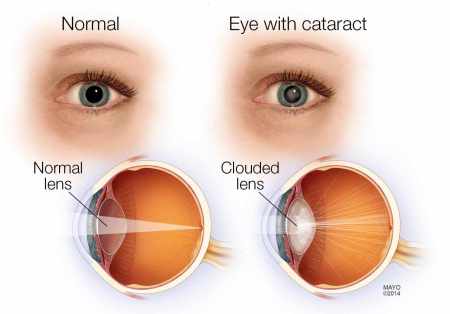
Generally, a cataract does not cause pain, redness or tears. Cataracts are most likely caused by changes related to aging. Throughout our lives, our bodies replace old cells with new ones. As we grow older, the old cells in our eye’s lens build up and block light as it tries to pass through. The end result is cloudy vision.

The National Eye Institute recently sponsored the Age-Related Eye Disease Study 2 (AREDS2), which revealed that lutein and zeaxanthin supplementation reduced the risk of progression of AMD, one of the leading causes of blindness and visual impairment today.

They recommend it is best to take steps to slow down, if not prevent developing cataracts in your precious eyes. Preventing vision damage starts with replenishing the nutrients your eyes lose before it starts. Specialized supplements designed for eye health help safeguard your sight—naturally.

The eye supplement I use offers  superior vision support in high-glare and low-light conditions while promoting macula, retina, and lens health. I take just one softgel a day to helps maintain my visual acuity. After all, it’s never too late to protect your eyes!

PreventBlindness.org offers this Facts & Myths About Cataracts Fact Sheet to further explain cataracts.

.

Five Critical Roles In Your Business

As you begin to establish your new business, there are critical roles that must be fulfilled in order to assure or at least give you a bigger chance of success. If you have the luxury of a large, quality pool of team members from which to choose, you may have these resources on your existing team.

Most new businesses do not have the advantage of having existing team members that can accomplish these tasks, so the alternative is that you must fill these roles yourself with an eye to recruit with these necessary roles in mind. The below article from Forbes tells us that these roles must be filled and identifies what they are and why they are indispensable.

You are the “de-facto” leader as a founder of your business. As its primary coach, you must lead in a way that creates love and respect for the way that you lead. Your first task is to find an “expert” who knows the industry, the market, and the products and is able to communicate those to the rest of the team.

The financial guru who keeps track of the income matrices and expenses that the team deems worthy of taking on. This person may be domestic to the team or be an external resource. Most entrepreneurs are busy with the everyday tasks of being leaders, so there is a need for a strategist who is skilled at navigating the future and guiding the enterprise into a profitable and fulfilling enterprise.

Finally, there is a need for the executer that takes ownership of the company’s plans and monitors their progress in the day-to-day operation. The executer understands, fully, the company’s expectations and how they are performing from one day, one week, one month and one year to the next. The executer knows what needs to be done, when and how.

As we have said, earlier, sometimes in start-up and new business endeavors these roles must be filled by the founder with an eye to the future as you recruit for your team. A lot of work in the beginning and the use of some outside resources that are available to you can fill those roles in the short or even the long-term and can lead to great things in your business.

www.forbes.com/sites/alanhall/2013/03/30/five-critical-team-members-for-business-success/#1f775e42ad90

Magnesium: the forgotten supplement

Vitamins and minerals are called “essential” because they are needed to sustain life and health, and almost all must be obtained from your diet. The most common source is fruit and vegetables, but only 14% of U.S. adults and 9.5% of U.S. teens are eating the recommended servings.

Because magnesium is the fourth most abundant mineral in your body, a deficiency can wreak havoc on your health. The fact that researchers have detected more than 3,750 magnesium-binding sites on human proteins should give you a sense of how important this mineral is for your body’s optimal functioning. Your body needs magnesium for:

  • Activating muscles and nerves
  • Creating energy in your body by activating adenosine triphosphate (ATP)
  • Helping digest proteins, carbohydrates and fats
  • Serving as a building block for RNA and DNA synthesis
  • Acting as a precursor for neurotransmitters like serotonin

The human body is not capable of storing most vitamins and minerals, so optimal health relies on nourishing the body with ideal amounts throughout the day. Dietary sources of magnesium include avocados, Brazil nuts, brown rice, cashews, dark leafy greens like spinach and Swiss chard, oily fish, raw cacao, seaweed and seeds.

You may be suffering from magnesium insufficiency if you experience:

  • Constipation
  • Eye twitches, muscle spasms — especially “charley horses” or spasms in your calf muscle that
    occur when you stretch your legs, numbness or tingling in your extremities and seizures
  • Headaches and/or migraines
  • High blood pressure, heart arrhythmias and/or coronary spasms
  • Low energy, fatigue and/or loss of appetite

Since the body’s ability to utilize some minerals diminishes with age, I supplement my diet with additional calcium, magnesium, and chromium with a Multivitamin & the Mineral supplement of that provides 100% or more of the daily recommended dose I need. How about you?

Another powerful reason to avoid drinking diet sodas

We already knew drinking sugary drinks was bad. Nutrition experts believe high levels of sugar contribute not just to rising levels of obesity, but also other health conditions such as diabetes, heart disease, dental cavities and cancer.

Boston University researchers found aspartame, a low-calorie sweetener, wreaks havoc on the arteries – as opposed to sugar-sweetened drinks. This means drinking diet soda is far worse for your health than drinking regular soda sweetened with sugar.

The results showed that adults who had one or more diet drinks a day were 2.9 times more likely to develop dementia and 3 times more at risk of strokes compared to those who virtually had none at all.

The team of scientists from Boston University believe the artificial sweeteners including aspartame and saccharine may be affecting the blood vessels, eventually triggering strokes and dementia.

This new study involved data on 2,888 adults older than 45 and 1,484 adults older than 60 from the town of Framingham, Massachusetts. The data came from the Framingham Heart Study, a project of the National Heart, Lung, and Blood Institute and Boston University.

“Our study shows a need to put more research into this area given how often people drink artificially sweetened beverages,” said Matthew Pase, a senior research fellow in the department of neurology at Boston University School of Medicine and lead author of the new study.

“Although we did not find an association between stroke or dementia and the consumption of sugary drinks, this certainly does not mean they are a healthy option. We recommend that people drink water on a regular basis instead of sugary or artificially sweetened beverages.”

Now, you have proof that  Drinking One Diet Drink A Day Can Triple Risk Of Dementia And Strokes. Only one a day!

So what to do? Drink ordinary water? That’s boring. We know getting eight glasses of water every day can be tough, but we’ve found a solution, SplasH2O.

SplasH2O® transforms plain water into a thirst-quenching, body-revitalizing, flavor sensation with tantalizing bursts of fresh fruit that will keep you making smarter choices. It’s a fantastic alternative to high-calorie, high-sugar drinks, and replaces them with sugar-free deliciousness. This fun, lively fusion of 5 classic fruits makes ordinary water taste refreshingly good—with no calories, sugar, or artificial flavors and colors.

We are so glad we found a way to turn water into a refreshing, flavorful drink that satisfies – without the sugar, calories, or cost of soda or fruit juice. We also know that we are reducing the chance of developing dementia or a stroke by switching. Now that’s something to consider.

The Centers For Disease Control And Prevention (CDC) have great information about the devastating consequences of eating too much sugar. It is very important to Know Your Limit for Added Sugars.

Another powerful reason to avoid drinking diet sodas

We already knew drinking sugary drinks was bad. Nutrition experts believe high levels of sugar contribute not just to rising levels of obesity, but also other health conditions such as diabetes, heart disease, dental cavities and cancer.

Boston University researchers found aspartame, a low-calorie sweetener, wreaks havoc on the arteries – as opposed to sugar-sweetened drinks. This means drinking diet soda is far worse for your health than drinking regular soda sweetened with sugar.

The results showed that adults who had one or more diet drinks a day were 2.9 times more likely to develop dementia and three times more at risk of strokes compared to those who virtually had none at all.

The team of scientists from Boston University believe the artificial sweeteners including aspartame and saccharine may be affecting the blood vessels, eventually triggering strokes and dementia.

This new study involved data on 2,888 adults older than 45 and 1,484 adults older than 60 from the town of Framingham, Massachusetts. The data came from the Framingham Heart Study, a project of the National Heart, Lung, and Blood Institute and Boston University.

“Our study shows a need to put more research into this area given how often people drink artificially sweetened beverages,” said Matthew Pase, a senior research fellow in the department of neurology at Boston University School of Medicine and lead author of the new study.

“Although we did not find an association between stroke or dementia and the consumption of sugary drinks, this certainly does not mean they are a healthy option. We recommend that people drink water on a regular basis instead of sugary or artificially sweetened beverages.”

Now, you have proof that  Drinking One Diet Drink A Day Can Triple Risk Of Dementia And Strokes. Only one a day!

So what to do? Drink ordinary water? That’s boring. We know getting eight glasses of water every day can be tough, but we’ve found a solution, SplasH2O.

SplasH2O® transforms plain water into a thirst-quenching, body-revitalizing, flavor sensation with tantalizing bursts of fresh fruit that will keep you making smarter choices. It’s a fantastic alternative to high-calorie, high-sugar drinks, and replaces them with sugar-free deliciousness. This fun, lively fusion of 5 classic fruits makes ordinary water taste refreshingly good—with no calories, sugar, or artificial flavors and colors.

We are so glad we found a way to turn water into a refreshing, flavorful drink that satisfies – without the sugar, calories, or cost of soda or fruit juice. We also know that we are reducing the chance of developing dementia or a stroke by switching products.

Now that’s something to consider.

The Centers For Disease Control And Prevention (CDC) have great information about the devastating consequences
of eating too much sugar. It is very important to Know Your Limit for Added Sugars.

What you should know if you use bleach

I don’t know about you, but I really am not a fan of those bleach commercials. You know, the ones where they tell you that to get something clean, you need to use bleach. Otherwise, you’re not cleaning properly, because bleach is the only thing can can get your house clean, fresh and bacteria free.

Common household bleach (sodium hydroxide) can be found in a variety of household products in both liquid and granular form and is not, technically speaking, considered corrosive or toxic, even if ingested. However, bleach exposure  is highly irritating and corrosive to the eyes, mouth and lungs. Fumes from bleach are very potent, as you can tell by the smell, and when inhaled can cause nervous system and brain damage, individuals with asthma or other breathing problems are particularly susceptible. In fact, inhaling the fumes is potentially carcinogenic.

Dermal contact of bleach can cause rash and burning. The longer the bleach is left on your skin,  the more likely it is that you will begin to experience burning, itching and other types of irritation. If the bleach is left on your skin for an inordinately long period of time, it can cause pigment lightening and permanent tissue damage.

Serious side effects of using bleach can include respiratory problems, skin burns, damage to the nervous system, asthma flares, extreme headaches, migraines, and vomiting. Inhalation of chlorine gas or drinking highly concentrated sources of chlorine (such as household bleach) can lead to vomiting, coma, and even death.

Athough it is not considered “technically toxic” stories abound concerning bleach and the side effects.

From the “Pharmaceutical Press”: A young girl had suffered episodes of vomiting, abdominal pain, and bronchopneumonia over a period of a year which was finally traced to her habit of sucking socks that had been bleached.

From Clinical Toxicology of Commercial Products:  An 18 month old girl who swallowed a “few tablespoons” of liquid household bleach coughed, choked and vomited. Promptly thereafter she became lethargic and was admitted to a local hospital in a state of coma. Death occurred 19 hours after ingestion.

Why would you add a half cup of chemical toxins to your load of laundry?
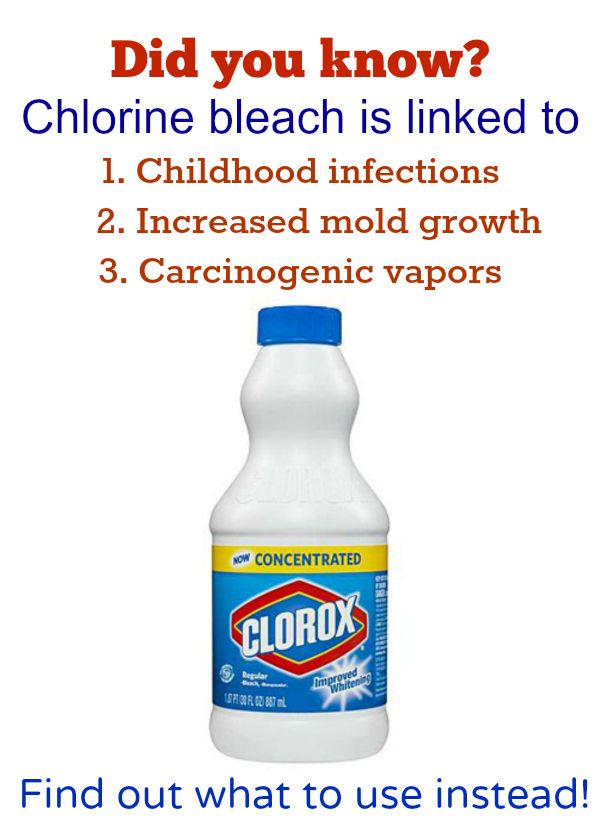
Well, that’s what you’re doing when you add Clorox® Bleach to your wash. The culprit in Clorox Bleach is chlorine—that toxic chemical with vapors irritating to your eyes and damaging to your respiratory system. Products with the word bleach in its name obviously contain bleach, however; a variety of products contain bleach and it may not be obvious at first glance, or smell. Some examples are: Drano, Tilex, Palmolive, and Cascade.

The statistics are startling.

An estimated 61% of toilet bowl cleaners use chlorine bleach. Another 26% of adults use chlorine bleach directly in their toilets. That means 87% of all toilets are being cleaned with a known poison that is then flushed into city water systems. That water must then be treated with more chemicals before being released into our water ways.

Not only can bleach be toxic, but it can increase my risk of an asthma attack and make the condition worse, as well as lead to COPD or cancer. I admit it, I was an ardent user of bleach until I decided to spend time reading labels and go green 15 years ago when I discovered a manufacturer providing greener products through an online shopping club.

I now use an EPA-registered botanical disinfectant, powered by thyme oil and citric acid, which kills over 99.9% of common household germs—no caustic chlorine bleach or quats required. I admit disinfecting my home has never been easier! For toilets, there’s an alternative powered by organic cleaners and thyme oil that has the same environmental impact as a bowl of lemons. It cleans beautifully, and smells great. I found a great way to get my home even cleaner than using bleach and my cleansers smell so much better! I know my home is safer too.

The link to the article below offers alternatives to using bleach in your laundry:

It’s time to break up with bleach and move up to MelaBrite Plus Oxi!

Switching stores and switching from bleach allowed me to get rid of a lot more than just the stains and dirt, it got rid of Ammonia; Chlorine Bleach; Petroleum Distillates; Gloves; Toxic Ingredients; no special ventilation is required and I have NO WORRIES!

It’s time to talk about dishwashing

I want to share something I learned a long time ago— you know it’s prohibited to vent your automatic dishwasher outdoors. Most dishwashers will have a vent on the outside of the door, others (like mine) will have a concealed vent located on the inside of the door, but both went the hot steam/air into your kitchen.

Why?

Because it’s prohibited to have chlorine gases emitted into the environment. Consider this, when you use an automatic dishwashing detergent that contains chlorine bleach, or other name-brand product containing a bleach chemical, it combines with the heat and steam which creates chlorine gas.

Since it’s not released outdoors, but released into our homes through the machines vents it creates an unhealthy or even toxic indoor air quality. That’s why it’s recommended to open your windows regularly to circulate air. If you don’t, those chlorine-based outgases can stay in your home for up to seven days! How unhealthy is that? No wonder so many children today suffer from asthma and other lung-related issues.

I stopped using those bleach-based toxic automatic dish soaps years ago.

I am so glad  I switched to a product that is free of phosphates and chlorine bleach. It’s also made with 100% nontoxic ingredients—because what’s on your dishes can also go into your body. The product also comes highly concentrated so the new resealable pouch uses 90% less plastic than the previous bottle, which was already significantly smaller than the competition!

It uses naturally derived water-softening agent naturally derived enzymes and all natural melaleuca oil. No bleach. No phosphates. No poisons. I love having sparkling dishes without endangering my family, and without polluting my home or the environment!

I like shopping with my online shopping club. Not only are the products non-toxic and the best of natural ingredients and science combined, but because I save so much money!

Recently, I placed my online shopping order and received two packages of this fabulous Automatic Dishwashing product FREE with my loyalty shopping dollars, saving me $14.33. Each time I shop, I get loyalty rewards, up to 18% back! I’ve yet to find another store that offers this type of reward, Even after 15 years of shopping with this club, I still get excited each time I order because of the savings!


Can you say that about your store?

Facing Fear

Fear (and not facing it) can degenerate your ability to succeed, in life, in business, and in your personal relationships. Fear is not the enemy, your inability to face it and challenge it is.

This article from “Help Scout” helps explain how fear can actually be your friend and how facing it often can be one of the greatest tools to achieving all the things that you consider success.

You have heard the term “comfort zone” numerous times and it is understandable that we all tend to cuddle in its’ warm embrace. IT IS COMFORTABLE. At the same time, that feeling of “being OK” is not that at all.

Fear is actually your friend. We all feel fear. It is NOT unique to you. Conquering it is the gateway to business success and life’s quality achievements. The fearful are punished as often as the bold. The difference is the bold gave themselves a chance.

Fear actually makes us do the opposite of what is best for us. The pain that facing fear causes is nothing compared to the gratification that facing and conquering it generates. Facing that needle, so that I may be immune to an illness or making that phone call for the appointment that can convert a new customer are better for me in the long-run and the long-term benefits far outweigh the prick of the needle or the anxiety that your finger dialing that number cause.

www.helpscout.net/blog/do-things-that-scare-you/

Pancakes can be a powerhouse

Getting a good healthy start to your day with a hearty breakfast can set the tone for a productive day. Eggs are a great choice, but eggs day after day can get boring. A tasty alternative can be pancakes. But knowing what the dangers packed in pancakes are can help you make them a healthy choice.

Pancakes are high in carbs and contain a wide range of vitamins and minerals, but they can contain lots of fat, calories, and sodium. Still, pancakes can be a great addition to the variety of your morning meal. Knowing what they contain can be helpful to your healthy diet.

A 3.5 oz. serving of pancakes (2 cakes) contains about  221 calories, although the addition of butter and maple syrup can add considerable calories, obviously. A serving of pancakes contains 8.8 g of fat/ 3.8g are saturated fat. Avoid more than 15g of saturated fat per day. They also contain 27.2 g of carbohydrates, which is about 10% of what you should have in a day. You also get 8.1 g of protein which is about 17% of the average amount of this macronutrient.

Pancakes pack both a savory and sweet taste which is what makes them so satisfying. They contain about 4.3 g of sugar. The American Heart Association recommends under 25 g for women and 37 g for men. Salt in your batter constitutes 308 mgs of sodium and the recommended limit is at about 2000 mg, so measure your daily intake carefully.

But pancakes are a good source of phosphorus (20%) and calcium (18%) of your daily requirements. This makes them a good option for increasing bone strength and your body’s ability to manufacture RNA and DNA. Pancakes also provide significant levels of iodine and riboflavin as well as smaller amounts of vitamin C, Thiamin, vitamin B-6, niacin, vitamin B-12, magnesium, zinc, copper, and iron.

Whole-wheat flour will provide extra fiber and whole grains. I have also have attached some great recipes for high protein versions of these little-griddled beauties. While we found the recipes to contain great food additives, we in no way endorse the brands promoted. We use the recipes as additional options to our already great pancake recipes. We shop directly from a manufacturer that manufactures an entire suite of performance supplements that can “jack up” the nutritional value of your morning meal, as well as help control blood sugar! We have discovered the amazing power of pancakes when made with the proper ingredients. No syrup needed. Yes, they are that good!

81 Percent of Dollar Store Products Tested Contain Chemicals Linked To Learning Disabilities, Cancer and Serious Illnesses

HealthyStuff, in collaboration with the Campaign for Healthier Solutions, released a report today about toxic chemicals found in Dollar store products. The report — A Day Late and a Dollar Short: Discount Retailers are Falling Behind on Safer Chemicals — includes testing results for 164 dollar store products such as toys, jewelry, school supplies and other household items, that found over 81% (133 of 164) contained at least one hazardous chemical above levels of concern.

On average the dollar store products are some of the poorest peforming from a chemical hazard perspective. There is a comparatively high percentage of products containing hazardous plasticizers. The chemicals of concern found in Dollar store products tested for this report include: phthalates, linked to birth defects, reduced fertility, cancer, learning disabilities, diabetes, and other health
issues; polyvinyl chloride plastic (PVC or vinyl), which creates hazards throughout its life cycle and has been linked to asthma and lung effects; and toxic metals such as lead, which harms brain development, leading to learning disabilities, lower IQ, and cause other serious health impacts, especially in children. Combined these discount chains have sales totaling over $36 billion
and operate more stores nationally than Walmart.

The attached article from Healthy Holistic Living gives a full report and explains what consumers can do.

In the meantime, families and communities let dollar store chains know that they want safer products, and join local and national efforts advocating for nontoxic products. Most importantly, consumers should read product labels to protect themselves and their families.

My company works hard every day to make sure that our products and business practices are environmentally friendly and safer for your home and family. We are passionate about and committed to eco-friendly practices that contribute to sustaining our environment and our customers health. Instead of harsh chemicals like chlorine bleach, ammonia, and formaldehyde, our products are powered by naturally derived ingredients including essential oils.

No matter how big or how small, nations, companies, communities, and families have the responsibility and opportunity to make a lasting, positive difference for our beautiful planet.

Hayseeds Creative

Enhancing Lives

Skip to content ↓